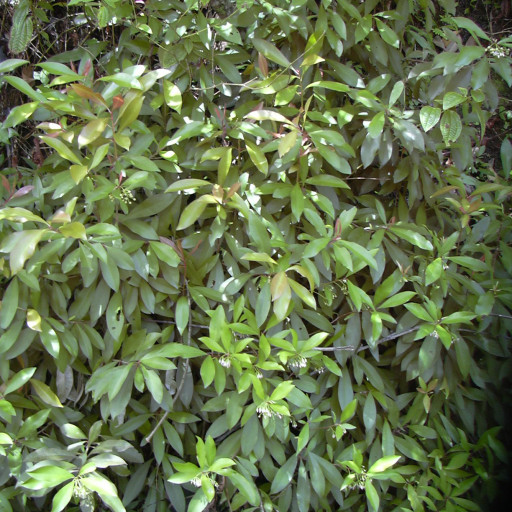
Plant Overview
Often called the Shoebutton Ardisia, this evergreen shrub is a tropical beauty that feels like a stylish traveler from the Victorian era. Originating from the coastal regions of Southeast Asia, it is prized for its glossy, leathery leaves and decorative berries that look like tiny, polished leather buttons. While it makes for a lush hedge, its prolific nature means it often escapes the garden to wander into the wild.
🔍 How to Identify
- 🍃 Leathery Foliage: The leaves are thick, smooth, and elliptical, often displaying a soft reddish tint when they first emerge before maturing into a deep, waxy green.
- 🌸 Starry Blooms: It produces small, drooping clusters of pale pink to lavender flowers that are shaped like delicate stars with distinct yellow centers.
- 🍒 The "Shoebuttons": The most famous feature is the fruit; green berries turn a bright, cherry red before finally ripening into a deep, glossy black.
🏡 In Your Garden
- 🌿 The Shade Specialist: This plant thrives in the "dappled light" of a forest canopy. It is a perfect choice for those tricky, darker corners of a tropical garden where other flowering shrubs might struggle to bloom.
- 💧 Thirsty and Humid: While hardy, it prefers consistently moist soil and high humidity. If the air gets too dry, the leaf tips may brown, signaling that it misses its humid, coastal origins.
- ✂️ Growth Management: Because birds love the berries and spread the seeds, this plant can become invasive in warm climates like Florida or Hawaii. Frequent pruning is necessary to maintain its shape and prevent it from "jumping the fence" into local woodlands.
⚠️ Safety & Toxicity
- 🐾 Mild Toxicity: Ardisia elliptica is generally considered to have low toxicity, but the berries and leaves contain saponins.
- 🤢 Keep Out of Reach: If ingested in large quantities by curious pets or toddlers, it can cause mild gastrointestinal upset, vomiting, or lethargy. It is best enjoyed as a visual ornament rather than a snack.
✨ Fun Fact
In the 19th century, "shoebuttons" were a staple of high fashion. The fruit of this plant was so strikingly similar to the small, black, polished buttons used on Victorian leather boots that the name has stuck for over a hundred years!

Detailed Care Instructions
| Color | Green |
| Soil Ph | Slightly Acidic 6.1-7.8 |
| Lighting | Part Sun |
| Soil Type | Moist Soil |
| Bloom Time | Mid-Summer |
| Plant Type | Evergreen Tree |
| Mature Size | 26 Feet Tall |
| Native Area | Native To The Indian Subcontinent (Southern India ,Sri Lanka) And South-Eastern Asia |
| Sun Exposure | Full Sun Or Partial Shade |
| Hardiness Zones | 8-10 |
To grow Ardisia Elliptica (also known as Shoebutton Ardisia or Asian Evergreen), you can follow these steps:
- Propagation: Ardisia Elliptica can be propagated from seeds or stem cuttings. If using seeds, sow them in a well-draining potting mix. If using stem cuttings, take a 4-6 inch long cutting from a healthy plant and place it in a potting mix.
- Soil and Potting: Use a well-draining potting mix rich in organic matter. Ensure the pot has drainage holes to prevent waterlogging and rot.
- Sunlight: Place the plant in a spot that receives bright, indirect sunlight. It can tolerate some shade but needs light to thrive.
- Watering: Keep the soil consistently moist but not waterlogged. Water when the top inch of soil feels dry. Avoid overwatering or letting the soil dry out completely.
- Humidity: Ardisia Elliptica prefers high humidity. Mist the leaves regularly or place a humidity tray filled with water beneath the pot to maintain moisture levels.
- Temperature: This plant prefers warm temperatures between 65-85°F (18-29°C). Avoid extreme cold or hot conditions.
- Fertilizer: Feed the plant with a balanced, water-soluble fertilizer diluted to half strength every 4-6 weeks during the growing season.
- Pruning: To maintain a compact shape and encourage bushier growth, pinch off the growing tips regularly. Remove any dead, yellowed, or diseased leaves and stems.
- Repotting: As the plant grows, repot it into a larger container when it becomes root-bound. Choose a pot that is slightly bigger than the current one.
- Pests and diseases: Watch out for pests like scales, aphids, or mealybugs. Treat any infestation promptly with an appropriate insecticide or by wiping leaves with soapy water. Avoid overwatering to prevent root rot.
With proper care and attention, your Ardisia Elliptica plant can grow into a beautiful evergreen shrub.

Place in a window with dappled sun or a spot in the middle of a room. Or directly in a window facing west or east.

To water this plant, you should check the soil moisture level by inserting your finger about an inch deep into the soil. If the soil feels dry, it's time to water. Water the plant thoroughly until water drains out of the bottom of the pot. It's important to avoid overwatering, as this plant prefers well-draining soil that's allowed to dry out slightly between waterings. You can also mist the leaves with a spray bottle to increase humidity, which this plant appreciates.
- Choose a balanced fertilizer with equal amounts of nitrogen, phosphorus, and potassium.
- Mix the fertilizer according to the package instructions.
- Apply the fertilizer evenly around the base of the plant.
- Water the plant thoroughly after fertilizing, to help the nutrients penetrate the soil.
- Fertilize the plant once a month during the growing season (spring and summer).
- Avoid over-fertilizing, as this can cause damage to the plant.
Ardisia Elliptica, a plant species native to Asia, requires well-draining soil to thrive. The soil should be rich in organic matter and have a slightly acidic pH level between 5.5 and 6.5. It is recommended to use a combination of peat moss, perlite, and vermiculite to create a loose and aerated soil mixture. Avoid using heavy clay soils as they can lead to root disease. Additionally, adding a slow-release fertilizer to the soil can provide the necessary nutrients for the plant's growth and development. Overall, the soil should be moist but not waterlogged to prevent root rot and fungal growth.
Ardisia Elliptica can be propagated through various methods including stem cutting, division, air layering, and seed germination. For stem cutting propagation, cut a stem with a few leaves and a node, and remove the lower leaves. Dip the cut end in rooting hormone and plant the cutting in a pot with well-draining soil. Keep the soil moist and in a warm, humid environment. For division propagation, carefully separate the plant into two or more sections and plant each section in a separate pot. For air layering propagation, select a healthy stem and make a small cut on the stem. Apply rooting hormone and wrap the cut stem in damp moss. Cover the moss with plastic wrap and wait for roots to form. Once roots have formed, cut the stem and plant in a pot. For seed germination, collect ripe berries and remove the seeds. Soak the seeds in water for 24 hours and plant in a pot with well-draining soil. Keep the soil moist and in a warm environment until the seeds germinate.
Common pests of the shoebutton include Scale insect, mealybugs. Make a habit of checking your shoebutton frequently for pests so that any infestations can be caught and managed early.








