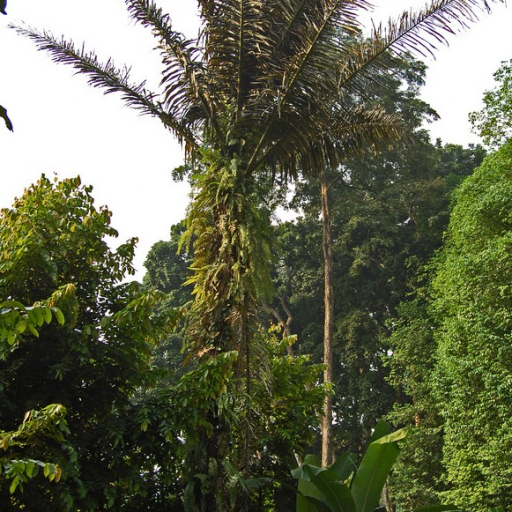
Plant Overview
The Sugar Palm, also known as the Arenga pinnata or "Kaong," is a majestic giant of the tropical world. Originally from Southeast Asia, this palm is often called the "Tree of Life" by local communities because almost every part of it—from its sap to its fibers—serves a purpose. In the wild, it creates a dramatic silhouette with its dark, "hairy" trunk and massive arching fronds.
🔍 How to Identify
- 🌴 The Trunk: The most striking feature is the trunk, which is usually covered in thick, black, hair-like fibers (called ijuk) that give the tree a shaggy, dark appearance.
- 🌿 The Foliage: It sports massive pinnate leaves that can reach up to 10 meters long. These leaves are dark green on top and have a distinctive silvery-grey underside.
- 🍇 The Fruit: It produces enormous, heavy clusters of round, green-to-yellow fruits that hang down like giant beaded curtains.
🏡 In Your Garden
- 🌱 Space Requirements: This is not a "living room palm." Because of its deep taproot and massive canopy, it needs plenty of vertical and horizontal space. It is best suited for large estates or botanical collections.
- 💧 Soil and Humidity: It thrives in rich, organic soil that stays moist. It is a true child of the tropics, so it requires high humidity and hates dry, cold winds which can tatter its beautiful fronds.
⚠️ Safety & Toxicity
- 🚫 Toxic Fruit Juice: While the seeds are edible after being processed (often found in tropical desserts), the raw fruit pulp and juice are highly caustic.
- 🤚 Skin Irritation: Touching the raw fruit can cause severe skin irritation and itching due to needle-like calcium oxalate crystals. Keep children and pets away from fallen fruits.
✨ Fun Fact
The black fibers found on the trunk are so tough and resistant to seawater that they were historically used to make ropes for ships and are still used today to create traditional thatched roofs that can last for over 50 years without rotting!

Detailed Care Instructions
To grow Arenga pinnata, also known as sugar palm or black-fiber palm, you can follow these steps:
- Choose the right location: Arenga pinnata thrives in tropical to subtropical climates. It prefers warm temperatures and high humidity. Select a spot in your garden that receives full to partial sun.
- Prepare the soil: The plant prefers well-draining soil. Add organic matter like compost or aged manure to improve soil fertility and drainage. Avoid clayey or waterlogged soil.
- Obtain seeds or seedlings: Arenga pinnata can be grown from seeds or seedlings. If you have access to seeds, soak them in warm water for about 24 hours before sowing. This helps soften the seed coat and aids germination.
- Sow the seeds: Plant the seeds about 1 to 2 inches deep in the prepared soil. Space them apart, as the palm grows into a large plant. If using seedlings, gently transplant them into the prepared soil.
- Watering: Keep the soil consistently moist but not waterlogged. Make sure to water the plant regularly, especially during dry periods. Arenga pinnata appreciates high humidity, so misting the leaves occasionally is beneficial.
- Fertilization: Apply a balanced, slow-release fertilizer to the soil around the plant every few months during the growing season. This helps provide necessary nutrients for healthy growth.
- Pruning: Remove any dead or damaged fronds to maintain the plant's health and aesthetics. Trim any suckers or offshoots that may develop around the base of the plant.
- Supporting the plant: Young Arenga pinnata plants may need support until they can establish themselves firmly. Use stakes or ties to keep the plant upright.
- Be patient: Arenga pinnata is a slow-growing palm that may take several years before it starts to flower and produce fruit. Be patient and provide proper care while waiting for its maturity.
Growing Arenga pinnata requires dedication and time, but the result can be a beautiful and unique palm tree in your garden.

Place in a bright room that is sun drenched almost all day. Or directly in a south-facing window.

To water this particular plant, you should first assess the soil's moisture level. It is best to water the plant when the top inch (2.5 cm) of soil feels dry to the touch. When watering, use room temperature or tepid water and slowly pour it onto the soil around the base of the plant until the top inch (2.5 cm) of soil feels moist. Make sure not to overwater the plant as it can lead to root rot and other issues. Additionally, it is recommended to water the plant in the morning or evening to reduce evaporation and prevent water from sitting on the foliage for too long.
For best results, fertilize this plant during the growing season with a balanced, general-purpose fertilizer. Apply the fertilizer according to the package instructions, typically every two to four weeks. It's important not to over-fertilize this plant, as it can cause burning of the leaves and roots. Furthermore, make sure to water the plant well before and after fertilizing.
The ideal soil for Arenga Pinnata plant is a well-draining soil that has a pH between 5.5 to 7.0. It should be rich in organic matter and have good water retention capacity. The soil should not be compacted, as this can lead to poor root growth and drainage problems. Sandy loam or loamy soil texture is preferred. It is also important to ensure that the soil is not contaminated with pollutants or chemical residues, as this can harm the plant's growth. It is recommended to add organic compost or animal manure to the soil before planting to improve its fertility and structure. Additionally, it is also important to ensure that the soil is properly aerated and has enough oxygen for the roots to breathe.
To propagate this plant, prepare a potting mixture that is well-draining and rich in nutrients. Take a section of the parent plant's stem with roots growing out of it and plant it in the prepared potting mixture, making sure that the stem is buried up to the level of the first set of leaves. Keep the soil consistently moist but not water-logged, and place the newly planted stem in a warm, humid location with filtered sunlight. It is important to keep the stem protected from direct sunlight until new growth appears. Once you observe new growth and roots emerge from the planting mixture, provide less consistent watering but maintain humidity. With proper care, the stem will grow into a new plant.








