Plant Overview
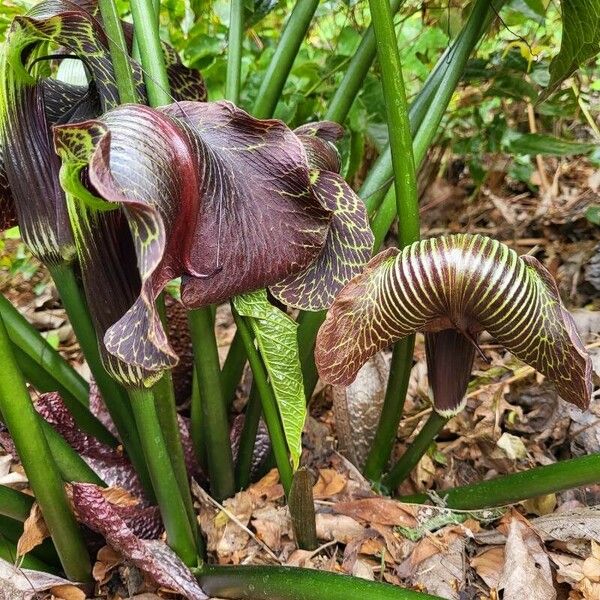
Often called the "Griffith’s Cobra Lily," this plant looks more like a creature from a dark fantasy novel than a typical garden flower. Hailing from the high-altitude forests of the Himalayas, it commands attention with its massive, hooded "spathe" that resembles a cobra ready to strike. It is a prized collector's item for those who love "gothic" or unusual woodland gardens, blending dramatic dark purples with intricate neon-green patterns.
🔍 How to Identify
- 🌿 The Spathe (Hood): This is the plant's showstopper—a wide, umbrella-like hood dramatically striped with deep chocolate-maroon and pale green veins. It curves forward, shielding the center of the bloom.
- 🐍 The Spadix: Peeking out from under the hood is a long, dark, thread-like appendage called a spadix. It often extends far out like a slender tail or a snake's tongue.
- 🍃 The Foliage: It typically produces a single, large leaf divided into three wide leaflets. The leaf is sturdy and deep green, often appearing after or alongside the flower to provide a lush, tropical backdrop.
🏡 In Your Garden
- ⛰️ High-Altitude Needs: Because it originates from the cool, misty mountains of Bhutan and Nepal, it thrives in "Goldilocks" conditions—it dislikes extreme summer heat and prefers dappled shade where the soil stays cool.
- 🕳️ Dormancy & Rot: The plant grows from a tuber that is very sensitive to winter wetness. To prevent the tuber from rotting during its nap, it should be planted in incredibly well-draining, humus-rich soil, often on a slight "mound" to let excess water run off.
⚠️ Safety & Toxicity
- 🚫 Toxic Status: Highly toxic to both humans and pets.
- 👅 The "Needle" Effect: Like most members of the Arum family, it contains microscopic, needle-shaped calcium oxalate crystals. If bitten, these crystals cause intense burning and swelling of the mouth, tongue, and throat.
- 🧤 Skin Protection: The sap can be a skin irritant for some people. It is wise to wear gloves when handling the tubers or dividing the plant.
✨ Fun Fact
The Griffith’s Cobra Lily is a "gender-bender" in the plant world! It can change its sex from year to year; when the tuber is small or stressed, it may produce only male flowers, but as it grows larger and stores more energy, it switches to producing female flowers to support seed production.

Detailed Care Instructions
To grow Arisaema Griffithii plants, follow these steps:
- Choose a suitable location: Arisaema Griffithii prefers partially shaded areas with well-draining soil. Find a spot where the plant will receive morning sun or dappled shade throughout the day.
- Prepare the soil: Amend the soil with organic matter, such as compost, to improve drainage and fertility. Arisaema Griffithii prefers slightly acidic soil with a pH between 5.5 and 6.5.
- Planting: Dig a hole that is deep enough to accommodate the tuber of the Arisaema Griffithii plant. Place the tuber in the hole with the pointed end facing up and cover it with soil, leaving the top of the tuber exposed. Space multiple tubers at least 8 inches apart.
- Watering: Arisaema Griffithii plants like consistently moist soil, so water the plant regularly, especially during dry periods. Avoid overwatering, as it can cause root rot. Mulching around the plant can help retain soil moisture.
- Provide support: As the plant grows, it may require support. Place a sturdy stake near the plant and gently tie the stem to it as it grows to prevent it from bending or breaking.
- Maintenance: Remove any weeds that compete for nutrients and water. Apply a balanced organic fertilizer in early spring to promote healthy growth.
- Protect from extreme temperatures: In colder climates, Arisaema Griffithii may require winter protection. Apply a thick layer of mulch around the plant to insulate the tuber from freezing temperatures.
- Propagation: Arisaema Griffithii can be propagated by division. After a few years, when the plant has established a clump of tubers, carefully dig up the plant in early spring and separate the tubers. Replant the divided tubers following the same planting instructions.
With proper care and suitable growing conditions, Arisaema Griffithii should thrive and produce unique flowers and foliage in your garden.
To water the Arisaema griffithii plant, it is crucial to consider its specific watering needs. Here is a detailed guide on watering this plant:
- Evaluate the soil moisture: Before watering, check the soil moisture by inserting your finger about an inch deep into the soil. If it feels dry, it is an indication that the plant needs watering.
- Choose the right watering method: Arisaema griffithii prefers a thorough watering over a shallow one. You can use a watering can or a garden hose with a gentle spray attachment to ensure even moisture distribution.
- Watering frequency: The watering frequency depends on various factors such as the local climate, season, and the plant's current stage of growth. Generally, water the plant when the top inch of soil has dried out completely. Avoid letting the soil become excessively dry or overly saturated.
- Watering techniques: When watering, try to mimic a gentle rain to prevent overwatering or soil erosion. Pour water slowly at the base of the plant, allowing it to soak into the soil evenly. Avoid wetting the foliage, as this can lead to fungal diseases.
- Observe drainage: Arisaema griffithii requires well-drained soil. Ensure that the planting container or garden bed has adequate drainage holes to allow excess water to escape easily. This prevents waterlogging, which can negatively affect the plant's health.
- Mulching: Apply a layer of organic mulch around the base of the Arisaema griffithii plant. This helps retain moisture in the soil, reduces weed growth, and regulates soil temperature.
- Adjust watering according to season: During the plant's dormancy period (usually winter), reduce watering while ensuring the soil doesn't completely dry out. During active growth in spring and summer, water more frequently to support the plant's development.
- Monitor the plant's response: Regularly inspect the plant for signs of under or overwatering. Overwatering may cause yellowing or wilting leaves, root rot, or fungus growth. Underwatering, on the other hand, can lead to stunted growth and leaf curling. Adjust the watering schedule accordingly.
Remember, the guidance provided here is general in nature. It's essential to consider the specific needs of your Arisaema griffithii plant and adjust your watering routine accordingly for its optimal health and growth.
To effectively fertilize the Arisaema Griffithii plant, follow these steps:
- Choose a well-balanced fertilizer with equal or slightly higher ratios of nitrogen (N), phosphorus (P), and potassium (K). A balanced NPK fertilizer with a ratio of 10-10-10 is suitable.
- Apply the fertilizer during the plant's active growing season, which typically begins in early spring and continues through summer. Avoid fertilizing during dormancy.
- Dilute the fertilizer according to the manufacturer's instructions. Typically, a dilution of 1 tablespoon of fertilizer per gallon of water is recommended, but this may vary based on the specific product you're using.
- Water the plant thoroughly before applying the fertilizer. This helps prevent root burn and ensures better absorption.
- Apply the diluted fertilizer around the base of the plant, following the recommended rate per square foot provided on the fertilizer packaging. Avoid direct contact with the plant's stem or leaves to prevent burning.
- Gently work the fertilizer into the soil using a gardening fork or rake, ensuring it is evenly distributed.
- Water the plant again after fertilizing to help incorporate the nutrients into the soil and prevent any potential fertilizer burn.
- Monitor the plant's condition after fertilizing. If you notice any signs of over-fertilization, such as wilting or scorched leaves, flush the plant with water to dilute the excess nutrients.
- Repeat the fertilization process every 4-6 weeks throughout the active growing season, following the recommended rate and dilution for the fertilizer you're using.
- Regularly observe the plant for any signs of nutrient deficiencies or excessive growth, adjusting the fertilizer schedule or type if necessary.
When cultivating Arisaema griffithii plants, it is important to choose a specific type of soil that meets their specific requirements. Ideally, a well-draining and fertile soil mix should be selected for optimal growth and development. The soil should consist of a combination of organic matter, such as compost or well-decomposed leaf litter, along with a blend of mineral components.
Ensuring good drainage is imperative as excess moisture can lead to root rot and other fungal diseases. Therefore, incorporating elements like perlite or coarse sand into the soil mix can help enhance drainage. It is also recommended to avoid heavy clayey soils, which can retain too much water, depriving the plants of necessary oxygen.
Arisaema griffithii plants prefer a slightly acidic to neutral pH level in the range of 6.0 to 7.0. Conducting a soil test beforehand can help determine the pH of the soil and make necessary adjustments. Adding organic matter like well-rotted compost can aid in improving both drainage and pH balance.
Additionally, these plants appreciate a nutrient-rich growing medium. Adding a slow-release balanced fertilizer or incorporating organic fertilizers, such as bone meal or fish emulsion, can provide the necessary nutrients for the plants' healthy growth.
Regularly monitoring the moisture levels and maintaining a well-drained soil mix will be crucial in ensuring the optimal growth and thriving of Arisaema griffithii plants.
To propagate Arisaema Griffithii, follow these steps:
- Select a healthy mature plant: Choose a well-established Arisaema Griffithii plant that has reached its reproductive phase. The plant should be disease-free and have strong, vibrant foliage.
- Timing: Propagation is best done during the dormant season, typically in late winter or early spring before new growth emerges. This allows the plant to recover and establish itself before the growing season.
- Division: Carefully dig up the plant and gently separate the clumps of tubers or rhizomes. Ensure that each division has at least one healthy bud or growing point.
- Cutting: Alternatively, you can propagate Arisaema Griffithii through stem cuttings. Take a clean, sharp scissors or knife and select a healthy stem with multiple buds. Cut the stem at an angle, just below a node.
- Preparing the cuttings: Remove any lower leaves or side shoots from the stem cutting. Leave a few small leaves at the top to facilitate photosynthesis.
- Hormone rooting powder: To enhance root development, dip the cut end of the stem into a rooting hormone powder. This will encourage the growth of roots and increase the chances of success.
- Planting: Prepare a container or planting bed with well-draining, fertile soil. Plant the divided sections or stem cuttings, making sure to bury them at the appropriate depth. Keep the planting depth consistent with the parent plant to ensure successful growth.
- Watering: After planting, thoroughly water the newly propagated plants to settle the soil and promote root establishment. Maintain regular watering throughout the growing season, keeping the soil consistently moist but not overly saturated.
- Light and temperature: Arisaema Griffithii typically prefers partial shade to full shade conditions. Ensure that the new plantings receive adequate light without being subjected to intense direct sunlight. Provide an appropriate temperature range, ideally between 60-75°F (15-24°C).
- Monitoring and care: Monitor the newly propagated plants regularly for signs of growth and overall health. Remove any weeds that may compete for nutrients and control pests or diseases if necessary.
- Patience: Be patient, as it may take some time for the Arisaema Griffithii plant to establish and produce new growth. Usually, it takes several months before the plant becomes fully established and displays vigorous growth.
By following these steps, you can successfully propagate Arisaema Griffithii and expand your collection or share it with other gardening enthusiasts.








