Plant Overview
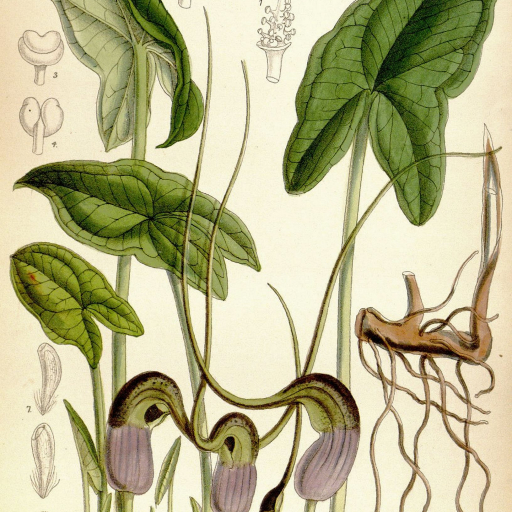
Commonly known as the Mouse Plant or Mouse Tail Plant, this whimsical perennial is one of nature’s most charming practical jokes. Native to the shaded woodlands of Italy and Spain, it creates a low-lying carpet of green that hides a secret: dozens of tiny "mice" appearing to dive nose-first into the soil, leaving only their long, thin tails peeking out. It is a favorite for woodland gardens and "secret" corners where its subtle humor can be discovered by sharp-eyed visitors.
🔍 How to Identify
- 🐭 The "Mouse" Bloom: The inflorescence consists of a dark chocolate-maroon hooded spathe that curves over, resembling a mouse’s body, ending in a remarkably long, coiled, tail-like tip.
- 🍃 Arrowhead Foliage: The leaves are glossy, deep green, and shaped like arrowheads (sagittate), providing a dense, lush groundcover even when the plant isn't blooming.
- 🌱 Low Profile: This plant rarely grows taller than 6 inches, hugging the ground and spreading via underground rhizomes to form a thick, emerald mat.
🏡 In Your Garden
- 💤 Summer Dormancy: One of the most important things to know is that this plant is a "spring ephemeral." It completely disappears in mid-summer to rest, so don't dig it up thinking it has died—it will return next spring!
- 🍄 Woodland Preferences: To keep it happy, mimic a forest floor. It thrives in damp, humus-rich soil and deep shade. It is an excellent choice for planting under large shrubs or in heavy shade where grass refuses to grow.
- 🐌 Slug Watch: Because it loves damp, shady spots, it can occasionally attract slugs or snails who find its tender leaves delicious.
⚠️ Safety & Toxicity
- 🚫 Status: Toxic if ingested.
- 🐾 Details: Like most members of the Arum family, the Mouse Plant contains calcium oxalate crystals. If chewed or eaten by pets or curious children, it can cause immediate stinging, swelling of the mouth, and digestive upset. It’s best planted in areas where pets won't be tempted to graze.
✨ Fun Fact
The Mouse Plant doesn't just look like a mouse for fun; it uses a clever trick for survival. Its flowers emit a faint scent of mushrooms, which lures in fungus gnats. These tiny flies crawl into the "mouse's body" to lay eggs, accidentally pollinating the plant in the process!

Detailed Care Instructions
To grow Arisarum Proboscideum, also known as mouse tail plant or cocklebur, you can follow these steps:
- Soil and location: Arisarum Proboscideum prefers well-draining soil that is rich in organic matter. Choose a location that offers partial to full shade, as excessive sun can scorch the leaves.
- Planting: Plant the tubers in late summer or early autumn, as this is when they are naturally dormant. Dig holes about 2-3 inches deep and space them about 6-8 inches apart. Place the tubers in the holes with the pointed side facing up, and cover them with soil.
- Watering: Provide enough water to keep the soil moist but not waterlogged. During the growing period, water regularly, especially during dry spells. Reduce watering during the dormant period.
- Fertilization: Apply a balanced organic fertilizer, such as compost or well-rotted manure, in early spring before growth begins. This will provide the necessary nutrients for healthy development.
- Mulching: Apply a layer of organic mulch, like leaf litter or wood chips, around the plants to help retain moisture and suppress weed growth. Make sure the mulch is not directly touching the tubers.
- Pruning: Arisarum Proboscideum doesn't require regular pruning. However, you may remove any dead or damaged leaves as needed.
- Propagation: The plant can be propagated by dividing the tubers in early autumn. Dig up the plant, gently separate the tubers, and replant them in desired locations.
- Pests and diseases: Arisarum Proboscideum is generally resistant to most pests and diseases. However, watch out for slugs and snails, which may feed on the leaves. Control them using organic pest control measures if necessary.
Remember, Arisarum Proboscideum is a unique and rare plant, so enjoy watching it grow and appreciate its unusual flower shape!

Place in a bright room that is sun drenched almost all day. Or directly in a south-facing window.

To water the plant in question, you should first check the topsoil to ensure that it is dry. Then, slowly pour water onto the soil around the base of the plant, being careful not to overwater or allow the water to pool on the surface. Only water when the soil has completely dried out, and avoid getting water on the leaves or flowers. This plant prefers moist but well-drained soil and should be watered regularly during its growing season.
To fertilize Arisarum Proboscideum plant, use a balanced, slow-release fertilizer suitable for indoor plants or general-purpose garden fertilizer. Follow these instructions:
- Choose a fertilizer with a balanced NPK ratio (nitrogen, phosphorus, potassium) such as 10-10-10 or 20-20-20.
- Dilute the fertilizer according to the manufacturer's instructions to avoid overfeeding the plant.
- Apply the diluted fertilizer to the soil around the base of the plant, avoiding direct contact with the foliage.
- Gently water the plant after fertilizing to help the nutrients penetrate the soil.
- Repeat fertilizer application every 4-6 weeks during the plant's active growing season, typically from spring to early autumn.
- Avoid over-fertilizing, as it can lead to nutrient imbalances or burn the plant's roots.
- If the plant shows signs of nutrient deficiency, consider supplementing with a specialized fertilizer for the specific deficiency.
Remember to carefully read and follow the instructions provided by the manufacturer for the specific fertilizer product you choose.
Arisarum Proboscideum is a type of plant that grows well in moist and well-draining soil. This plant prefers soil that is slightly acidic and has a pH level between 6.0 and 6.5. The ideal soil for this plant is rich in organic matter and has a good texture that allows for adequate drainage and aeration.
The soil used for Arisarum Proboscideum should be evenly moist without being waterlogged. It is important to avoid allowing the soil to dry out completely, as this can cause the plant to wilt and eventually die.
To promote healthy growth, it is recommended to mix a balanced, slow-release fertilizer into the soil before planting the Arisarum Proboscideum. This will provide the plant with the nutrients it needs to thrive and produce healthy leaves and flowers.
Overall, the ideal soil for Arisarum Proboscideum is one that is slightly acidic, rich in organic matter, evenly moist, and well-draining. By providing the right growing conditions, you can expect to enjoy a healthy and thriving plant for years to come.
To propagate Arisarum proboscideum, also known as the mouse plant, you can follow these steps:
- Begin by identifying a healthy and mature Arisarum proboscideum plant from which to take cuttings for propagation.
- Select a stem that is firm, with no signs of disease or damage. It should also have multiple leaves on it.
- Using clean and sharp pruning shears or a knife, make a clean cut just below a node, which is the point where a leaf joins the stem.
- Remove any leaves from the lower part of the stem. This will prevent the leaves from rotting when placed in the propagation medium.
- Prepare a propagation medium, such as a mixture of equal parts peat moss and perlite or a well-draining potting mix. Moisten the medium slightly, ensuring it is damp but not waterlogged.
- Make a hole in the propagation medium using a pencil or your finger, about 1 to 2 inches deep.
- Dip the cut end of the stem into a rooting hormone powder, which will encourage root development.
- Place the treated end of the stem into the hole in the propagation medium and gently firm the medium around it to hold it in place. Make sure the node where the leaf was attached is buried in the medium.
- Provide a warm and humid environment for the cutting by covering it with a plastic bag or placing it in a propagator. This will help to maintain moisture levels and promote root growth.
- Place the cutting in a location that receives bright, indirect light. Avoid direct sunlight, as it can cause the cutting to overheat and dry out.
- Check the cutting regularly to ensure the propagation medium remains slightly moist. However, be careful not to overwater, as this can lead to rot.
- After a few weeks, gently tug on the cutting to test if roots have developed. If you feel resistance, it indicates that roots have formed.
- Once the cutting has developed a strong root system, it can be carefully transplanted into a pot filled with well-draining soil. Keep it in a bright location, but out of direct sunlight.
- Continue to provide proper care, including regular watering and occasional fertilization with a balanced all-purpose fertilizer, following the plant's specific needs.
By following these steps, you should be able to successfully propagate Arisarum proboscideum and establish new plants.
Common pests of the mouse-tail arum include Spider mites, aphids, snails. Make a habit of checking your mouse-tail arum frequently for pests so that any infestations can be caught and managed early.








