Plant Overview
Often called the Calico Flower or the Elegant Dutchman’s Pipe, this South American native is a show-stopper in any tropical garden. Its name comes from the bizarre, pipe-shaped blossoms that look like they were fashioned from vintage calico fabric. While it looks like something out of a Victorian conservatory, it is a vigorous climber that brings a touch of the exotic to trellises and fences.
🔍 How to Identify
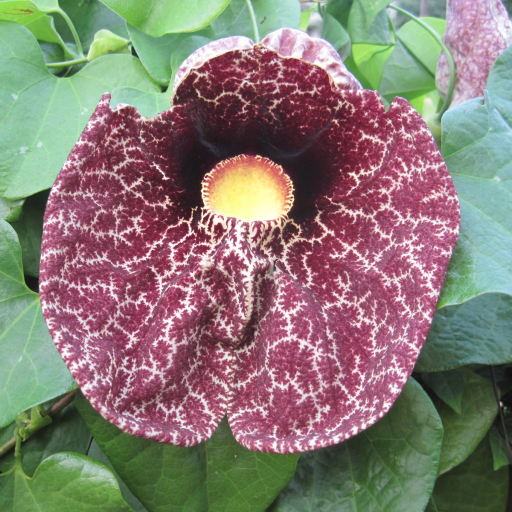
- 🌸 The Flower: A large, heart-shaped bloom that lacks traditional petals; instead, it features a single, broad lobe patterned with intricate maroon and creamy-white mottling, resembling a piece of liver or patterned fabric.
- 🍃 The Foliage: Bright green, kidney-shaped or heart-shaped leaves that grow densely along a slender, twining woody stem.
- 🥨 The "Pipe": Behind the broad face of the flower is a curved, yellowish-green tube that gives the plant its "pipe" nickname.
🏡 In Your Garden
- 🧗 A Vigorous Climber: This vine uses its stems to twine around supports. Because it grows quickly, it requires a sturdy trellis or arbor to prevent it from smothering nearby smaller plants.
- 💧 The "Goldilocks" Humidity: While it loves tropical heat, it appreciates "cool feet"—meaning rich, organic mulch over the roots to keep moisture in while the vines reach for the sun.
- 🪰 The Fly Trap: Don't worry, it's not carnivorous! The plant uses a "trap and release" mechanism. It lures flies into its pipe with a faint scent, holds them overnight to coat them in pollen, and releases them the next day.
⚠️ Safety & Toxicity
- 🚫 High Toxicity: All parts of the Aristolochia elegans contain aristolochic acid, a potent toxin that is extremely harmful if ingested.
- 🐕 Pets and Children: Keep this plant out of reach of curious pets and toddlers. Ingestion can lead to severe kidney damage and is known to be carcinogenic.
- 🦋 The Butterfly Paradox: While it is a host plant for some Swallowtail butterflies, it is actually "evolutionarily deceptive" to others. Some species lay eggs on it thinking it's a food source, but the leaves are toxic to their caterpillars, leading to a 100% mortality rate for those specific larvae.
✨ Fun Fact
The Aristolochia genus name is derived from the Greek words aristos (best) and lochia (childbirth). In ancient times, the "pipe" shape of the flower was thought to resemble a human fetus in the birth canal, leading herbalists to (incorrectly and dangerously) use it to aid in labor.

Detailed Care Instructions
To grow Aristolochia Elegans (also known as Calico Flower or Elegant Dutchman's Pipe), you can follow these steps:
- Climate and location: Aristolochia Elegans thrives in warm climates and prefers full sun or partial shade. Ensure that your location has a temperature range of 65-75°F (18-24°C) year-round.
- Soil: Use well-draining soil with organic matter. The pH level should be slightly acidic to neutral (around 6.0-7.0).
- Planting: Choose a spot with a trellis or support for the vine to climb on. Dig a hole twice as wide and deep as the plant's root ball. Place the plant in the hole, ensuring that it sits at the same level as its previous container. Backfill the hole with soil and gently pat it down.
- Watering: Keep the soil consistently moist but not waterlogged. Water the plant deeply once a week, adjusting the frequency depending on rainfall and temperature. Adding a layer of mulch around the plant can help retain moisture.
- Fertilizer: Feed your Aristolochia Elegans with a balanced slow-release fertilizer in early spring and mid-summer. Follow the instructions on the fertilizer packaging for proper application rates.
- Pruning: Prune the plant in late winter or early spring to remove any dead or damaged branches. You can also trim the plant to control its size and shape.
- Pests and diseases: Aristolochia Elegans is generally pest-resistant. However, keep an eye out for common garden pests such as aphids and spider mites. Treat any infestations with an appropriate insecticide or use natural methods like washing the plant with a strong stream of water or applying neem oil.
- Propagation: You can propagate Aristolochia Elegans through stem cuttings or by division in the spring. Take 4-6 inch cuttings from healthy stems, remove the lower leaves, and plant them in a well-draining potting mix. Place the cuttings in a warm, bright location and keep the soil consistently moist until roots develop.
By following these steps and providing proper care, you can successfully grow Aristolochia Elegans and enjoy its beautiful blooms.

Place in a window with dappled sun or a spot in the middle of a room. Or directly in a window facing west or east.

Aristolochia Elegans requires consistent and moderate watering. When watering the plant, ensure that the soil is moist but not waterlogged. It is advisable to water the plant deeply once a week rather than frequent shallow watering. When the plant is in its active growing period, it may need more frequent watering. However, during the dormant period, watering frequency can be reduced. Overwatering can damage the roots of the plant, so it is important to be cautious and not let the plant sit in water for prolonged periods. Additionally, it is helpful to allow the soil to dry out slightly in between watering cycles.
To fertilize this plant, use a balanced all-purpose fertilizer that is high in phosphorus and potassium. Apply the fertilizer every two weeks during the growing season, which typically runs from late spring to early autumn. Be sure to follow the manufacturer's instructions when applying the fertilizer and use only the recommended amount. Over-fertilization can harm the plant. Water the plant thoroughly after applying fertilizer to help distribute it evenly.
The soil for Aristolochia Elegans plant should be well-draining and loamy. It should contain a balanced mixture of sand, organic matter, and clay. The pH level of the soil should be between 6.0 and 7.5. The soil should have good aeration and water retention properties to promote healthy growth of the plant. The soil should also be free from weeds and pests that can harm the plant. Regular fertilization with a balanced fertilizer will provide the necessary nutrients needed for growth. The plant should be watered regularly, making sure not to overwater, as this can cause root rot. Mulching the soil around the plant will help to retain moisture and protect the plant roots from extreme temperatures.
- Take stem cuttings: Using a sharp, sterilized knife or scissors, cut a section of stem about 6-8 inches long from the parent plant. Make the cut at a diagonal angle. Remove any leaves from the bottom half of the stem.
- Prepare the cuttings: Dip the cut ends of the stems in rooting hormone powder, tapping off any excess.
- Plant the cuttings: Place the cuttings in pots filled with moist, well-draining soil. Make a hole in the soil with a pencil and gently push the stem cutting into the soil, making sure that the buried nodes are covered. Firmly press the soil around the cutting.
- Provide adequate light and humidity: Place the potted cuttings in a bright, indirect light or semi-shade spot. Mist the plants with water regularly to maintain humidity.
- Wait for rooting: Roots should form within 4-6 weeks. Once the cuttings have established roots, you can transplant them into larger pots or your garden.
- Care for the new plants: Aristolochia elegans plants require adequate moisture and well-draining soil. Water regularly, but avoid letting the soil become waterlogged. Provide support for the vines to climb and grow. Watch for pests and treat them immediately.








