Plant Overview
Often called the Dutchman’s Pipe or Guaco, Aristolochia maxima is a vigorous climbing vine that looks like it stepped straight out of a prehistoric jungle. Its name comes from the bizarre, curved flowers that resemble a classic tobacco pipe or a saxophone. While it is prized by collectors for its alien-like blooms, it is a complex plant that balances beauty with a potent chemical defense system.
🔍 How to Identify
- 🍃 Heart-Shaped Foliage: The leaves are large, glossy, and distinctly heart-shaped (cordate), providing a dense, lush green backdrop for the flowers.
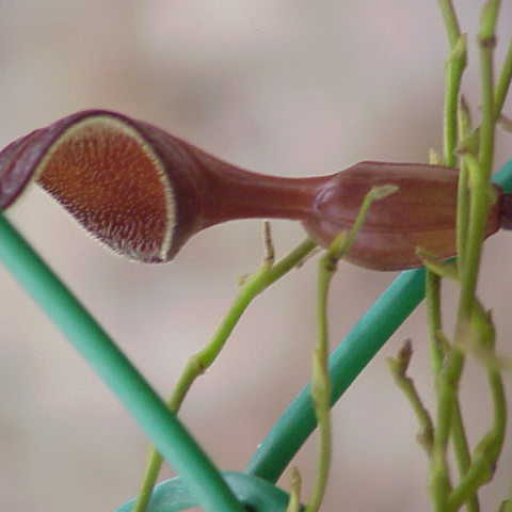
- 🎺 The "Pipe" Flower: The blooms are deep maroon or brownish-purple with intricate creamy veining. They have a characteristic U-shaped tube that flares out into a wide, velvety opening.
- 🥨 Corky Stems: As the vine matures, the lower stems become thick and woody, often developing a rugged, cork-like texture to support its massive weight.
🏡 In Your Garden
- 🏗️ Support is Essential: This is a heavy-duty "liana" (woody vine). It requires a very sturdy trellis, fence, or arbor, as it will aggressively twine around anything it can reach to find the sun.
- 💧 Tropical Appetite: To see those massive blooms, you must mimic the rainforest. It craves high humidity, rich organic soil, and consistent moisture—it hates drying out completely.
⚠️ Safety & Toxicity
- 🚫 Toxic Status: High Toxicity. Every part of this plant contains aristolochic acid, a potent nephrotoxin and carcinogen.
- 🐾 Pets & Kids: It is dangerous if ingested. Keep it away from curious pets and children, as consumption can lead to severe kidney damage. Some people also experience mild skin irritation when pruning the sap.
✨ Fun Fact
- 🦋 The Pollination Prison: Aristolochia flowers aren't just pretty; they are temporary traps! They use a pungent scent to lure flies into the "pipe." Once inside, downward-pointing hairs prevent the fly from leaving until the flower has dusted it with pollen. Only then do the hairs wither, releasing the insect to find another "trap."

Detailed Care Instructions
To grow Aristolochia Maxima plant, also known as Pipevine or Dutchman's Pipe, follow these steps:
- Select a suitable location: Choose a place that receives full to partial sun (about 6-8 hours of sunlight per day). The plant can tolerate a range of soil types, but it prefers well-draining, fertile soil.
- Planting: Plant your Aristolochia Maxima in the spring or fall. Dig a hole slightly larger than the plant's root ball and place the plant in the hole, making sure the top soil line is level with the ground. Fill the hole with soil and gently tamp it down.
- Watering: Keep the soil moist but not waterlogged. Water deeply every 7-10 days or whenever the top inch of soil feels dry. Once established, the plant can tolerate some drought but performs best with consistent moisture.
- Mulching: Apply a layer of organic mulch around the base of the plant to help retain moisture, prevent weed growth, and protect the roots. Avoid putting mulch directly against the stem to avoid rot.
- Fertilizing: Use a balanced, slow-release fertilizer in spring to promote healthy growth. Follow the instructions on the fertilizer package for the appropriate amount to use.
- Support: Aristolochia Maxima is a vine that requires support to grow and climb. Install a trellis, arbor, or provide a fence or other structure for the plant to climb on. Tie the vines loosely to the support system as they grow.
- Pruning: Prune the plant as needed to control its size, remove dead or damaged branches, or shape it. The best time to prune is in late winter or early spring before new growth begins.
- Pests and diseases: The Aristolochia Maxima plant is generally resistant to pests and diseases, but occasionally aphids or spider mites can be a problem. Regularly inspect the leaves for any sign of damage or infestation, and if necessary, use an organic or chemical insecticide to control the pests.
- Propagation: The plant can be propagated through stem cuttings or layering. Take a healthy stem cutting with at least two nodes and remove the lower leaves. Place the cutting in a well-draining potting mix and keep it warm and moist until roots develop.
By following these steps, you can successfully grow Aristolochia Maxima plant and enjoy its unique flowers and foliage in your garden.
The plant should be watered thoroughly once a week, providing enough water to saturate the soil. The soil should be allowed to dry out slightly between waterings, but not so much that the plant wilts or becomes stressed. Avoid over-watering, as this can lead to root rot and other problems. When watering, it is important to water around the base of the plant, rather than directly on the leaves or flowers, to prevent damage or disease. It is also important to avoid getting water on the foliage during hot, sunny weather, as this can cause scorching and other problems. Use a watering can or hose with a gentle spray attachment to water the plant evenly and avoid damaging the soil or roots.
To fertilize the Aristolochia Maxima plant, use a balanced fertilizer with equal parts nitrogen, potassium, and phosphorus. Apply the fertilizer in early spring when new growth emerges and again before the flowering season. Be sure not to over-fertilize as it can lead to weak growth and root burn. Water the plant thoroughly after fertilizing.
The ideal soil for Aristolochia Maxima should be nutrient-rich, well-draining, and moist. The recommended pH range is slightly acidic to neutral, between 6.0 and 7.0. It is important to avoid soils that are too heavy or clayey, as this can lead to waterlogging and root rot. Adding compost, well-rotted manure, or other organic amendments can improve soil quality and fertility. During planting, it is recommended to mix the soil with coarse sand or perlite to improve drainage. Additionally, regular fertilization with a balanced, slow-release fertilizer can promote healthy growth and flowering.
To propagate this plant, you will need to obtain stem cuttings that are at least 6 inches long. Make sure to use a sharp, sterile cutting tool when obtaining the cuttings to prevent disease or injury to the plant.
Once you have your cuttings, remove the leaves from the bottom third of the stem, leaving only a few leaves at the top. Dip the cut end of the stem in rooting hormone, which will help encourage the development of roots.
Next, prepare a potting mix that is well-draining and contains a mixture of soil and perlite or sand. Plant the cuttings in the potting mix, making sure that the bottom two-thirds of the stem is buried in the soil.
Water the cuttings thoroughly, and place them in a warm, humid location that receives bright, indirect light. Keep the soil moist but not waterlogged, and avoid exposing the cuttings to direct sunlight or extreme temperatures.
After a few weeks, the cuttings should start to develop roots. You can check for this by gently tugging on the stem – if you feel some resistance, it means that roots have formed.
Once the cuttings have established roots, you can transplant them to larger pots or outdoors in a suitable location. With proper care and maintenance, your newly propagated Aristolochia Maxima plant will grow and thrive!








