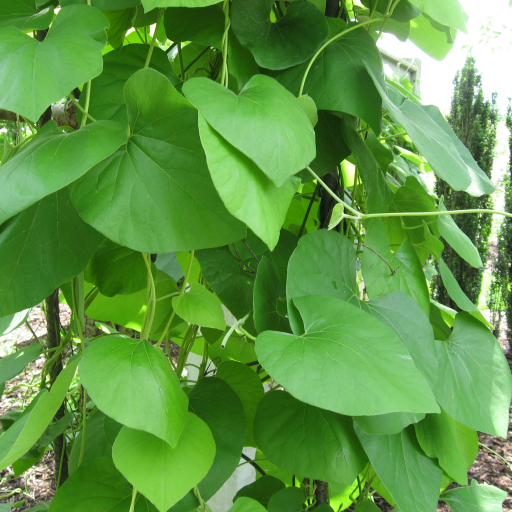
Plant Overview
Often called the Woolly Pipevine, this vigorous climber looks like something plucked from a Victorian greenhouse. Known for its curious, curved flowers that mimic a traditional tobacco pipe, it creates a lush, jungle-like curtain of green in any landscape. Beyond its ornamental beauty, it serves as a vital "nursery" for one of North America’s most stunning butterflies.
🔍 How to Identify
- 🍃 Large Foliage: Huge, heart-shaped (cordate) leaves that can grow up to 8 inches wide, overlapping to create a dense, shingled appearance.
- ☁️ The "Woolly" Coat: True to its name, the young stems and leaf undersides are covered in a soft, velvety white fuzz (tomentum).
- 🎷 The "Pipe" Flower: Small, U-shaped flowers that are yellowish-green with a dark purple or brown "throat." They often hide discreetly beneath the large leaves.
🏡 In Your Garden
- 🧗 Heavyweight Climber: This is a powerful, woody twining vine. Because it lacks tendrils, it needs a sturdy structure like a heavy-duty trellis, pergola, or chain-link fence to wrap its stems around.
- 🦋 Butterfly Buffet: This plant is the primary host for the Pipevine Swallowtail butterfly. Don't be alarmed if you see caterpillars munching on the leaves—this is a sign of a healthy garden ecosystem!
- 🌿 Privacy Screen: Due to its rapid growth and overlapping leaves, it is an excellent choice for creating a living "green wall" to block out neighbors or unsightly views.
⚠️ Safety & Toxicity
- 🚫 Toxic if Ingested: The entire plant contains aristolochic acid, a potent chemical that is highly toxic and carcinogenic to humans and mammals.
- 🐾 Pet Warning: Keep this plant away from curious dogs, cats, or horses. Ingestion can lead to severe kidney damage or failure. It is strictly ornamental and should never be used in herbal teas.
✨ Fun Fact
The Pipevine Swallowtail caterpillar is a master of chemical warfare. By eating the Aristolochia tomentosa leaves, it absorbs the plant's toxins into its own body. This makes the caterpillar—and the eventual butterfly—taste so bitter and toxic that birds learn to avoid them after just one bite!

Detailed Care Instructions
To grow Aristolochia tomentosa plants, also known as Dutchman's pipe or pipevine, follow these steps:
- Time and location: Select a suitable planting time and location. Aristolochia tomentosa is a deciduous vine that prefers full sun to partial shade and can be planted in USDA hardiness zones 5-9. It can be grown outdoors or in a greenhouse.
- Soil preparation: Prepare a well-draining soil mix for the plant. Amend the soil with organic matter like compost to improve fertility and drainage.
- Propagation: Aristolochia tomentosa can be propagated from seeds, stem cuttings, or rhizome division. If starting from seeds, soak them overnight before planting to enhance germination rates. If using stem cuttings, take a 4-6 inch long cutting from a healthy plant, remove the lower leaves, and place it in a pot filled with a well-draining rooting medium. Keep it moist until roots develop.
- Planting: Dig a hole in the prepared soil that is large enough to accommodate the plant's root system. Place the plant in the hole at the same depth as it was in the container or propagating medium. Backfill the hole and gently firm the soil around the roots.
- Support: Provide a strong support structure for the vine to climb on, such as a trellis, fence, or arbor. Ensure the structure can handle the weight of the vine as it grows.
- Watering: Water consistently, keeping the soil consistently moist but not waterlogged. Avoid overwatering as it can lead to root rot.
- Pruning: Prune the plant annually to maintain its shape and size. It can be pruned in late winter or early spring before new growth begins.
- Fertilization: Fertilize the plant once or twice a year in early spring and midsummer. Use a balanced, slow-release fertilizer or compost to provide necessary nutrients.
- Pest and disease control: Monitor the plant for common pests like aphids, spider mites, or caterpillars, and take appropriate measures if an infestation occurs. Watch out for diseases like powdery mildew or leaf spot and treat accordingly.
- Winter care: In colder regions, protect the plant during freezing temperatures by covering it with a layer of mulch or bringing potted plants indoors. Remove the protective cover once the danger of frost has passed.
By following these steps, you can successfully grow Aristolochia tomentosa plants and enjoy their unique flowers and interesting foliage.

Place in a window with dappled sun or a spot in the middle of a room. Or directly in a window facing west or east.

To water this plant, ensure that the soil is completely dry before providing water. Once the soil is dry, water the plant slowly and deeply to ensure that the water reaches the roots. Avoid getting the leaves or stem wet, as this can cause damage to the plant. Use room temperature or lukewarm water, and ensure that excess water drains out of the pot to prevent waterlogging. Water the plant less frequently during the winter months when it enters a dormant state.
To fertilize this plant, first make sure it is well watered. Then, use a balanced fertilizer with equal amounts of nitrogen, phosphorus, and potassium. Apply the fertilizer once every two weeks during the growing season, reducing the frequency to once a month during the dormant period. Dilute the fertilizer with water according to the manufacturer's instructions and apply it to the soil around the base of the plant, avoiding the leaves.
It is recommended to use a well-draining soil mixture that is rich in organic matter and slightly acidic in pH. A mixture of one part peat moss, one part coarse sand or perlite, and one part composted bark or leaf mold is ideal. Avoid using heavy, clayey soils as they tend to retain excess moisture and can lead to root rot. Additionally, it is suggested to amend the soil with a slow-release fertilizer that is high in phosphorus to promote root growth and enhance flower production. Care should be taken to avoid over-fertilization, which can lead to leaf burn and other issues.
Aristolochia Tomentosa plant can be propagated through stem cuttings or by layering. When propagating through stem cuttings, select a stem that is 4-6 inches in length and has at least two nodes. Remove the lower leaves and dip the cut end in rooting hormone powder. Plant the stem cutting in a pot filled with well-draining soil, and keep the soil slightly moist while the cutting is establishing its roots.
To propagate the plant through layering, select a healthy stem that is near the ground and bend it down to the soil surface. Make a small cut on the underside of the stem, and dust the wound with rooting hormone. Then, bury the wounded area under a few inches of soil. Keep the soil moist while the roots develop. Once roots have formed, the new plant can be separated from the parent plant and potted up on its own.








