Plant Overview
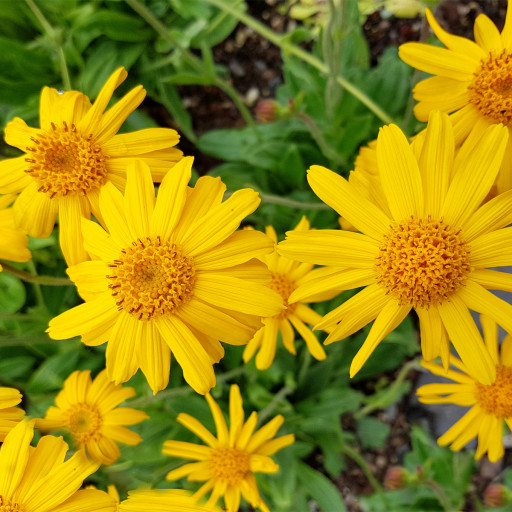
Often called "Wolf's Bane" or "Mountain Tobacco," Arnica montana is a golden-yellow alpine treasure that has been a staple in European folk medicine for centuries. It thrives in the thin, crisp air of high-altitude meadows, standing as a resilient symbol of mountain beauty. While it looks like a cheerful daisy, its sunny disposition hides a potent chemical profile that has earned it a permanent spot in the world of natural recovery.
🔍 How to Identify
- 🌼 The Blooms: Look for large, daisy-like flower heads (about 2 inches wide) with slightly "disheveled" or ragged bright yellow-orange petals and a darker, golden-orange center.
- 🌱 The Foliage: At the base, it features a flat rosette of oval, fuzzy, "toothed" leaves that feel slightly sticky to the touch due to glandular hairs.
- 📏 The Stem: A single, upright, and hairy stalk that typically grows between 1 to 2 feet tall, usually supporting one to three flower heads.
🏡 In Your Garden
- ⛰️ The Alpine Specialist: This isn't your average garden perennial. It craves the specific conditions of the Alps—cool summers, high humidity, and nutrient-poor, acidic soil. It often struggles in hot, humid lowland gardens or heavy clay.
- 🚫 Root Sensitivity: Arnica develops a creeping rhizome system and is notoriously sensitive to being moved. It "hates" being transplanted; if you are growing it from seed, ensure you choose a permanent spot with excellent drainage to avoid root rot.
⚠️ Safety & Toxicity
- 🚫 Toxic if Ingested: Unlike its cousin Chamomile, Arnica is strictly not for tea. Ingesting the plant can cause severe heart palpitations, internal bleeding, and digestive distress.
- 👶 Skin Sensitivity: While famous as a topical ointment for bruises, the raw plant can cause "Arnica dermatitis"—a painful rash or blistering—in children, pets, or those with sensitive skin. Always wash your hands after handling the fresh flowers.
✨ Fun Fact
- 🐐 The Falling Goat: European mountain legends say that shepherds first discovered Arnica's properties by watching chamois (mountain goats). After a fall or a tumble down a rocky slope, the goats were observed climbing to high ridges specifically to seek out and eat Arnica to help heal their bruised bodies.

Detailed Care Instructions
| Humidity | Normal |
| Difficulty | Easy |
| Hibernation | Cold Period |
| Temperature | 19°C - 30°C |
| Hardiness Zones | 5 - 9 |
To grow Arnica Montana plant, you can follow these steps:
- Start with good quality seeds or young starter plants. You can purchase them from nurseries or online seed suppliers.
- Choose a suitable location for planting. Arnica Montana prefers partial shade to full sun, so select a spot that receives 4-6 hours of direct sunlight per day.
- Prepare the soil by removing any weeds or grass and loosen it using a garden fork or hoe. Ensure the soil has good drainage.
- If you have seeds, sow them directly into the soil in spring or early summer, just barely covering them with a thin layer of soil. If using starter plants, dig a hole in the soil slightly larger than the root ball and place the plant in it.
- Water the plants well after planting and keep the soil consistently moist, but not soggy, during the growing season.
- Mulch the area around the plants to prevent weed growth, conserve moisture, and regulate soil temperature.
- Fertilize with a balanced organic fertilizer once or twice during the growing season, following the instructions on the product's label.
- Due to its long taproot, avoid transplanting Arnica Montana once it is established as it can cause damage to the plant.
- Prune the plant lightly after flowering to shape it and remove any dead or damaged parts.
- In temperate climates, Arnica Montana plants go dormant in winter. Protect them from extreme cold by covering them with a layer of straw or mulch to insulate the roots.
- In the following year, your Arnica Montana plant should start blooming. Enjoy the beautiful yellow flowers and use them for various herbal applications, with caution and following proper guidelines.
Remember, Arnica Montana is a protected and endangered species in some areas, so it's always best to check with your local authorities before growing or harvesting it.

Place in a bright room that is sun drenched almost all day. Or directly in a south-facing window.

To water this plant, it is important to first check the soil moisture level before adding any water. The topsoil should be allowed to dry out before watering again, as overwatering can cause root rot. When watering, it is best to use distilled or rainwater, as tap water may contain minerals that can harm the plant. The water should be added liberally to the base of the plant, ensuring that it reaches the roots. However, care should be taken not to wet the leaves as this can lead to fungal growth. In dry weather conditions, the plant may require more frequent watering, but in cooler temperatures, watering should be reduced. It is also important to allow excess water to drain away from the soil to prevent waterlogging.
To fertilize Arnica Montana, it is recommended to follow these instructions:
- Choose a balanced, slow-release fertilizer with an N-P-K ratio of around 10-10-10 or 15-15-15.
- Apply the fertilizer in early spring, just as new growth begins to emerge.
- Use a granular fertilizer and sprinkle it evenly around the base of the plant, avoiding direct contact with the stems or foliage.
- Gently work the fertilizer into the top layer of soil using a rake or hand tool.
- Water the plant after fertilizing to ensure the nutrients penetrate the soil and reach the roots.
- Avoid over-fertilizing, as it can lead to excessive vegetative growth or decreased flower production.
- It is generally recommended to fertilize Arnica Montana once a year in the spring, but if the plant seems weak or lacks vigor, a mid-summer application may be beneficial.
- Monitor the plant's response to the fertilizer and adjust the amount or frequency if necessary.
- Remember to always read and follow the instructions provided by the specific fertilizer product you choose.
Arnica Montana, a plant belonging to the Asteraceae family, prefers well-draining soil that is rich in organic matter. The soil should have a slightly acidic to neutral pH ranging from 6.0 to 7.0. The plant grows best in loamy soil with a good mixture of sand, silt, and clay. The ideal soil texture should be crumbly, with good aeration and drainage. The soil should be prepared by mixing compost or aged manure to improve the soil structure and fertility. It is important not to over-fertilize the soil, as this can lead to excessive leaf growth and reduced flower production. Additionally, the plant prefers a consistently moist soil but can also tolerate periods of drought. Overall, choosing the appropriate soil for Arnica Montana is crucial for promoting healthy growth and blooming.
Arnica Montana is a perennial herbaceous plant that can be propagated through several methods, such as division, seeds, or stem cuttings. Here is a detailed explanation of how to propagate Arnica Montana:
- Division: This method involves carefully separating the rooted clumps of Arnica Montana into smaller sections. Here's how to do it:
a. Choose a healthy mature plant that has several stems and a well-developed root system.
b. Dig around the plant to expose the roots, ensuring you don't damage them.
c. Gently separate the clumps by cutting through the root system with a sharp and sterile knife or garden tool.
d. Make sure each separated clump has a healthy amount of roots and stems.
e. Replant the divisions in well-draining soil, leaving enough space between them to promote proper growth.
- Seed Propagation: Another way to propagate Arnica Montana is through seeds. Here's a step-by-step guide:
a. Collect ripe flowers or seed heads from a mature Arnica Montana plant.
b. Carefully remove the seeds from the flowers or seed heads and place them in a paper bag or envelope.
c. Store the seeds in a cool, dry place for about two weeks to allow them to fully dry.
d. Prepare a seed tray or small pots filled with a well-draining potting mix.
e. Sow the seeds on the surface of the soil, ensuring they are evenly spaced and not overcrowded.
f. Lightly press the seeds into the soil, but do not bury them too deep.
g. Mist the soil to keep it slightly moist, and cover the tray or pots with a clear plastic bag or plastic wrap to create a greenhouse effect.
h. Place the tray or pots in a warm area with indirect sunlight.
i. Germination usually takes around two to four weeks.
j. Once the seedlings have grown several leaves and are strong enough to handle, they can be transplanted into individual pots or directly into the garden.
- Stem Cuttings: This method involves taking cuttings from a mature Arnica Montana plant and rooting them to develop new plants. Here's how to do it:
a. Select a healthy stem from the plant that is not flowering. It should preferably be a side shoot.
b. Using clean and sharp pruning shears, cut a 3-4 inch section of the stem just below a leaf node.
c. Remove the lower leaves from the cutting, leaving a few leaves at the top.
d. Dip the cut end of the stem into a rooting hormone powder or gel to promote root growth (optional).
e. Prepare a small pot filled with a well-draining potting mix or a mix of perlite and peat moss.
f. Make a small hole in the potting mix and insert the cutting, ensuring it is buried about an inch deep.
g. Firmly press the soil around the cutting to secure it.
h. Place the pot in a warm and bright location, avoiding direct sunlight.
i. Keep the soil slightly moist, but be careful not to overwater as it may cause rotting.
j. After a few weeks, the cutting should begin to develop roots. You can gently tug on it to check for resistance, indicating root growth.
k. Once the cutting has established roots, it can be transplanted into a larger pot or directly into the garden.
Remember to provide proper care and maintenance to the newly propagated Arnica Montana plants to ensure their healthy growth.
Common pests of the mountain tobacco include Spider mites, aphids, thrips, whiteflies. Make a habit of checking your mountain tobacco frequently for pests so that any infestations can be caught and managed early.








