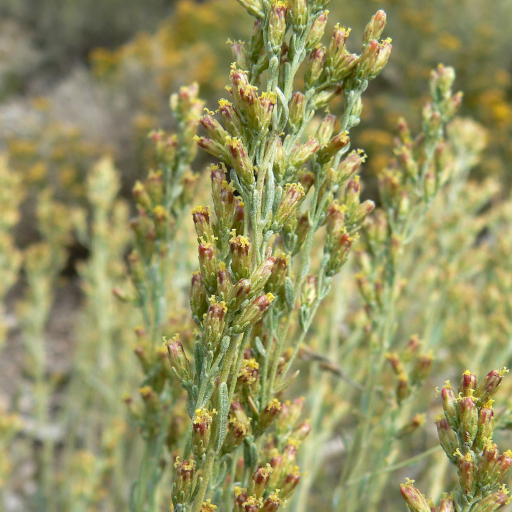
Plant Overview
Often called the Black Sagebrush, this resilient shrub is a stoic survivor of the American West’s high deserts. While it looks like a miniature, more "moody" version of its famous cousin, Big Sagebrush, it is highly prized for its intense aromatic oils. In the wild, it forms vast, dark carpets across rocky plains, providing a vital winter lifeline for desert wildlife.
🔍 How to Identify
- 🌿 The Foliage: The leaves are tiny, wedge-shaped, and usually have three distinct blunt teeth at the tips. Unlike many silvery sagebrushes, these leaves are a deep, dark green.
- ✨ The Sheen: If you look closely or touch the leaves, they feel sticky. This is due to glandular hairs that secrete potent, shiny resins.
- 👃 The Scent: It possesses one of the strongest "sage" aromas in the wild—pungent, medicinal, and earthy, especially after a rainstorm.
- 🌼 The Flowers: In late summer, it produces inconspicuous brownish-yellow flower heads that stand upright on brownish stalks.
🏡 In Your Garden
- 🪨 The "Scrappy" Specialist: This plant thrives where others fail. It prefers shallow, rocky, or calcareous soils. If you have a "problem area" in a xeriscape garden with poor soil and intense sun, this is your champion.
- 💧 Dry Roots Only: Its biggest weakness is "wet feet." It has evolved for the high desert; excessive watering or heavy clay soil that holds moisture will lead to root rot almost overnight.
- 🦌 Wildlife Magnet: If you are gardening to support local ecology, this is a top-tier choice. it provides essential winter forage for pronghorn and is a nesting site for various desert birds.
⚠️ Safety & Toxicity
- 🟢 Status: Generally safe to handle, but use caution with ingestion.
- 🐾 Details: Like many members of the Artemisia genus, it contains volatile oils (including thujone). While not considered "deadly," it can cause digestive upset in dogs, cats, or horses if consumed in significant quantities. The sticky resin can also be a mild skin irritant for those with sensitive skin.
✨ Fun Fact
The "Black" in its common name doesn't just refer to the dark green leaves. During the winter or after rain, the dark stems and deep foliage make the entire landscape appear dark or black from a distance, distinguishing it from the "Silver" Big Sagebrush plains.

Detailed Care Instructions

Place in a bright room that is sun drenched almost all day. Or directly in a south-facing window.

When the top few inches of soil dry out, water your plants. If the top few inches of soil are still moist, do not water your plant. Wait a few days, then poke your finger into the soil to see if anything has changed. Overwatering poses a disease risk, such as the development of fungal diseases in the roots. These plants have adaptations in there leaves that allow them to survive in low water supply.








