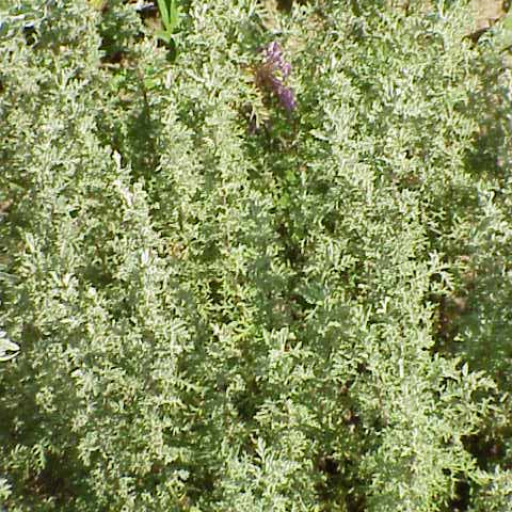
Plant Overview
Often referred to as Roman Wormwood or "Little Wormwood," Artemisia pontica is the elegant, more refined cousin of the common wormwood. While its relatives are often rugged and wild, this species is prized for its feathery, silver-grey foliage that looks like delicate lace. Historically, it earned its fame not in the garden, but in the glass—it is a primary botanical used to flavor traditional Vermouth and Absinthe, providing a subtle, aromatic bitterness that defined the "Pontique" style of spirits.
🔍 How to Identify
- 🌿 The Foliage: The leaves are exceptionally fine, twice-pinnatifid (deeply lobed), and covered in soft, silvery-grey hairs that give the plant a shimmering, frosted appearance.
- 🌼 The Blooms: In late summer, it produces small, nodding, globular flower heads that are a muted yellowish-white. They are subtle and held in narrow, leafy clusters.
- 📏 The Stature: Unlike the tall, lanky common wormwood, the Roman variety stays relatively compact, usually reaching about 15 to 30 inches in height, forming a dense, shrubby mound.
🏡 In Your Garden
- ☀️ Sun & Drainage: This plant is a sun-worshipper. It thrives in poor, well-drained soil; in fact, if the soil is too rich or moist, the plant may lose its silver luster and become "floppy" or prone to root rot.
- 🏃 The Runner: Be mindful of its footprint. Artemisia pontica spreads via underground rhizomes. While it makes an excellent groundcover for difficult, dry slopes, it can become invasive in a small garden bed if not contained by a border or pot.
- ✂️ Pruning Needs: To keep it looking neat and silvery, it’s best to cut the plant back significantly in early spring to encourage fresh, vigorous new growth.
⚠️ Safety & Toxicity
- 🚫 Status: Low toxicity via touch, but caution is required for ingestion.
- 🐾 Pet & Child Safety: Like most members of the Artemisia genus, it contains thujone. While used in tiny amounts for flavoring spirits, it is toxic to cats, dogs, and horses if eaten in quantity.
- 🤚 Skin Sensitivity: Some gardeners may experience "Compositae dermatitis"—a mild skin rash—after handling the foliage without gloves.
✨ Fun Fact
Despite its name "Roman Wormwood," the plant actually originated in Southeastern Europe and Central Asia. It earned the "Roman" moniker because it was heavily cultivated in Italy for the early vermouth industry, where it was considered the highest quality bittering agent available.

Detailed Care Instructions
To grow Artemisia Pontica, also known as Roman Wormwood or Small Pontic Wormwood, follow these steps:
- Find a suitable location: Artemisia Pontica thrives in full sun to partial shade. It prefers well-draining soil, preferably sandy or loamy soil with a pH level between 6 and 7.
- Prepare the soil: Before planting, loosen the soil and remove any weeds or rocks. Incorporate organic matter like compost or aged manure to improve soil fertility and drainage.
- Planting method: Artemisia Pontica can be grown from seeds or cuttings. If using seeds, sow them about 1/8 inch deep in rows or scattered directly on the prepared soil. If using cuttings, take 4-6 inch stem cuttings from a healthy plant and plant them in the prepared soil, ensuring that the lower leaves are removed and the cutting is placed deep enough to stabilize it.
- Watering: Initially, keep the soil evenly moist until the plant is established. After that, Artemisia Pontica is fairly drought-tolerant and only needs occasional watering, particularly during prolonged dry spells.
- Mulching: Applying a layer of organic mulch, such as straw or wood chips, around the plants can help conserve moisture and suppress weed growth.
- Maintenance: Artemisia Pontica is generally low maintenance. Prune or pinch back the plant in early spring to encourage bushier growth. Remove any dead or damaged stems throughout the growing season.
- Fertilization: Artemisia Pontica doesn't require heavy fertilization. A light application of balanced fertilizer in spring is sufficient. Alternatively, use compost or organic fertilizers to provide nutrients.
- Pests and diseases: This plant is relatively resistant to pests and diseases. However, it may occasionally be attacked by aphids or spider mites. Monitor the plant regularly and treat as necessary using organic pest control methods.
- Harvesting: The leaves of Artemisia Pontica can be harvested once the plant reaches about 12-16 inches in height. Cut the stems at ground level, leaving some stalks behind to encourage regrowth.
By following these guidelines, you can successfully grow Artemisia Pontica in your garden or container.

Place in a bright room that is sun drenched almost all day. Or directly in a south-facing window.

Artemisia Pontica plant requires moderate watering, ensuring that its soil remains moist but well-drained. You need to water the plant regularly, especially during warmer months or if it's grown in a dry environment. Make sure the topsoil is dry before watering, and apply the water slowly and evenly to the base of the plant.
Over-watering can cause root rot and eventually kill the plant, so it's crucial to avoid watering excessively. In colder months, reduce watering and let the soil dry out slightly between waterings. Similarly, when growing in humid environments, be careful not to water the plant excessively.
In addition to watering, ensure that the plant is given enough sunlight, proper drainage, and adequate nutrition to thrive. Fertilize the plant every 3-4 weeks in the growing season. Cut back old or damaged foliage to promote healthy growth and prevent pest and disease issues.
- Prepare a well-draining soil mix.
- Use a balanced fertilizer, such as a 10-10-10 or 20-20-20 blend.
- Apply fertilizer sparingly, as Artemisia Pontica is a low-maintenance plant.
- Spread a thin layer of fertilizer around the base of the plant.
- Water lightly after fertilizing to help the nutrients seep into the soil.
- Fertilize once every three to four months during the growing season (spring to fall).
- Avoid over-fertilizing as it can cause damage to the plant.
Artemisia Pontica is a type of perennial plant that belongs to the Asteraceae family. It prefers well-drained soil that is rich in organic matter with a pH range between 6.0 and 8.0. The ideal soil type for this plant is sandy or loamy soil that is slightly acidic to neutral. The soil should also have good water retention to prevent the plant from drying out. It is recommended to supplement the soil with organic matter such as compost or well-rotted manure to improve soil health and provide essential nutrients for the plant's growth. Heavy or clay soils should be avoided as they do not drain well and may cause root rot. Before planting, it is essential to loosen the soil and remove any weeds or debris to provide an optimal growing environment for Artemisia Pontica.
Artemisia Pontica plant can be propagated by various methods such as seed propagation, division, and stem cuttings.
Seed propagation: Collect mature seeds from the Artemisia Pontica plant and sow them in well-draining soil. Keep the soil moist and place the seed tray in a spot with indirect sunlight. The seeds will take a few weeks to germinate and once they have grown a few inches tall, they can be transplanted to a permanent location.
Division: Divide an established Artemisia Pontica plant during its dormant period. Dig out the plant and gently separate the roots into sections. Replant each section in a well-drained soil mix.
Stem cuttings: Take stem cuttings from the Artemisia Pontica plant during its growing season. Cut a stem with several leaves and remove the bottom leaves. Dip the end of the stem in rooting hormone and plant it in moist, well-draining soil. Keep the soil moist and warm until the stem has rooted and new growth appears.
After propagating Artemisia Pontica, plant it in a spot with well-draining, humus-rich soil and provide it with sufficient water and full to partial sunlight.








