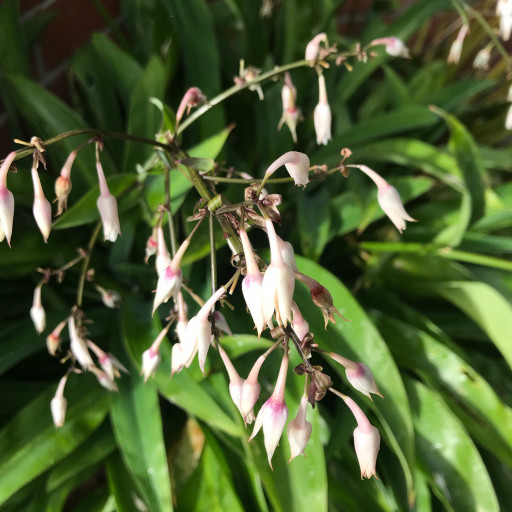
Plant Overview
Known affectionately as the Renga Renga Lily or New Zealand Rock Lily, this hardy evergreen is a coastal superstar from the shores of Aotearoa. It is famous for its ability to brighten up the darkest, driest corners of a garden with its fountain-like foliage and delicate, starry blossoms. Despite its elegant, "soft" look, it is an incredibly resilient survivor that feels right at home clinging to rocky cliffs.
🔍 How to Identify
- 🍃 Foliage: It features broad, sword-shaped leaves that arch gracefully from the base, forming lush, pale-green clumps that can reach up to a meter wide.
- 🌸 Blooms: In late spring and summer, it sends up tall, branched stems topped with airy clusters of white, star-shaped flowers.
- 🧬 The "Curls": If you look closely at the center of the flower, the stamens have distinct tri-colored appendages (purple, yellow, and white) that curl at the ends—this "curly" trait is exactly what its Latin name cirratum refers to.
🏡 In Your Garden
- ⛱️ Shade Specialist: This plant is a "problem solver" for dry shade. While many plants struggle to grow under the canopy of large trees where light is low and roots compete for water, the Renga Renga thrives.
- 🐌 The Snail Buffet: Its only true weakness is its popularity with gastropods. Snails and slugs find the fleshy leaves delicious, so you may need to provide some protection in the early spring to prevent the plant from looking like Swiss cheese.
- ❄️ Frost Sensitivity: While it handles drought like a pro, it is sensitive to heavy frost. If you live in a colder climate, it’s best planted in a sheltered spot or a container that can be moved.
⚠️ Safety & Toxicity
- ✅ Status: Generally non-toxic and safe for home gardens.
- 🐾 Pets & Kids: Unlike "True Lilies" (Lilium), which are famously deadly to cats, the Renga Renga Lily is not known to be toxic. However, as with any ornamental plant, keep an eye on curious pets, as munching on fibrous leaves can still cause mild digestive upset.
✨ Fun Fact
🍲 The Ancient Snack: The Māori people traditionally cultivated the Renga Renga Lily near their settlements. They would slow-cook the thick, fleshy rhizomes (roots) in an earth oven known as a hāngī, turning the bitter root into a source of starch!

Detailed Care Instructions
To grow Arthropodium Cirratum plants, also known as Renga Lily or New Zealand Rock Lily, you can follow these steps:
- Location: Choose a location that receives partial shade to full sun. These plants can tolerate a range of light conditions but prefer some shade in hot climates.
- Soil: Use well-draining soil that is rich in organic matter. Arthropodium Cirratum plants prefer slightly acidic to neutral soil pH.
- Watering: Water the plant moderately, keeping the soil moist but not overly wet. These plants prefer slightly dry conditions rather than being constantly wet.
- Propagation: You can propagate Arthropodium Cirratum plants by dividing the clumps in early spring. Dig up the plant, carefully divide the clumps using a sharp knife, and replant the divisions in separate containers or garden beds.
- Planting: Plant the divisions or nursery-bought plants in the prepared soil at the same depth they were growing previously.
- Mulching: Apply a layer of organic mulch around the plant to help retain moisture, regulate soil temperature, and suppress weed growth.
- Fertilization: Feed the plants with a balanced, slow-release fertilizer in early spring. Follow the instructions on the fertilizer package for dosage and application.
- Pruning: Prune back any dead or damaged foliage to maintain the plant's appearance and overall health. It's best to do this in late winter or early spring before new growth starts.
- Pests and diseases: Arthropodium Cirratum plants are generally pest and disease-resistant. However, watch out for slugs, snails, or aphids. If needed, treat the plant with appropriate organic or chemical remedies.
- Overwintering: These plants are hardy in USDA zones 7-11. In colder regions, consider protecting the plant with a layer of mulch or moving container-grown plants indoors during the winter months.
Remember to regularly monitor the plant's growth, water requirements, and overall health. With proper care, your Arthropodium Cirratum plant should thrive and produce beautiful flowers.

Place in a bright room that is sun drenched almost all day. Or directly in a south-facing window.

When providing hydration to this particular plant, it is best to avoid watering the foliage directly and instead aim for the soil. The selected watering method should allow for even distribution and avoid creating pools of standing water at the base. It is crucial to avoid overwatering, so make sure to only water when the soil feels dry to the touch. When watering, do not allow water to accumulate in the drainage dish underneath the pot as this can lead to root rot. In dry or warm environments, it may be necessary to water more frequently. The plant can benefit from occasional misting to boost humidity levels in the surrounding air, but this should not replace the need for proper watering.
To fertilize an Arthropodium Cirratum plant, follow these instructions:
- Choose a balanced, water-soluble fertilizer formulated for houseplants or flowering plants.
- Dilute the fertilizer according to the package instructions. Generally, a ratio of 1 teaspoon of fertilizer per gallon of water is appropriate for indoor plants.
- Water the plant thoroughly before applying fertilizer to ensure the soil is evenly moist.
- Pour the diluted fertilizer solution evenly around the base of the plant, avoiding getting it on the leaves or stems.
- Allow the excess fertilizer solution to drain out of the drainage holes in the pot.
- Repeat the fertilizing process every two to four weeks during the growing season, typically spring and summer.
- Reduce frequency to once a month during the winter months, as the plant's growth slows down.
- Monitor the plant for any signs of over-fertilization, such as leaf burn or wilting. If these occur, flush the soil with plain water to remove any excess fertilizer.
- Follow the manufacturer's guidelines and adjust the fertilizing schedule as necessary based on the specific brand and type of fertilizer used.
Arthropodium Cirratum plant thrives well in well-draining soil that is rich in organic matter. The soil should be moist but not waterlogged and preferably slightly acidic with a pH range of 5.5 to 6.5. A mixture of loamy soil, sand, and organic compost is ideal for this plant. It is also important to ensure that the soil is not compacted to allow proper root penetration and aeration. Additionally, adding a layer of organic mulch around the plant helps to retain moisture and suppress weeds.
To propagate Arthropodium Cirratum plant, one can use a few different methods:
- Division: Start by carefully digging up an established plant, making sure to preserve its root system. Gently separate the plant into smaller sections, ensuring that each division has a healthy amount of roots and shoots. Replant the divisions in separate containers or directly into the garden, ensuring adequate moisture and light.
- Stem cuttings: Select a healthy stem from the parent plant, preferably one that is semi-hardwood. Using a clean and sharp knife or pair of pruning shears, cut a 4-6 inch section from the stem. Remove any lower leaves, leaving only a few leaves at the top. Dip the cut end in a rooting hormone powder to promote root development. Plant the cutting in a well-draining potting mix or a mixture of peat and sand. Keep the soil moist, place the cutting in a warm and brightly lit area, and ensure high humidity to encourage root growth.
- Sowing seeds: Collect ripe or mature seeds from the parent plant. Clean and dry the seeds before sowing them in a well-draining seed-starting mix. Lightly cover the seeds with a thin layer of soil or vermiculite. Maintain a warm and humid environment, ideally using a propagator or a plastic cover to create a mini greenhouse effect. Keep the soil consistently moist but not soaked. Germination typically takes a few weeks, and once the seedlings have developed a few leaves, they can be transplanted into individual pots or directly into the garden.
Regardless of the propagation method chosen, it is essential to provide proper care and attention to the newly propagated plants by ensuring adequate water, light, and temperature conditions. Regularly monitor their progress and make adjustments as needed.
Common pests of the rock-lily include Scale insect, mealybugs, spider mites, fungus gnats, aphids, thrips, whiteflies. Make a habit of checking your rock-lily frequently for pests so that any infestations can be caught and managed early.








