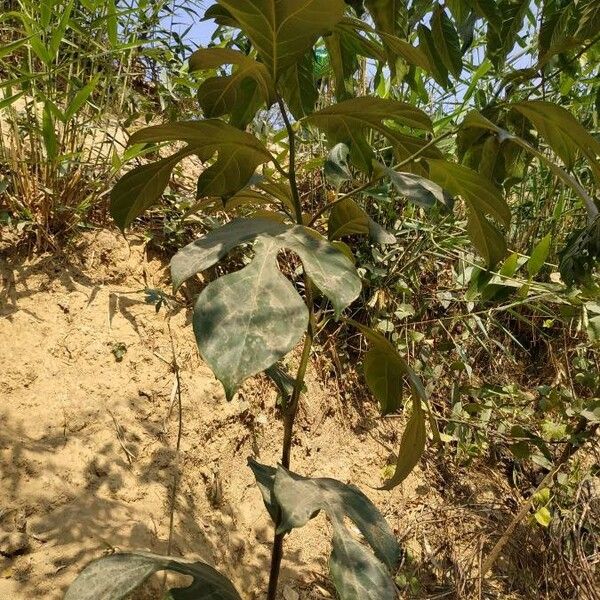
Plant Overview
Often called the "Himalayan Jackfruit" or Chaplaish, Artocarpus chama is a towering legend of the Southeast Asian rainforests. While its famous cousin, the common Jackfruit, is celebrated for its massive sweetness, this tree is a forest giant prized for its majestic height and incredibly durable timber. It serves as a vital pillar of its native ecosystem, providing a canopy home for birds and a sour-sweet feast for forest wildlife.
🔍 How to Identify
- 🍃 Broad Foliage: The leaves are large, leathery, and broadly ovate. If you rub them, you’ll notice a slightly rough, sandpaper-like texture on the top surface with very prominent veins underneath.
- 🟡 Spherical Fruit: Unlike the massive, oblong Jackfruit, the fruit of the Chaplaish is smaller and nearly perfectly spherical (globose). It is covered in tiny, warty "spines" that turn from green to a dusty yellow-orange as they ripen.
- 🌳 Straight Majesty: The tree is known for its remarkably straight, tall trunk covered in greyish-brown bark. If the bark is nicked, it immediately "bleeds" a thick, sticky, milky-white sap.
🏡 In Your Garden
- 🌱 A Legacy Tree: This is not a plant for a small backyard or a balcony! Because it can reach heights of over 30 meters, it is considered a "legacy tree" that requires deep soil and vast vertical space, usually found in large estates or tropical botanical collections.
- 💧 Humidity Hunter: It thrives in humid, subtropical, and tropical climates. It is particularly fond of monsoon-style watering patterns and deep, well-draining loamy soil that mimics the nutrient-rich floor of a wild rainforest.
⚠️ Safety & Toxicity
- ✅ Edible Fruit: The fruit is non-toxic and edible. It has a unique, tangy-sweet flavor profile that is often described as a mix between a jackfruit and a citrus fruit.
- 🩹 Sticky Latex: Like many members of the Moraceae family, the tree contains a high volume of milky latex. While not "poisonous," this sap is incredibly sticky and can cause mild skin irritation or an allergic rash in sensitive individuals. It is best to wear gloves if pruning.
✨ Fun Fact
The wood of the Chaplaish is so naturally resistant to rot and water damage that it has been used for centuries to carve traditional "dugout" canoes. In some regions, a single massive trunk is hollowed out to create a boat that can last for decades!

Detailed Care Instructions








