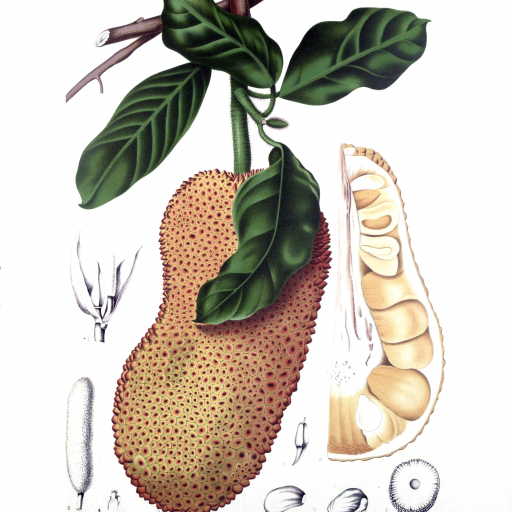
Plant Overview
Often hailed as the "Jackfruit’s fragrant cousin," the Cempedak is a tropical treasure native to Southeast Asia. While it looks remarkably similar to a Jackfruit, it is prized for its much sweeter, honey-like flesh and an aroma so powerful it can fill an entire house. In its native Malaysia and Indonesia, this tree is a backyard staple, beloved for its heavy yields and the fact that almost every part of the fruit is edible.
🔍 How to Identify
- 🍃 Hairy Foliage: Unlike the smooth leaves of the Jackfruit, Cempedak leaves and young twigs are often covered in fine, stiff, golden-brown hairs.
- 🍈 The Fruit Shape: The fruit is smaller and more cylindrical (sausage-shaped) than a Jackfruit, with a thin, leathery skin covered in blunt, hexagonal bumps.
- 🟡 Golden Bulbs: When opened, the fruit reveals bright yellow to orange fleshy "bulbs" that are much softer and slimier than those of its relatives, clinging to a thick central core.
🏡 In Your Garden
- 🌳 The Taproot Rule: This tree develops a very deep and sensitive taproot early on. It absolutely hates being moved, so choose its "forever home" carefully—transplanting a sapling often leads to a quick decline.
- 💧 Thirsty Foundations: While it loves tropical humidity and frequent watering, it cannot stand "wet feet." Ensure your soil is deep and well-draining to prevent root rot.
- 🪵 Trunk-Fruiting: One of its most fascinating traits is cauliflory, meaning the fruit grows directly out of the trunk and main branches rather than on the tips of twigs. This allows the tree to support the massive weight of the heavy fruit.
⚠️ Safety & Toxicity
- ✅ Safe & Edible: The fruit flesh is delicious raw or fried, and even the seeds are edible when boiled or roasted (tasting like chestnuts).
- 🍯 Sticky Situation: The tree produces a thick, white, and incredibly sticky latex (sap). If it gets on your skin or clothes, water won't help—you’ll need to use cooking oil or alcohol to dissolve the "glue."
- 🧤 Skin Sensitivity: While not toxic, the tiny hairs on the leaves and the sticky sap can cause mild skin irritation for people with sensitive skin.
✨ Fun Fact
Waste not, want not! In some cultures, even the skin of the Cempedak is preserved. It is fermented in brine to create a dish called Mandai, which has a savory, meat-like texture when stir-fried with spices.

Detailed Care Instructions
To grow an Artocarpus Integer plant, also known as the Jackfruit plant, follow these steps:
- Obtain a healthy and ripe jackfruit. You can either buy it from a nursery or collect the seeds from a fresh jackfruit.
- Remove the seeds from the jackfruit and wash them thoroughly to remove any residue.
- Fill a pot or seed tray with well-draining soil. Avoid using potting mixtures that have a high percentage of peat moss as it retains too much moisture.
- Plant the jackfruit seeds about 1 inch deep into the soil. Ensure that the pointed end is facing downwards.
- Water the soil lightly to keep it moist but not waterlogged. Overwatering can cause the seeds to rot. Aim to keep the soil consistently moist throughout the germination process.
- Place the pot or seed tray in a warm and sunny location, preferably with temperatures between 80-90°F (27-32°C). Jackfruit plants thrive in warm and tropical environments.
- Germination usually takes around 2-3 weeks. Once the seedling emerges, continue to provide it with ample sunlight and warm temperatures.
- After a few months, when the seedling has grown a few inches in height, you can transplant it into a larger pot or directly into the ground if you live in a suitable climate.
- Choose a location for planting that receives at least 6-8 hours of direct sunlight each day. Jackfruit plants require full sun to thrive.
- Ensure that the soil is well-draining and rich in organic matter. Amend the soil with compost or well-rotted manure to improve its fertility.
- Water the plant regularly, aiming for consistent moisture. However, be cautious not to overwater, as jackfruit plants do not tolerate waterlogged soil.
- Fertilize the plant every 2-3 months using a balanced fertilizer. Choose a slow-release or organic fertilizer specifically formulated for fruit trees.
- Prune the plant sparingly, if needed, to maintain its shape and remove any dead, damaged, or diseased branches.
- Protect the plant from extreme cold temperatures. If you live in a region with freezing winters, consider growing the jackfruit plant in a container that can be moved indoors during winter or provide frost protection.
By following these steps, you can successfully grow an Artocarpus Integer plant and eventually enjoy the delicious and exotic Jackfruit fruits.

Place in a bright room that is sun drenched almost all day. Or directly in a south-facing window.

1. Artocarpus Integer is a tropical plant that requires regular watering to thrive.
2. You should water the plant deeply, allowing the water to reach the roots.
3. Water the plant only when the top layer of soil feels dry to the touch.
4. Avoid overwatering the plant, as this can lead to root rot and other issues.
5. Use water at room temperature, as excessively cold or hot water can damage the plant.
6. Avoid getting water on the leaves of the plant, as this can promote fungal growth.
7. Use a watering can or similar device to water the plant gently and evenly.
8. If using tap water, allow it to sit for several hours before watering the plant, as this can help remove chlorine and other chemicals.
To fertilize this plant, apply a balanced fertilizer with equal ratios of nitrogen, phosphorus, and potassium. Use a slow-release fertilizer once a month during the growing season, and water thoroughly after application. Avoid over-fertilization, as it can lead to excessive growth and weak stems. Additionally, supplement with micronutrients, such as iron and magnesium, if yellowing or chlorosis is present in the foliage.
The best soil for Artocarpus Integer, a member of the Moraceae family, should be well-draining with a pH level of 5.5 to 7.5. It should be rich in organic matter and contain a balanced amount of nutrients such as nitrogen, phosphorus, and potassium. A mix of sandy loam soil with composted leaf litter or aged manure would be ideal. The soil should be kept moist but not waterlogged, as the plant prefers a consistently moist environment. The plant may also benefit from occasional applications of organic fertilizers to boost its growth and overall health.
Propagating this plant can be done using several methods. One method is root cuttings, which involves taking 6-8 inch cuttings from the root system of a mature plant. Another method is air layering, which involves making a wound on the stem of a mature plant and covering it with moist sphagnum moss, then allowing roots to form before transplanting. Additionally, this plant can also be propagated through seed, though it may take several years to reach maturity. Proper care and maintenance during propagation is crucial, including providing adequate moisture and sunlight, and protecting from pests and diseases.








