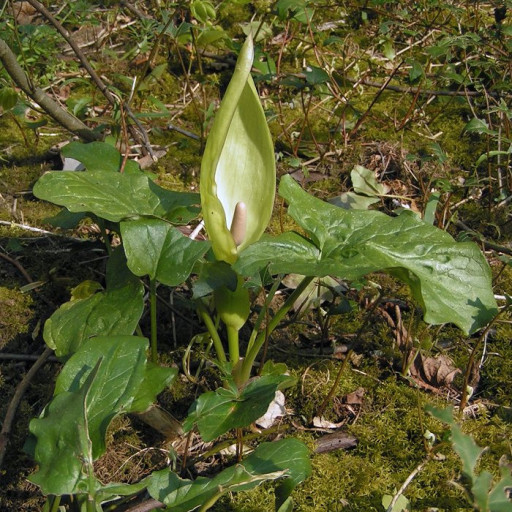
Plant Overview
Known by dozens of whimsical names like "Lords-and-Ladies," "Cuckoo Pint," or "Friar’s Cowl," Arum maculatum is a master of woodland drama. This ancient-looking plant is a staple of European hedgerows and shady garden corners, emerging in early spring with a gothic elegance. While its structural beauty is captivating, it is a plant that demands respect from a distance.
🔍 How to Identify
- 🍃 Arrow-Shaped Foliage: Glossy, dark green leaves shaped like large arrowheads, frequently dappled with mysterious black or purple spots that give the plant its "Maculatum" (spotted) name.
- 🕯️ The Spathe and Spadix: A pale green, hood-like leaf (the spathe) wraps around a central, dark purple or yellow upright rod (the spadix), creating a distinct "pulpit" appearance.
- 🔴 Jewel-Like Berries: In late summer, the leaves wither away to reveal a stark, leafless stem topped with a heavy cluster of brilliant, waxy orange-red berries that stand out against the forest floor.
🏡 In Your Garden
- 🌳 The Shade Specialist: This plant is a specialist of the "understory," thriving in the damp, dappled light beneath deciduous trees where most flowers struggle. It prefers heavy, humus-rich soil that mimics a forest floor.
- 🍂 Dormancy Cycle: Don't be alarmed if the plant "disappears" in mid-summer. It naturally retreats into its underground tubers after flowering, leaving only the stalks of bright berries behind as its summer encore.
⚠️ Safety & Toxicity
- 🚫 Severe Irritant: ALL parts of this plant are highly toxic. It contains needle-like calcium oxalate crystals that cause immediate burning, swelling of the throat, and intense pain if even a small piece is bitten.
- 🐾 Pet & Child Alert: The bright red berries are particularly dangerous because they look attractive to children and pets. Touching the sap can also cause contact dermatitis, so it is best to wear gloves if you are thinning them out in your garden.
✨ Fun Fact
- 🌡️ A Living Heater: During pollination, the central rod (spadix) can actually generate its own heat through a process called thermogenesis. It can reach temperatures 15°C warmer than the surrounding air to help broadcast its pungent scent—which smells like rotting meat—to attract tiny moth flies!

Detailed Care Instructions
To grow Arum Maculatum plant (also known as cuckoo pint or lords-and-ladies), you can follow these steps:
- Select a suitable planting location: Arum Maculatum prefers partial shade to full shade, and moist, well-draining soil. It can grow in various soil types but prefers slightly acidic to neutral soil.
- Prepare the soil: Before planting, ensure the soil is well-prepared by removing any weeds, rocks, or debris. Loosen the soil to improve drainage if necessary.
- Planting from corms: Arum Maculatum grows from corms, which are underground bulbs. Plant the corms in late summer or early autumn, about 2-3 inches deep and 6-8 inches apart. Ensure the pointed end of the corm faces upwards.
- Watering: Keep the soil consistently moist but not waterlogged. Water the plant whenever the top inch of soil feels dry. In drier periods, you may need to water more frequently.
- Mulching: Apply a layer of organic mulch, such as compost or well-rotted manure, around the base of the plant to retain moisture and suppress weeds.
- Fertilization: Arum Maculatum doesn't typically require fertilization if you have prepared the soil adequately. However, you can apply a balanced, slow-release fertilizer in early spring if desired.
- Maintenance: Remove any dead or yellowing leaves or flowers as they wither. In late autumn, after the foliage has died back, you can cut it down to ground level.
- Propagation: Arum Maculatum can spread naturally by producing offsets (small bulbs that grow attached to the parent corm). You can dig up these offsets carefully and replant them in new locations to propagate the plant.
- Controlling spread: Since Arum Maculatum can become invasive in some regions, consider growing it in containers buried in the ground or in areas where it won't spread uncontrollably.
- Caution: It's essential to note that Arum Maculatum contains calcium oxalate crystals, which can cause skin irritation or be toxic if ingested. Avoid touching or consuming the plant, and consider wearing gloves when handling it.
Remember to research any specific guidelines or regulations for your area regarding the introduction of non-native plants, as Arum Maculatum is not native to all regions.

Place in a window with dappled sun or a spot in the middle of a room. Or directly in a window facing west or east.

To properly water this plant, ensure that the soil is consistently moist but not waterlogged. It is important to let the first inch of soil dry out before watering again to avoid overwatering. When watering, pour water at the base of the plant and avoid getting water on the leaves as this can cause fungal diseases. Additionally, during hot and dry weather, increase watering frequency to ensure the plant stays hydrated.
To fertilize this plant, it is recommended to use a balanced, slow-release fertilizer in early spring when new growth appears. Apply the fertilizer around the base of the plant, being careful not to get it on the leaves or stem. Water thoroughly after fertilizing. Repeat this process once or twice throughout the growing season. Avoid using high-nitrogen fertilizers as they can promote more foliage growth at the expense of flower production. Always follow the package instructions for the fertilizer you are using.
Arum Maculatum, a perennial flowering plant, prefers to grow in soils that are moist and slightly acidic. It needs soil that can provide good drainage, but also retain enough moisture to keep the roots hydrated. It is recommended to mix the soil with organic matter to increase its moisture retention capacity. The pH level of the soil should be between 5.5 to 6.5. It is also important to ensure that the soil is free from weeds and is well-aerated. Arum Maculatum is tolerant of a wide range of soils, including loam, sand, and clay, but it grows best in loamy soils with good drainage.
To propagate this plant, you can start by collecting seeds from mature flowers in the fall. The seeds should be planted in a moist, well-draining soil mix and kept in a warm, bright location until they germinate.
Another method of propagation is by dividing the plant in the early spring, before new growth begins. Carefully dig up the plant and separate the rhizomes (thick, underground stems) with a clean, sharp knife and replant in fresh soil.
Ensure that the newly propagated plants are kept in a moist environment and in indirect sunlight until they have established themselves.








