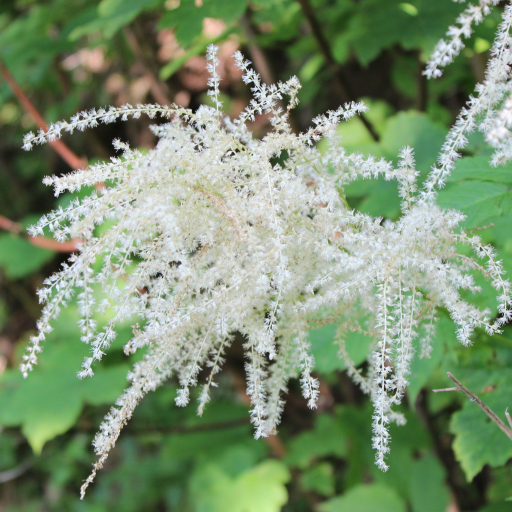
Plant Overview
Known as the "Goat’s Beard" or "Bride's Feathers," Aruncus sylvester (syn. Aruncus dioicus) is a woodland giant that brings a touch of wild elegance to shady corners. Looking like a gargantuan Astilbe, it has been a staple of Victorian gardens and European folklore for centuries. It thrives where other plants sulk, turning damp, dim spots into a frothy sea of white plumes.
🔍 How to Identify
- 🌿 The Foliage: It features large, compound leaves that resemble oversized fern fronds. The leaflets are oval, deeply toothed, and maintain a crisp, vibrant green color throughout the summer.
- ☁️ The Flowers: Massive, branching plumes of tiny, creamy-white flowers arch gracefully over the foliage. Male plants usually produce showier, "fuzzier" flowers, while female plants have a more slender appearance.
- 📏 Growth Habit: This is a clumping perennial that acts like a shrub. It can reach heights of 4 to 6 feet, creating a dramatic architectural focal point without the woody stems of a traditional bush.
🏡 In Your Garden
- 💧 Thirst for Moisture: Unlike many perennials that can handle a dry spell, Goat’s Beard is a true water-lover. It is happiest near ponds, stream banks, or in low-lying garden spots where the soil stays consistently damp.
- 🛑 The Taproot Rule: Plan your placement carefully because this plant hates to travel. It develops a deep, woody taproot that makes it very difficult to move or divide once it has matured. It is a long-lived "permanent resident" of the garden.
- ⛅ Shadow Play: While it can handle more sun in northern, cooler climates, its leaves will scorch and turn brown at the edges if it doesn't have protection from the harsh afternoon sun in warmer regions.
⚠️ Safety & Toxicity
- 🐾 Pet Safety: It is generally considered non-toxic to cats and dogs. However, as with any ornamental plant, grazing should be discouraged to prevent mild digestive upset.
- 👶 Human Caution: The seeds and roots contain small amounts of saponins. While not considered highly dangerous, they should not be ingested. It is best kept as a "look but don't eat" plant for children.
✨ Fun Fact
The name Aruncus is derived from the Greek word aryngos, which literally translates to "goat’s beard." Because it is "dioecious" (meaning individual plants are either male or female), early naturalists would often debate which version was more beautiful; the males generally won the prize for having the most voluminous, "bearded" flowers.

Detailed Care Instructions
Aruncus Sylvester, also known as Goat's Beard, is a beautiful perennial plant that thrives in moist, well-drained soil and partial shade. Here are some tips to help you grow Aruncus Sylvester successfully:
- Choose a suitable planting location: Find a spot in your garden that receives partial shade or dappled sunlight. Aruncus Sylvester does not tolerate full sun well, so it's best to plant it in a location that offers some protection from the hot afternoon sun.
- Prepare the soil: Ensure that the soil is rich in organic matter and well-drained. You can amend the soil with compost or well-rotted manure before planting to improve its texture and fertility. Aruncus Sylvester prefers slightly acidic soil with a pH of 5.5 to 6.5.
- Plant the rhizomes: Aruncus Sylvester can be propagated from rhizomes or by division in the spring or fall. Plant the rhizomes in a hole that is slightly larger than the root ball, and backfill with soil. Water thoroughly after planting to help settle the soil around the roots.
- Water regularly: Keep the soil consistently moist but not waterlogged. Water deeply once or twice a week, especially during dry periods. Mulch around the base of the plant to help retain moisture and suppress weed growth.
- Fertilize sparingly: Aruncus Sylvester doesn't require heavy feeding, but you can apply a balanced fertilizer once a year in early spring to promote healthy growth and flowering.
- Prune as needed: Remove any dead or damaged foliage in the spring to encourage new growth. You can also cut back the flower stalks after blooming to tidy up the plant and encourage a second flush of flowers later in the season.
By following these tips, you can grow a healthy and thriving Aruncus Sylvester plant in your garden. Enjoy the graceful foliage and delicate plumes of flowers that this plant has to offer!
Aruncus Sylvester plant should be watered consistently to keep the soil evenly moist. Water the plant at the base, avoiding wetting the foliage, to prevent diseases. It is important to water deeply, allowing the water to penetrate the root zone. Check the moisture level of the soil regularly by sticking your finger into the soil up to your knuckle. If the top inch of soil feels dry, it's time to water. During hot periods, the plant may need more frequent watering. Be cautious not to overwater, as this can cause root rot. Mulching around the plant can help retain moisture in the soil.
To effectively fertilize Aruncus Sylvester plants, it is recommended to apply a balanced slow-release fertilizer in the early spring, just as the new growth begins to emerge. Be sure to follow the manufacturer's instructions for dosage and application method. Avoid over-fertilizing, as this can lead to excessive leaf growth at the expense of flower production. Additionally, consider supplementing with a high-phosphorus fertilizer in the fall to help promote healthy root development and prepare the plant for winter dormancy. Always water thoroughly after fertilizing to ensure proper absorption by the plant roots.
Aruncus Sylvester plants thrive in well-draining soil with a neutral to slightly acidic pH. A loose, fertile soil is best, with adequate organic matter to provide necessary nutrients and moisture retention. Avoid heavy clay soils, as they can lead to waterlogged conditions that may harm the plant. Adding compost or peat moss to the soil can help improve its structure and fertility, promoting healthy growth and abundant flowering. Additionally, incorporating some sand or perlite can aid in improving drainage and preventing root rot. Regularly mulching the soil around the plant can help conserve moisture, suppress weeds, and maintain a more stable root temperature. Overall, choosing the right soil for Aruncus Sylvester plants is crucial for their overall health and longevity.
Aruncus Sylvester plant can be propagated through division in the springtime. To do this, dig up the plant and carefully separate the root ball into smaller sections, making sure each section has a healthy amount of roots and foliage. Replant these divisions in well-draining soil and keep them watered until they establish themselves in their new location. Additionally, Aruncus Sylvester can also be propagated from seed, although this method is less common and may take longer for the plant to mature and flower. To propagate from seed, collect the seed pods from mature plants and sow them in a seed starting mix. Keep the soil moist and provide warmth and light to encourage germination. Transplant the seedlings once they have developed a strong root system.








