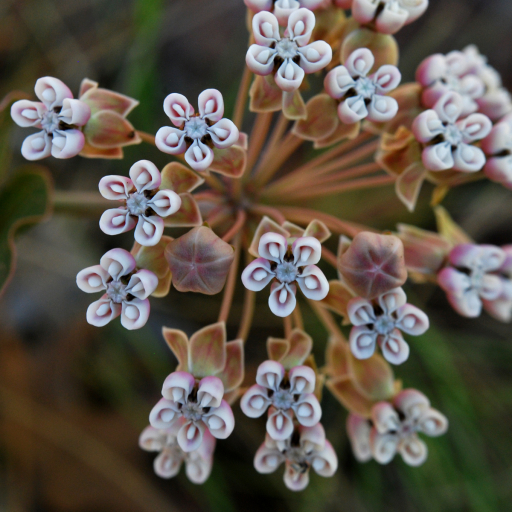
Plant Overview
Known as the Pinewoods Milkweed or Sandhill Milkweed, this hardy native of the American Southeast is a true survivor of the scrublands. Unlike its tall, upright cousins, this species prefers to sprawl across the ground like a dusty, purple-veined carpet. It plays a critical role in the life cycle of Monarch butterflies, acting as a crucial early-season refueling station during their northern migration.
🔍 How to Identify
- 🍃 The Veins: Large, thick, heart-shaped leaves featuring striking silvery-pink or deep purple veins that look like a vivid, natural roadmap across the foliage.
- 👣 Growth Habit: This plant is "prostrate," meaning the stems trail along the ground rather than growing vertically, often forming a circular mat in open sandy areas.
- 🌸 The Bloom: Spherical clusters of star-shaped flowers that range from a pale, dusty rose to a ghostly lavender-white, usually appearing in late spring.
🏡 In Your Garden
- 🏜️ Sand Specialist: This milkweed is a "specialist" that thrives in xeric (extremely dry) conditions; it actually prefers poor, sandy soil and often fails in rich, damp potting mixes.
- ⚓ The Taproot Trap: It develops an incredibly deep, carrot-like taproot to find water deep beneath the sand. Because of this, it is notoriously difficult to transplant—once you plant a seed, it is best to leave it in its permanent home forever.
⚠️ Safety & Toxicity
- 🥛 Toxic Sap: Like all members of the Asclepias genus, the plant contains a sticky white latex sap that is high in cardiac glycosides.
- 🐾 Pet Warning: It is toxic if ingested by dogs, cats, or livestock, and the milky sap can cause mild skin irritation or significant eye stinging if handled without gloves.
✨ Fun Fact
🦋 The First Stop: Because it emerges earlier in the spring than many other milkweed species in the Deep South, Asclepias humistrata is often the very first plant the "pioneer" generation of Monarch butterflies finds to lay their eggs on after leaving their wintering grounds.

Detailed Care Instructions
To grow Asclepias humistrata (pinewoods milkweed), follow these steps:
- Choose the right location: Select a spot in your garden that receives full sun, as this plant loves sunlight. Ensure the soil is well-drained and has a slightly acidic pH level (around 6.0 to 7.5).
- Prepare the soil: Before planting, loosen the soil to a depth of around 8-10 inches and remove any weeds or debris. Incorporate organic matter like compost or well-rotted manure to improve the soil's fertility and drainage.
- Planting: Asclepias humistrata can be propagated by both seeds and cuttings. If using seeds, sow them directly into the soil after the last frost date in your region, as they require a period of cold stratification for germination. Place the seeds about ¼ inch deep and space them around 12-18 inches apart.
- Watering: Keep the soil consistently moist but not waterlogged during the germination period, which usually takes 2-4 weeks. After the plants are established, they are drought-tolerant and will require less water.
- Mulching: Apply a layer of organic mulch around the plants to suppress weed growth, retain moisture, and maintain a moderate soil temperature.
- Pest control: Asclepias humistrata is relatively resistant to pests and diseases. However, if you notice any problems, like aphids or caterpillar infestations, treat them with organic insecticides or use natural pest control methods.
- Maintenance: Pinewoods milkweed generally doesn't require much maintenance once established. However, it's a good idea to remove any dead or damaged foliage and flowers regularly to enhance the plant's overall appearance.
- Winter care: Asclepias humistrata is native to the southeastern United States and is hardy in USDA zones 7-10. In colder zones, provide a layer of mulch around the base of the plant in late fall to protect it from frost.
By following these steps, you can successfully grow Asclepias humistrata in your garden and provide a habitat for butterflies and other pollinators.

Place in a bright room that is sun drenched almost all day. Or directly in a south-facing window.

Asclepias Humistrata is a perennial plant native to North America. It prefers to grow in moist to wet soils that are high in organic matter and receive full sun to partial shade. When watering this plant, it is important to ensure that the soil remains consistently damp but not waterlogged.
To water Asclepias Humistrata, the plant should be thoroughly soaked, allowing the water to penetrate deep into the root zone. This can be done either by hand-watering with a hose or watering can or by using an irrigation system. It is important to avoid getting the foliage wet, as this can increase the risk of fungal diseases.
In addition to regular watering, Asclepias Humistrata may benefit from mulching around the base of the plant to help retain soil moisture and prevent weeds. During hot and dry weather, additional watering may be necessary to prevent the soil from drying out completely.
Overall, proper watering is essential for the health and growth of Asclepias Humistrata, and care should be taken to ensure that the plant receives the necessary moisture it needs to thrive.
To fertilize Asclepias Humistrata plants, follow these instructions:
- Use a balanced, slow-release fertilizer with an NPK ratio of 10-10-10 or 20-20-20.
- Apply the fertilizer in early spring, just as new growth begins.
- Scatter the granules or apply liquid fertilizer evenly around the base of the plants.
- Avoid direct contact of the fertilizer with the stems or foliage.
- Water the plants thoroughly after fertilizing to help distribute the nutrients.
- Repeat the fertilization process once every four to six weeks during the growing season.
- Reduce or stop fertilizing in late summer to allow the plants to prepare for dormancy.
- Always follow the instructions provided by the fertilizer manufacturer for specific application rates and frequency.
Asclepias Humistrata plants prefer well-drained soil that is rich in organic matter. The soil should have a pH of 5.5 to 6.5 and should be moist but not waterlogged. The plant can tolerate some drought but will do better when kept consistently moist. A light application of fertilizer can be applied in the spring. The soil should be prepared by adding compost or peat moss to improve drainage and moisture retention. The plant can also benefit from mulching to help retain moisture and regulate soil temperature. Avoid using heavy or compacted soil as this can lead to root rot and poor growth.
To propagate Asclepias Humistrata plant, you can follow these steps:
- Start by collecting ripe seed pods from mature plants. Wait until the pods have started to dry and turn brown, indicating that the seeds are mature and ready for harvesting.
- Once you have collected the seed pods, place them in a paper bag or envelope to allow further drying and ensure that the seeds are fully matured.
- After a week or two, gently open the seed pods and remove the flat brown seeds. Asclepias Humistrata plants produce numerous small seeds with attached silky hairs, which help them disperse in the wind.
- Next, prepare a seed-starting tray or pots filled with well-draining potting soil. Asclepias Humistrata prefers soil that is moist but not waterlogged. Ensure that the container has drainage holes to prevent waterlogging.
- Sow the Asclepias Humistrata seeds on the soil surface, spacing them evenly apart. Avoid burying the seeds, as they require light to germinate.
- Lightly mist the seeds and soil with water to settle them, using a spray bottle or a fine mist setting on a watering can.
- Place the seed tray or pots in a warm, bright location, preferably a greenhouse or a sunny windowsill. Asclepias Humistrata needs plenty of sunlight for successful germination.
- Ensure that the soil remains consistently moist but not oversaturated. Water the seedlings gently using a misting technique or by bottom-watering to prevent displacing the seeds.
- Asclepias Humistrata seeds typically take about 10-20 days to germinate. Once germination occurs, you will notice small, delicate seedlings emerging from the soil.
- Allow the seedlings to grow until they develop their first few sets of true leaves. At this stage, they can be transplanted into individual pots with a well-draining soil mix.
- Continue caring for the young Asclepias Humistrata plants by providing them with adequate sunlight, watering them regularly but moderately, and protecting them from extreme temperatures and strong winds.
- After the last frost date has passed, and the seedlings have grown to a mature size, they can be transplanted into the ground in your desired location. Choose a spot that receives at least 6 hours of direct sunlight daily and has well-drained soil.
By following these steps, you should be able to successfully propagate Asclepias Humistrata plants from seeds and enjoy their beautiful flowers while providing essential habitat and food source for pollinators.








