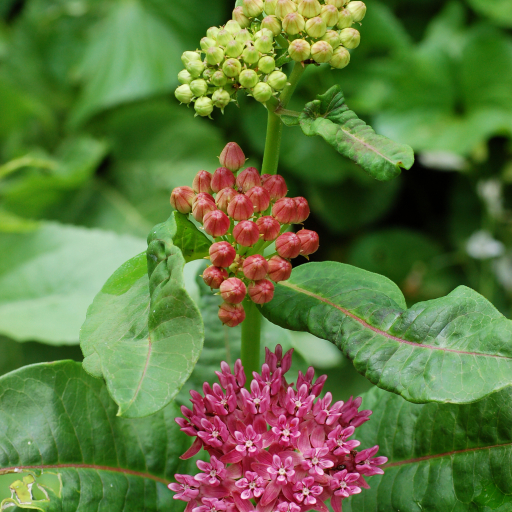
Plant Overview
Often called the "Glow-in-the-Dark Milkweed" by native plant enthusiasts, the Purple Milkweed is the sophisticated, vibrant cousin of the common field milkweed. While many milkweeds have pale, dusty tones, this species boasts deep, neon-magenta blossoms that look almost artificial in their intensity. It is a prized find for any gardener looking to support the Monarch butterfly migration without the aggressive spreading habit of other varieties.
🔍 How to Identify
- 🌸 The Blooms: Features spherical clusters (umbels) of flowers that range from deep rose-pink to a rich, royal purple. The "hoods" of the flowers are noticeably taller than those of common milkweed.
- 🍃 The Foliage: Broad, oval leaves that are deep green with a smooth top and a slightly velvety, paler underside. They grow in opposite pairs along a sturdy, upright stem.
- 📏 Growth Habit: Unlike its cousins that "run" everywhere, this plant grows in tidy clumps, reaching about 2 to 4 feet in height.
- 💧 The Sap: When a leaf or stem is broken, it secretes a thick, milky white latex—the classic signature of the Asclepias genus.
🏡 In Your Garden
- 🦋 The Ultimate Host: This is a high-priority host plant for the Monarch butterfly. Its leaves provide the necessary nutrients for caterpillars, and its nectar is like "high-octane fuel" for adult butterflies and bees.
- ⛅ The Edge-Dweller: While most milkweeds crave scorched earth and full sun, Purple Milkweed is unique because it prefers "savannah" conditions—partial shade or the dappled light found at the edges of a woodland.
- 🌱 Patience Required: This plant is notorious for being difficult to transplant because of its deep taproot. Once you plant it, avoid moving it; it may take a year or two to fully establish and bloom.
⚠️ Safety & Toxicity
- 🐾 Toxic to Pets: Like all milkweeds, it contains cardiac glycosides. If ingested in large quantities by dogs, cats, or horses, it can cause heart rhythm issues, drooling, or vomiting.
- 🖐️ Skin Irritant: The milky sap can cause "contact dermatitis" (skin rashes) or severe eye irritation. It is best to wear gloves when pruning or handling broken stems.
✨ Fun Fact
Purple Milkweed is considered a "rare beauty" in the wild. Even though it has a wide range across North America, it is listed as endangered or threatened in several states because it is very picky about its habitat and doesn't compete well with invasive grasses.

Detailed Care Instructions
| Humidity | Normal |
| Lighting | Part Sun |
| Toxicity | Poisonous |
| Difficulty | Medium |
| Hardiness Zones | 3 - 8 |
To grow Asclepias purpurascens, also known as Purple Milkweed or Clasping Milkweed, follow these steps:
- Seed selection: Obtain seeds from a reputable source or collect them from mature milkweed pods. Cold-stratify the seeds by placing them in a sealed plastic bag with moist soil or vermiculite, and keep them in the refrigerator for approximately 30 days before planting.
- Planting time: Plant the seeds in early spring, after the last frost date in your area. Milkweed plants perform best when planted directly in the ground, rather than starting them indoors.
- Site selection: Choose a location with full sun exposure, as Asclepias purpurascens thrives in bright sunlight. Ensure the soil is well-drained and fertile.
- Soil preparation: Loosen the soil using a garden tiller or hand tools. Remove any weeds or debris from the planting area and work in compost or well-rotted manure to improve soil fertility and drainage.
- Planting: Sow the seeds ¼ to ½ inch (0.6-1.3 cm) deep, spacing them around 6-12 inches (15-30 cm) apart. After planting, gently press down on the soil to ensure good seed-to-soil contact.
- Watering: Keep the soil consistently moist, especially during germination. However, avoid overwatering, as excessive moisture can lead to root rot. Water the plants regularly throughout the growing season, especially during dry spells.
- Mulching: Apply a layer of organic mulch, such as straw or wood chips, around the base of the plants to help retain moisture and suppress weed growth. Ensure the mulch does not touch the stem of the milkweed plants, as this can cause rotting.
- Maintenance: Remove any weeds that compete with the milkweed for nutrients and water. Monitor the plants for pests, such as aphids or milkweed bugs, and take appropriate measures to control them if necessary.
- Enjoying blooms: Asclepias purpurascens usually blooms in early to mid-summer. The plants produce attractive clusters of pinkish-purple flowers that attract pollinators, particularly butterflies. Once the flowers fade, seed pods will develop. If you want to collect seeds, allow the pods to fully mature and dry on the plant before harvesting them.
By following these steps, you'll be able to successfully grow Asclepias purpurascens and provide habitat for monarch butterflies and other pollinators.

Place in a bright room that is sun drenched almost all day. Or directly in a south-facing window.

Asclepias Purpurascens plant requires regular watering to keep the soil moist but not too wet. It is important to avoid overwatering, as this can lead to root rot. When watering the plant, it is best to water deeply and evenly, allowing the water to soak into the soil rather than running off the surface. It is also important to avoid getting water on the leaves, as this can encourage the growth of fungus and other diseases. During dry spells or hot weather, the plant may need to be watered more frequently to prevent the soil from drying out completely.
This plant should be fertilized with a balanced fertilizer once per month during the growing season. Fertilizer should be applied to the soil around the base of the plant. Be sure to follow the instructions on the fertilizer package carefully to avoid over-fertilizing.
Asclepias Purpurascens requires well-draining soil with a pH level of 6.5 to 7.5. The soil should be rich in organic matter and high in nitrogen content. The plant prefers clay loam or sandy loam soil, and it should be kept moist but not soggy. Fertilizer should be applied sparingly to prevent excess leaf growth, which could inhibit flowering. Adding compost or organic matter to the soil before planting can improve soil quality and ensure healthy growth of the plant.
To propagate this plant, you can take stem cuttings in the spring or early summer. Choose a healthy stem and use a clean, sharp knife to cut a section that is about 3-4 inches long. Remove any leaves from the bottom portion of the cutting and dip the cut end in rooting hormone. Plant the cutting in a well-draining soil mix and water it thoroughly. Keep the cutting in a warm, humid location with indirect light until roots form and it begins to grow. Once it has established roots, you can transplant it to its permanent location.








