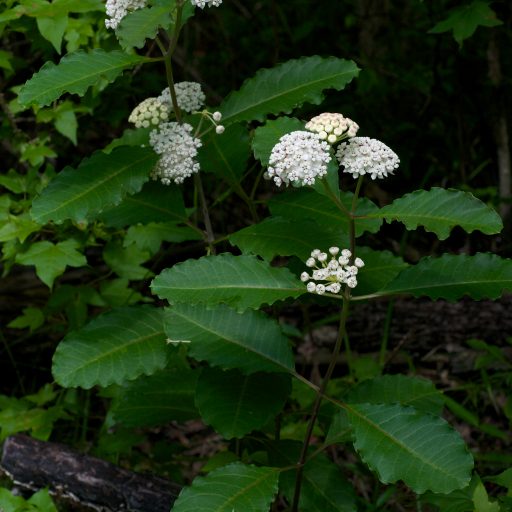
Plant Overview
Known as the Redring Milkweed or White Milkweed, this species is often called the "Jewel of the Milkweeds" by native plant enthusiasts. Unlike the more common, boisterous orange or pink varieties, this plant offers a sophisticated, snowball-like bloom that glows in the dappled light of woodland edges. It is a vital, high-quality host for Monarch butterflies, making it a "must-have" for conservation-minded gardeners.
🔍 How to Identify
- ⚪ The "Snowballs": It produces incredibly dense, spherical clusters (umbels) of pure white flowers that look like tiny floral globes from a distance.
- ⭕ The Crimson Ring: Upon closer inspection, each individual white flower has a tiny, distinct purplish-red ring at its base, which gives the plant its common name.
- 🍃 Wavy Foliage: The leaves are broad, dark green, and oval-shaped with slightly "crinkled" or wavy margins, appearing in opposite pairs along the stem.
🏡 In Your Garden
- 🌳 The Shade Lover: Unlike its sun-worshipping cousins, this milkweed thrives in partial shade and well-drained, upland soils. It is perfect for those "in-between" spots under tall canopy trees.
- 🚫 Look but Don't Move: This plant develops a deep, sensitive taproot. It is notoriously difficult to transplant once established, so choose its "forever home" carefully from the start.
- 🦋 The Monarch Nursery: While it grows more slowly than Common Milkweed, it provides high-protein foliage for Monarch caterpillars and is a preferred nectar source for delicate native bees.
⚠️ Safety & Toxicity
- 🧪 Toxic if Ingested: Like all members of the Asclepias genus, the plant contains cardiac glycosides. These chemicals are what make Monarch caterpillars toxic to predators, but they are dangerous to mammals.
- 🐾 Pet & Child Safety: Keep this plant away from curious pets or toddlers. If the stem is broken, it leaks a sticky, white "milk" (latex) that can cause skin irritation or significant eye pain if touched and then rubbed into the eyes.
✨ Fun Fact
The genus name Asclepias is a tribute to Asklepios, the Greek god of medicine and healing. While many milkweed species were used in ancient folk remedies, today we value this specific variety most for its "healing" effect on the local ecosystem!

Detailed Care Instructions
To grow Asclepias variegata, also known as white milkweed or redring milkweed, follow these steps:
- Choose the right location: Asclepias variegata thrives in full sun, so select a sunny spot in your garden or a location where it will receive at least 6-8 hours of direct sunlight each day.
- Prepare the soil: The soil should be well-draining and moderately fertile. Incorporate organic matter, such as compost or well-rotted manure, into the soil to improve its fertility and drainage.
- Planting: Asclepias variegata can be propagated from seeds or transplanted from potted plants. For seeds, sow them directly into the ground in the spring or fall, following the recommended planting depth on the seed packet. If using potted plants, dig a hole slightly larger than the root ball and place the plant in the hole, making sure the top of the root ball is level with or slightly above the soil surface. Backfill the hole with soil and water well.
- Watering: While Asclepias variegata is relatively drought-tolerant once established, it requires regular watering during its initial stages of growth. Water the plant deeply once a week, ensuring the soil stays evenly moist but not waterlogged.
- Mulching: Apply a layer of organic mulch, such as straw or wood chips, around the base of the plant to conserve moisture, discourage weed growth, and regulate soil temperature.
- Pruning: Asclepias variegata doesn't require frequent pruning. However, removing faded flowers, known as deadheading, can encourage additional blooms and prevent the plant from developing seeds.
- Support: Depending on the cultivar and environmental conditions, Asclepias variegata may require additional support. Use bamboo stakes or plant supports to prevent tall varieties from flopping over.
- Pests and diseases: Asclepias variegata is relatively resistant to pests and diseases. However, keep an eye out for common garden pests such as aphids or caterpillars, which may occasionally feed on the plant. Monitor regularly and take appropriate action if necessary, such as using insecticidal soap or attracting beneficial insects.
- Wildlife habitat: Asclepias variegata is an essential food source for monarch butterfly larvae. To support the monarch population, avoid using pesticides and provide a pesticide-free environment in your garden. Consider planting other native plants that attract butterflies, bees, and other pollinators.
Remember that growing plants can vary based on your specific location and climate conditions. It's best to consult with local gardening experts or extension offices for more specific advice tailored to your region.

Place in a window with dappled sun or a spot in the middle of a room. Or directly in a window facing west or east.

Asclepias Variegata is a plant that requires regular watering to thrive. When watering this plant, it is important to avoid overwatering, as this can lead to root rot and other problems. The best way to water Asclepias Variegata is to give it a deep, thorough watering once a week, or more frequently if the weather is extremely hot and dry.
To water Asclepias Variegata, fill a watering can with room temperature water and slowly pour it around the base of the plant. Be careful not to water the leaves or flowers, as this can cause them to rot. Instead, focus on watering the soil around the plant to a depth of at least 6 inches.
After watering, allow the soil around the plant to dry out before watering again. It is important to avoid letting the soil become too dry between waterings, as this can stress the plant and cause it to wilt.
In addition to regular watering, Asclepias Variegata also benefits from occasional fertilization with a balanced fertilizer. This can help to ensure that the plant receives the nutrients it needs to grow and thrive.
To fertilize your Asclepias Variegata plant, use a balanced, granular fertilizer with equal amounts of nitrogen, phosphorus, and potassium, such as 10-10-10. Apply the fertilizer in the spring, before the new growth begins, and again in mid-summer. Use one tablespoon of fertilizer per square foot of soil surface, being careful not to apply fertilizer directly to the foliage or stems. Water the fertilizer in well after application. Avoid over-fertilizing, as this can lead to excessive growth and weaker plants.
Asclepias Variegata is a plant that belongs to the genus Asclepias. For this plant, it is best to use a well-draining soil that has good aeration and nutrient holding capacity. A mixture of sand, loam, and gravel can be used to create a well-balanced soil. It is also recommended to add organic matter to the soil to improve its quality. The pH of the soil should ideally be slightly acidic to neutral, ranging from 5.5 to 7.0. It is important to avoid using heavy clay soils or soils that are prone to waterlogging, as this can cause root rot and other fungal diseases. Overall, the soil should be able to provide adequate moisture and nutrients to support the growth and development of the Asclepias Variegata plant.
To propagate this particular plant, first gather mature seeds from the parent plant and soak them in warm water for 24 to 48 hours to soften the hard seed coat. Next, plant the seeds in a well-draining soil mix in a bright area with indirect sunlight. Keep the soil moist but not overly wet and maintain a consistent temperature between 65-85°F (18-29°C). Once germination occurs, thin out the seedlings and transplant them to individual pots. When the plants are about 6-8 inches tall, they can be planted outdoors in a location with full sun and well-draining soil. Alternatively, mature plants can also be propagated through stem cuttings or division. To propagate through stem cuttings, take a cutting from a mature plant and dip the cut end in rooting hormone powder before planting in a well-draining soil mix. To propagate through division, carefully divide the root ball of a mature plant into several smaller portions and replant each division in its own pot or area outdoors.








