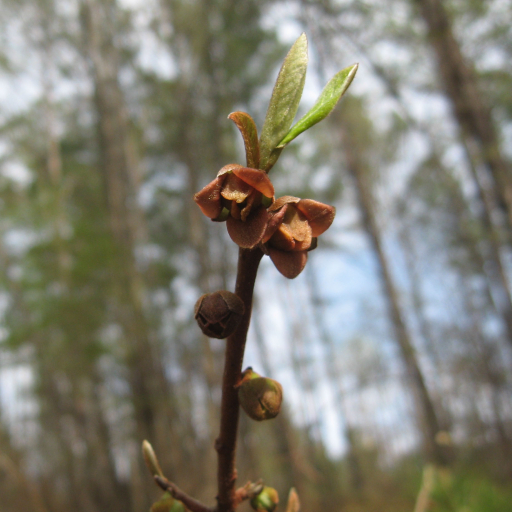
Plant Overview
Often called the Dwarf Pawpaw or the Smallflower Pawpaw, this charming shrub is the understated sibling of the famous, larger Asimina triloba. Native to the sandy pine woods and coastal plains of the Southeastern United States, it is a hidden gem for native plant enthusiasts. While it doesn't produce the giant "custard apples" of its cousin, it offers a unique, wild beauty and plays a critical role in supporting local biodiversity.
🔍 How to Identify
- 🍃 The Leaf Scent: One of the easiest ways to identify this plant is to gently crush a leaf; it releases a distinct, pungent aroma often compared to green bell peppers or even diesel fuel.
- 🌸 Miniature Blooms: Unlike the large flowers of other pawpaws, these blooms are tiny (less than an inch across) and a deep, fleshy maroon or brownish-purple color, appearing before or with the new leaves.
- 🌳 Shrubby Stature: It rarely grows into a full tree, instead maintaining a multi-stemmed shrub habit, usually reaching only 6 to 10 feet in height with a graceful, spreading canopy.
🏡 In Your Garden
- 🦋 Wildlife Magnet: If you want to see the stunning Zebra Swallowtail butterfly, you must plant this. It is a specific host plant where the butterflies lay their eggs, and the larvae feed exclusively on the foliage.
- 🌱 The Taproot Rule: Like all pawpaws, this species develops a very deep, sensitive taproot. It is notoriously difficult to transplant once established, so choose its "forever home" in well-drained, acidic soil carefully.
- 🍐 Bonsai Fruit: It produces small, greenish-brown fruits that look like tiny potatoes. While edible when soft and ripe, they have very little pulp compared to the large seeds inside.
⚠️ Safety & Toxicity
- 🟢 Edibility: The ripe fruit pulp is safe for humans and has a tropical, custard-like flavor. However, never consume the skin or the large black seeds.
- 🚫 Pet & Livestock Warning: The leaves and bark contain annonaceous acetogenins, which act as a natural pesticide. While this makes the plant deer-resistant, it can be toxic to pets or livestock if consumed in large quantities.
- 🧤 Skin Sensitivity: Some gardeners report a mild skin rash (dermatitis) after handling the foliage extensively, so wearing gloves during pruning is recommended.
✨ Fun Fact
The Smallflower Pawpaw doesn't rely on bees for pollination. Instead, its maroon flowers mimic the color and faint scent of fermenting fruit or carrion to attract small flies and beetles, who do all the heavy lifting of moving pollen from flower to flower!

Detailed Care Instructions
To grow Asimina Parviflora, also known as smallflower pawpaw or wild custard apple, you can follow these steps:
- Climate and Soil Requirements:
- Asimina Parviflora prefers well-draining soil and damp conditions.
- It thrives in USDA hardiness zones 5-9, which typically have mild winters and moderate summers.
- Asimina Parviflora prefers well-draining soil and damp conditions.
- Planting:
- Choose a suitable location with partial shade or filtered sunlight, as direct sunlight can scorch the leaves.
- Dig a hole deep and wide enough to accommodate the root ball.
- Place the plant in the hole and backfill with soil, gently firming it around the base of the plant.
- Water thoroughly after planting.
- Choose a suitable location with partial shade or filtered sunlight, as direct sunlight can scorch the leaves.
- Watering:
- Keep the soil evenly moist, especially during the first year of growth.
- Provide regular water during dry periods, but avoid overwatering, as it can lead to root rot.
- Keep the soil evenly moist, especially during the first year of growth.
- Mulching and Fertilizing:
- Apply a layer of organic mulch, such as wood chips or straw, around the base of the plant to retain moisture and suppress weeds.
- In early spring, apply a balanced slow-release fertilizer specifically formulated for fruit-bearing trees.
- Apply a layer of organic mulch, such as wood chips or straw, around the base of the plant to retain moisture and suppress weeds.
- Pruning:
- Prune Asimina Parviflora during winter dormancy to remove any dead or damaged branches.
- Thin out overcrowded branches to promote better air circulation and sunlight penetration.
- Prune to shape the plant or to control its size if desired.
- Prune Asimina Parviflora during winter dormancy to remove any dead or damaged branches.
- Pests and Diseases:
- Asimina Parviflora is relatively resistant to pests and diseases.
- However, keep an eye out for common issues such as aphids, caterpillars, or powdery mildew, and take appropriate measures if necessary.
- Asimina Parviflora is relatively resistant to pests and diseases.
- Harvesting:
- Asimina Parviflora typically produces small, greenish-yellow fruit that resembles custard apples.
- Harvest the fruit when it is fully ripe and easily separates from the stem.
- The fruit is ready to eat when it gives slightly to gentle pressure.
By following these steps, you should be able to successfully grow Asimina Parviflora and enjoy its unique fruit.
- Asimina Parviflora typically produces small, greenish-yellow fruit that resembles custard apples.

Place in a bright room that is sun drenched almost all day. Or directly in a south-facing window.

To provide optimal care for this plant, it is important to water it regularly but also avoid over-watering. During the growing season, water the plant deeply once a week, making sure the soil is moist to a depth of 3-4 inches. During periods of drought, increase the frequency of watering to prevent the soil from drying out completely. Be sure to use a watering can or drip system to deliver water directly to the soil and avoid wetting the foliage, which can cause fungal diseases. In the winter, reduce watering to once every 2-3 weeks since the plant is dormant and requires less water. It is important to monitor the soil moisture level and adjust watering accordingly.
This plant should be fertilized twice per year with an all-purpose fertilizer, once in early spring before new growth begins and once in late summer/early fall. Use a balanced, slow-release fertilizer and apply according to the manufacturer's instructions. Avoid fertilizing when the soil is dry or when the plant is under stress. Water thoroughly after fertilizing to ensure the nutrients are distributed throughout the soil.
Asimina Parviflora requires a well-draining soil that is rich in organic matter. The soil should preferably be slightly acidic with a pH range of 5.5-6.5. Sandy or loamy texture soil is best for the growth of this plant. Adding composted bark or sphagnum peat moss to the soil can help improve the water-holding capacity and provide nutrients to the plant. It is recommended to avoid heavy or clay soils as they can cause root rot. Additionally, the soil should not be allowed to dry out completely and should be kept consistently moist but not waterlogged.
To propagate this plant, you first need to identify a healthy and mature specimen from which you can take cuttings or seeds. Cuttings should be taken in spring or early summer when the plant is actively growing. Use a sharp, clean knife or shears to make a clean cut at a 45-degree angle, taking a 4-6 inch section of stem with at least one node (where the leaves emerge). Remove any lower leaves from the cutting and dip the cut end into rooting hormone. Plant the cutting in a well-draining potting mix, and keep it in a warm and humid place with indirect light until roots form.
Alternatively, you can collect seeds from the fruit of the plant in autumn. Clean the seeds and soak them in warm water overnight to soften the outer coating. Plant the seeds in a well-draining potting mix, and cover with a light layer of soil. Keep the soil moist and warm (around 70 degrees Fahrenheit) until the seeds germinate, which can take several weeks. Once the seedlings have grown a few sets of true leaves, carefully transplant them into individual pots.
Both of these methods can be successful for propagating Asimina Parviflora, depending on your preference and available resources.








