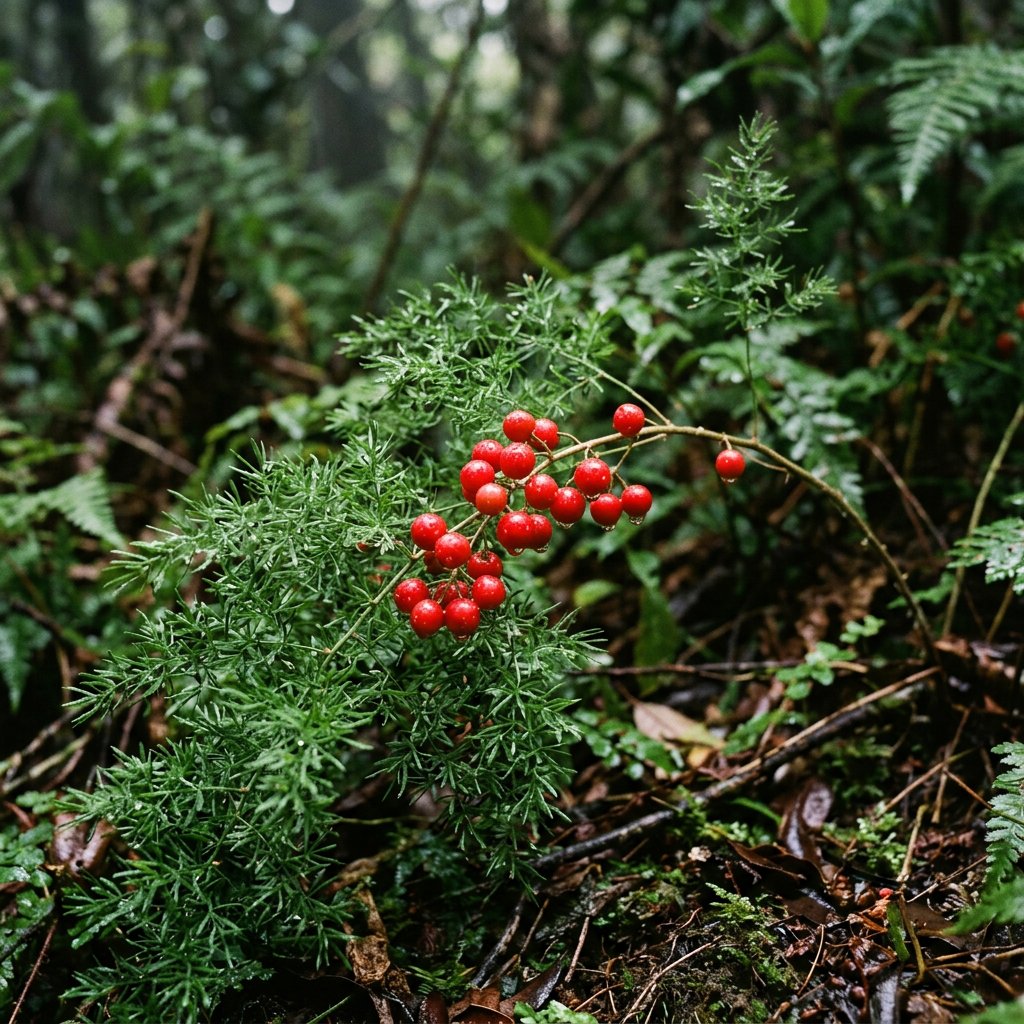
Plant Overview
Often called the Sprenger’s Asparagus Fern or the Emerald Fern, this plant is a master of disguise. Despite its delicate, feathery appearance and common name, it isn't a true fern at all—it’s actually a member of the Asparagus family and closer related to lilies! Hailing from the coastal regions of South Africa, it has become a global favorite for hanging baskets thanks to its lush, cascading plumes that look like soft, green clouds.
🔍 How to Identify
- 🌿 The "Leaves": What look like tiny needles are actually flattened stems called cladodes. They give the plant its airy, fern-like texture while being much hardier than true fern fronds.
- 🌸 Hidden Blooms: In the summer, it produces tiny, inconspicuous white or pale pink flowers that are surprisingly fragrant, though they are often tucked away inside the dense foliage.
- 🍒 Bright Berries: Following the flowers, the plant develops small green berries that eventually turn a vibrant, glossy red.
- 🌵 Hidden Thorns: Beware when pruning! Mature stems develop small, sharp hooked spines that can catch on skin or clothing.
🏡 In Your Garden
- 🏺 The Tuber Secret: If you notice the soil rising or the pot cracking, don't panic! This plant grows thick, watery tubers underground. These "storage tanks" allow it to survive periods of neglect and drought, making it much tougher than it looks.
- 💧 Hanging Elegance: Because of its trailing habit, it is most at home in elevated containers. It loves bright, indirect light; too much direct sun can turn those bright green "needles" yellow or brown.
- 🏃 Escape Artist: In frost-free climates (like Florida or Australia), it is considered a vigorous "garden thug." It can spread rapidly via birds dropping seeds, so it’s often best kept strictly as a container plant to protect local ecosystems.
⚠️ Safety & Toxicity
- 🐾 Toxic to Pets: The red berries are mildly toxic to cats and dogs, potentially causing vomiting or diarrhea if ingested.
- 🧴 Skin Irritation: The sap can cause allergic contact dermatitis (skin redness or itching) in sensitive individuals, especially after pruning.
- 🧤 Hand Protection: Due to the hidden thorns along the stems, it is always a good idea to wear gardening gloves when repotting or trimming.
✨ Fun Fact
Even though it shares a genus with the edible garden asparagus (Asparagus officinalis), you definitely shouldn't put this one on your dinner plate! It uses its "fern" appearance to trick herbivores, while its real strength lies in its ability to survive in rocky, harsh coastal cliffs.

Detailed Care Instructions
If regularly repotted and well cared for, an asparagus fern can have an almost indefinite life as a houseplant. If not regularly divided and repotted, however, it may perish within a few years as it becomes root-bound and overgrown. Outdoor garden plants have an easier time of it, as they will simply spread to fill available space.
How many species of asparagus fern are there?
In addition to the popular A. aethiopicus and A. densiflorus species, several other species are sometimes known as asparagus fern, including A. plumosus, A. retrofractus, and A. scandens, These species are not nearly as popular as houseplants, however.
What's the difference between asparagus fern, and the asparagus we eat as a vegetable?
Asparagus ferns and edible garden asparagus are different species within the same Asparagus genus. Garden asparagus is A. officinalis, a slow-growing perennial vegetable. It has a similar appearance to the asparagus fern species, but it has delicious edible stems that are harvested before the plant leafs out in spring.
| Color | White; Flowers Are Insignificant |
| Soil Ph | 6.5 To 6.8 |
| Humidity | High |
| Invasive | Weed |
| Lighting | Part Sun |
| Toxicity | Poisonous |
| Soil Type | Well-Drained Potting Soil |
| Bloom Time | Summer |
| Difficulty | Medium |
| Plant Type | Annual, Houseplant |
| Hibernation | Cold Period |
| Mature Size | Up To 2 Feet High And 6 Feet Long |
| Native Area | South Africa |
| Temperature | 15°C - 27°C |
| Sun Exposure | Indirect Light (Indoors); Part Sun (Outdoors) |
| Hardiness Zones | 9 To 11 |
To grow Asparagus Aethiopicus, also known as Sprenger's asparagus fern or Foxtail fern, follow these steps:
- Choose a suitable location: Asparagus Aethiopicus plants thrive in partial shade to full sun. Select a spot with well-draining soil for optimum growth.
- Propagation method: The common way to propagate Asparagus Aethiopicus is through division. Start by obtaining a healthy plant from a nursery or garden center.
- Prepare the soil: Ensure the soil is loose and well-draining. You can add organic matter such as compost or aged manure to improve fertility and drainage.
- Planting: Dig a hole slightly larger than the root ball of the plant. Place the plant in the hole and backfill with soil, gently firming it around the roots. Leave enough space between each plant, typically around 12-18 inches apart.
- Watering: Water the newly planted Asparagus Aethiopicus thoroughly, ensuring the water reaches the roots. Thereafter, water the plant regularly, keeping the soil moist but not waterlogged. These ferns prefer regular watering during the growing season.
- Fertilization: Apply a balanced, slow-release fertilizer in spring to promote healthy growth. Follow the instructions on the fertilizer package for proper application.
- Pruning: Asparagus Aethiopicus may produce long stems or fronds, also known as "foxtails." If you desire a neater appearance, you can prune off any unwanted or damaged fronds at the base of the plant. Be cautious while handling, as the asparagus fern has thorns on its fronds.
- Mulching: Adding a layer of organic mulch around the base of the plant can help retain soil moisture, suppress weed growth, and regulate soil temperature. Apply a 2-3 inch layer of mulch, keeping it a few inches away from the stem.
- Overwintering: Asparagus Aethiopicus is not frost-tolerant. If you live in a colder region, consider moving the plant indoors or covering it with a frost cloth during the winter months.
- Pests and diseases: Monitor your Asparagus Aethiopicus plant for any signs of pests such as aphids or mealybugs. Treat any infestations promptly with organic insecticidal soap or neem oil. Proper watering and adequate spacing between plants can also help prevent diseases such as root rot.
With proper care and maintenance, your Asparagus Aethiopicus plant should thrive and provide an attractive addition to your garden or indoor space.

Place in a window with dappled sun or a spot in the middle of a room. Or directly in a window facing west or east.

To water the plant, you should take into consideration the soil composition and drainage system. Ensure the soil stays consistently moist but not waterlogged, as this can lead to poor growth. Water the Asparagus Aethiopicus plant deeply and thoroughly, making sure the water reaches the roots of the plant. Avoid spraying water on the leaves as this can lead to bacterial and fungal infections. In cases of dry conditions or high temperatures, you may need to water more frequently to keep the plant hydrated. However, it is essential to monitor the plant's water intake to avoid overwatering, which can cause root rot and damage the plant. Therefore, test the soil regularly by sticking your finger in the soil to check the moisture level before watering.
To fertilize this plant, use a balanced, slow-release fertilizer. Apply it in the early spring, just as the new growth begins to appear. Use a garden fork to scratch the fertilizer into the soil around the base of the plant, being careful not to damage the roots. Water the plant deeply after fertilizing, to help the fertilizer soak into the soil. Repeat this process once or twice during the growing season, at intervals of 6-8 weeks. Avoid applying too much fertilizer, which can lead to the plant being burnt or overfed.
When planting Asparagus Aethiopicus, it is essential to use well-draining soil that is rich in organic matter. The soil should be loose and loamy, allowing for good root development and maximum nutrient absorption. Asparagus Aethiopicus plants prefer a slightly acidic to neutral soil pH level of between 6 and 7.5. To create the ideal soil mix for this plant, it is recommended to combine equal parts of compost, peat moss, and perlite or vermiculite. Additionally, the soil should be kept moist but not waterlogged, to prevent root rot and other fungal diseases. It is also essential to ensure adequate drainage in the plant's container or planting site to avoid soil compaction and waterlogging.
Asparagus Aethiopicus can be propagated using seeds or by division of its rhizomes.
To propagate from seeds, collect mature seeds from the plant and soak them in lukewarm water for a few hours before planting them in prepared soil. Keep the soil moist and warm, ideally around 70°F (21°C), and in 2 to 3 weeks, the seeds should begin to germinate.
To propagate by division, carefully uproot the entire plant and separate the rhizomes, being careful not to damage them. Plant each rhizome in a new pot with soil that is equal parts sand and compost. Keep the soil moist and in a warm and shaded location for the first few days.
Within a few weeks, new shoots should emerge from the rhizomes, and the roots will establish themselves in the soil. Once the new plant has matured, it can be uprooted and divided again to propagate further.
Common pests of the sprenger's asparagus fern include Mealybugs, spider mites, fungus gnats. Make a habit of checking your sprenger's asparagus fern frequently for pests so that any infestations can be caught and managed early.








