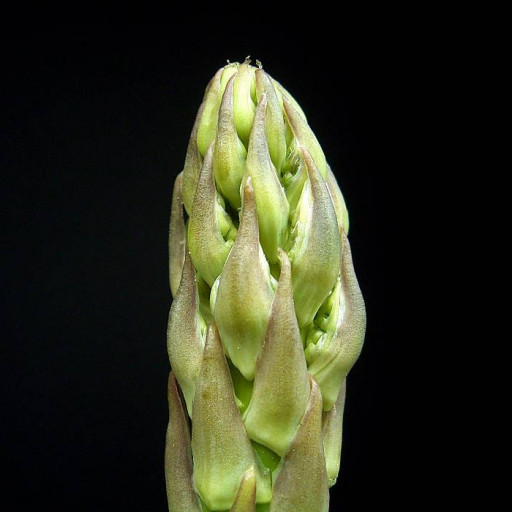
Plant Overview
Often called the "King of Vegetables," Asparagus officinalis has been garden royalty since the time of the Roman Empire. While most of us recognize it as the tender green spears on our dinner plates, this plant undergoes a dramatic transformation if left to grow, turning into a towering, ethereal cloud of green. It is a marathon runner of the garden world, often producing delicious harvests for over 20 years once established.
🔍 How to Identify
- 🌱 Spring Spears: The plant first emerges from the soil as fleshy, scale-covered shoots with tightly furled, pointed tips.
- 🌿 Feathery Foliage: If not harvested, the spears grow up to 5 feet tall, developing delicate, needle-like branchlets that give the plant a soft, fern-like appearance.
- 🔴 Jewel-like Berries: In late summer, female plants produce small, bright red berries that hang like ornaments among the wispy branches.
🏡 In Your Garden
- ⏳ Patience is Key: Asparagus is a long-term investment. You shouldn't harvest the spears for the first two years after planting; this allows the "crown" (the underground root system) to build enough energy for decades of future production.
- ☀️ Sun and Space: It thrives in full sun and requires deep, well-drained soil. Because it is a perennial that stays in one spot for a lifetime, it hates being moved and needs a dedicated corner where its tall ferns won't shade out smaller neighbors.
- 🍂 Seasonal Cycle: In autumn, the foliage turns a brilliant gold. It’s important to leave this foliage until it completely browns, as it is busy pumping nutrients back into the roots for next year's crop.
⚠️ Safety & Toxicity
- 🟢 Spears are Safe: The young, tender spears are perfectly safe and highly nutritious for humans.
- 🚫 Toxic Berries: The attractive red berries produced by the mature plant are toxic. They contain sapogenins which can cause abdominal pain, vomiting, and diarrhea if ingested.
- 🐾 Pet Alert: Keep dogs and cats away from the mature plants in late summer; eating the berries or brushing against the foliage can cause skin irritation or gastric upset in pets.
✨ Fun Fact
In the 1st Century AD, Roman Emperor Augustus was so fond of this vegetable that he coined the phrase "faster than you can cook asparagus" to describe any task that needed to be done with extreme speed!

Detailed Care Instructions
To grow Asparagus officinalis, also known as asparagus, follow these steps:
- Choose a suitable location: Select a sunny spot in your garden that receives around 6-8 hours of direct sunlight each day. Asparagus plants need well-drained soil that is enriched with organic matter.
- Prepare the soil: Asparagus prefers soil with a pH between 6.5 and 7.5. Amend the soil with compost or well-rotted manure before planting to improve its fertility and drainage.
- Start with crowns: Asparagus is typically grown from crowns instead of seeds. Purchase healthy asparagus crowns from a reputable nursery or garden center.
- Plant the crowns: Dig trenches that are around 12 inches deep and 8-12 inches wide. Space the crowns around 18 inches apart in the trench, ensuring that the dormant buds or "eyes" are facing upwards. Cover them with 2-3 inches of soil.
- Fill and mound soil: As the asparagus grows, gradually fill the trench with soil, covering the crowns. Over time, mound the soil around the plants to promote the growth of longer spears.
- Water regularly: Asparagus plants require consistent moisture. Water the plants deeply, providing around 1 inch of water per week, especially during dry periods. Avoid overwatering, as this may lead to root rot.
- Mulch: Apply a layer of organic mulch, such as straw or wood chips, around the asparagus plants to suppress weeds, retain moisture, and moderate soil temperature.
- Fertilize: Asparagus is a heavy feeder and benefits from regular fertilization. Apply balanced fertilizers, either organic or synthetic, in early spring and again after harvest in summer.
- Harvesting: Allow the asparagus crowns to establish for two to three years before harvesting. During the harvesting season (spring), snap or cut the spears just above the soil surface when they reach 6-8 inches in length. Stop harvesting when the spears become thinner or when the plant starts to produce fern-like foliage.
- Winter care: For winter, cut down the dried ferns to ground level and apply a layer of mulch for insulation. This will protect the crowns from frost damage.
With proper care and maintenance, your asparagus plants should continue to produce spears for up to 15-20 years.

Place in a window with dappled sun or a spot in the middle of a room. Or directly in a window facing west or east.

Asparagus Officinalis plants require consistent and regular watering to maintain their optimal health and growth. When watering these plants, it is important to avoid overwatering, which can lead to root rot and other issues.
To properly water Asparagus Officinalis plants, start by checking the soil moisture levels before watering. Stick your finger into the soil up to your first knuckle to gauge how damp the soil is. If it feels dry, it is time to water.
When watering, use a watering can or hose with a spray nozzle to gently moisten the soil. Avoid getting water on the plant's leaves or stems, as this can cause damage or promote disease.
Water until the soil is moist but not soaking wet. Ideally, the soil should be able to hold together when squeezed, but not be dripping with water.
In general, Asparagus Officinalis plants should be watered every 3-4 days, or more frequently during hot and dry weather. However, be sure to adjust your watering schedule based on the plant's individual needs and the conditions in your environment.
To fertilize the plant, apply a balanced fertilizer with an N-P-K ratio of 10-10-10 in early spring before the spears emerge from the ground. Apply the fertilizer evenly around the base of the plant and water well. Repeat this process every 4-6 weeks during the growing season. Avoid applying too much fertilizer as it can damage the roots of the plant.
Asparagus Officinalis prefer a well-draining soil with a pH range of about 6.0 to 7.0. The soil should be rich in organic matter and nutrients, with good water retention properties as Asparagus Officinalis require consistent moisture levels. An ideal soil for Asparagus Officinalis would contain a mix of loam, sand, and compost to promote fertility and soil aeration. It is important to avoid acidic soils and soils with high clay content as these can restrict root growth and lead to poor plant health. Additionally, adding a layer of mulch around the base of the plant can help retain soil moisture and prevent weed growth.
- Select a healthy and mature asparagus plant with strong and firm roots.
- Use a sharp and sterile pruning shears to cut the spear-like shoots or spears from the plant, leaving some stem intact.
- Cut the stem into sections, each about 4 inches long.
- Dip the cut ends of the stem sections in a rooting hormone powder or gel to promote root growth.
- Prepare a container with well-draining soil mix or sand, which is kept moist but not too wet.
- Make shallow holes in the soil and insert the cuttings about 2 inches deep, leaving the top part of the stem above the soil line.
- Cover the container with a clear plastic bag to create a humid environment and keep the soil moist.
- Place the container in a warm and bright spot, but avoid direct sunlight and extreme temperature fluctuations.
- Check the soil moisture level regularly and mist the foliage lightly to prevent wilting.
- After a few weeks, gently tug on the stem to check for root development. If the cutting resists, it has rooted.
- When the cuttings have developed a good root system, transplant them into individual pots or outdoors in a well-prepared garden bed.
Common pests of the garden asparagus include Mealybugs, spider mites, fungus gnats. Make a habit of checking your garden asparagus frequently for pests so that any infestations can be caught and managed early.








