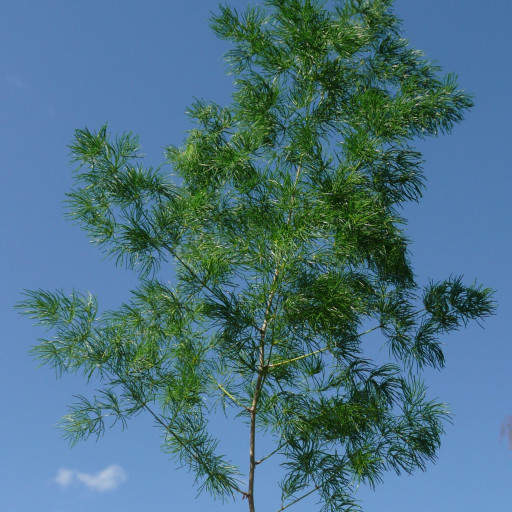
Plant Overview
Often called the Ming Fern or Zigzag Asparagus, this South African native is a master of disguise. While its soft, cloud-like foliage mimics the delicate appearance of a true fern, it is actually a hardy member of the Asparagus family (and a distant relative of the lily). Its architectural, sculptural growth makes it a favorite for those seeking a "natural bonsai" look without the high-maintenance demands of traditional penjing.
🔍 How to Identify
- 🌿 The Foliage: Look for clusters of tiny, needle-like green structures called cladodes. These grow in dense, fluffy tufts or "pom-poms" that feel surprisingly soft to the touch.
- 🦴 The Stems: The plant features woody, silver-grey branches that grow in a distinct zigzag pattern, sharply changing direction at every node.
- 🌼 The Bloom: In the right conditions, it produces tiny, fragrant white flowers that eventually turn into small, spherical orange-to-black berries.
🏡 In Your Garden
- 🏺 Root Sensitivity: This plant develops thick, tuberous roots designed to store water for periods of drought. Because of these fleshy tubers, it dislikes being frequently repotted or moved; it prefers to settle into a container and stay there.
- ☀️ Light & Texture: While it looks airy and soft, the older woody stems hide small, sharp thorns. It thrives in bright, filtered light. If the "pom-poms" start to yellow and shed, it is usually a sign of low humidity or a sudden draft.
⚠️ Safety & Toxicity
- 🐾 Toxic to Pets: The Ming Fern is considered toxic to cats and dogs. Ingestion can lead to vomiting, diarrhea, or abdominal pain.
- ⚠️ Skin Irritation: The sap can cause mild dermatitis in sensitive individuals, and the hidden thorns along the inner stems can cause small scratches during pruning.
- 🚫 Non-Edible: Despite being in the Asparagus genus, no part of this plant is edible for humans.
✨ Fun Fact
The species name retrofractus is derived from Latin, meaning "broken back." This isn't a comment on its health, but a literal description of its unique "fractured" or zigzagging stem structure that looks like it has been bent at sharp angles.

Detailed Care Instructions
To grow Asparagus Retrofractus plant, also known as Ming Fern, follow these steps:
- Choosing the right location: Asparagus Retrofractus plant prefers bright, indirect light. Place it near a window or in a partially shaded area of your garden.
- Soil requirements: The plant needs well-draining soil. Mix equal parts of potting soil, sphagnum moss, and perlite to create a suitable growing medium. Ensure that the pH level is slightly acidic.
- Propagation: The most common method of propagation is through division. Carefully separate the offshoots from the main plant, ensuring that each division has a few healthy roots attached.
- Planting: Select a container or garden bed with proper drainage holes. Gently place the divisions into the soil, burying them to the same depth as they were previously.
- Watering: Ming Fern prefers soil that is moderately moist but never waterlogged. Water the plant when the top inch of soil feels dry. Be cautious not to overwater, as it can lead to root rot.
- Humidity: Providing a humid environment is crucial for Ming Fern. You can increase humidity by misting the plant regularly or placing a tray filled with water near the plant, ensuring that the pot sits above the waterline.
- Fertilization: Feed the plant with a balanced liquid fertilizer once a month during the growing season (spring and summer). Follow the instructions on the label for the correct dosage.
- Pruning: Trim any yellowing or dead fronds from the plant to maintain its appearance and health. Ensure to use clean, sharp pruning shears to prevent damaging the foliage.
- Pests and diseases: Watch out for common plant pests like spider mites and mealybugs. Treat any infestation promptly with insecticidal soap or neem oil. Avoid overwatering to prevent fungal diseases.
- Winter care: Asparagus Retrofractus is sensitive to cold temperatures. If you live in a colder region, bring the plant indoors when the temperature drops below 50°F (10°C), ensuring it receives adequate light.
By following these guidelines, you can successfully cultivate and grow an Asparagus Retrofractus plant.

Place in a window with dappled sun or a spot in the middle of a room. Or directly in a window facing west or east.

Asparagus Retrofractus plant requires regular watering to keep the soil moist. You can water the plant once a week or when the topsoil feels dry to the touch. Avoid overwatering the plant as it can lead to root rot. When watering, ensure that the water reaches the root zone by watering at the base of the plant. Additionally, the plant prefers well-draining soil, so ensure there are proper drainage holes in the pot. Watering the plant in the morning is recommended to allow the excess moisture to evaporate before sunset. Finally, it is also essential to ensure that the plant is not sitting in standing water as it can damage the roots.
To fertilize the plant, use a balanced, all-purpose fertilizer with an N-P-K ratio of 10-10-10. Apply the fertilizer in the spring before new growth emerges and then again in the fall after the foliage has died back. Use a granular fertilizer that can be sprinkled around the base of the plant, following the instructions on the package for the correct dosage. Water the plant well after fertilizing to help the fertilizer soak into the soil. Avoid over-fertilizing, as this can damage the plant and negatively affect its growth and production.
The ideal soil for the plant is a well-draining and nutrient-rich soil that is slightly acidic in nature. It should contain a mix of organic matter, such as compost, and inorganic material, such as sand or perlite. The soil should not be compacted and should be loose to allow for proper root development and aeration. The plant prefers a soil pH range of 6.0 to 6.5, which can be adjusted with the addition of sulfur or lime. The soil should be kept moist but not waterlogged. The plant prefers full sun to partial shade and is commonly grown in garden beds or containers.
To propagate this plant, you will need to take cuttings. Start by selecting a healthy stem that is about 4-6 inches long, and cut it with a sharp, sterile knife.
Remove the lower leaves from the stem, leaving about 1-2 inches of leaves at the top. Dip the cut end in a rooting hormone powder to encourage root growth.
Next, plant the cutting in a small pot filled with well-draining soil. Water the cutting thoroughly, and cover the pot with a plastic bag to create a humid environment.
Place the pot in a warm, bright location, but out of direct sunlight. Keep the soil moist, and remove the plastic bag once new growth appears.
Once the cutting has established a healthy root system and new growth, it can be transplanted into a larger pot or outside in a sunny location.
Common pests of the ming fern include Mealybugs, spider mites, fungus gnats. Make a habit of checking your ming fern frequently for pests so that any infestations can be caught and managed early.








