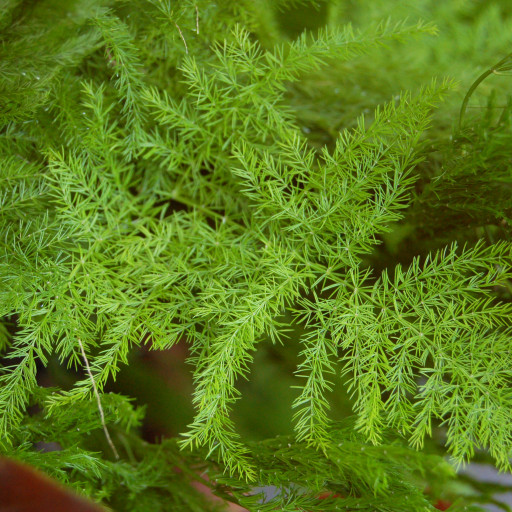
Plant Overview
Often called the "Lace Fern," this elegant plant is a master of deception. Despite its soft, cloud-like appearance, it is not a true fern at all—it is actually a member of the Asparagus family (Asparagaceae). Originally hailing from South Africa, it has been a favorite in floral arrangements and indoor gardens since the Victorian era for its ability to add a touch of woodland magic to any space.
🔍 How to Identify
- 🌿 Cladodes: What look like tiny, needle-thin leaves are actually modified stems called cladodes. They grow in flat, horizontal tiers that give the plant its signature "feathery" look.
- 📐 Geometric Growth: New stems emerge as straight, leafless "spears" before unfurling into delicate, horizontal plates of greenery.
- ⚔️ Hidden Thorns: As the plant matures and begins to vine, it develops small, hooked thorns along its main stems to help it scramble up nearby structures.
🏡 In Your Garden
- 🌤️ Humidity is Key: Unlike desert succulents, this "fern" craves moisture in the air. If the air is too dry, it will shed its tiny needles, leaving a golden, messy trail on your floor. Regular misting or a pebble tray is its best friend.
- 🧗 Climbing Ambition: While often sold as a small tabletop plant, its natural instinct is to climb. In its native habitat or if given a trellis, it can reach lengths of over 10 feet. It’s a "rambler" that loves to explore its surroundings.
⚠️ Safety & Toxicity
- 🐾 Pet Warning: The Asparagus Setaceus is mildly toxic to cats and dogs. Ingesting the foliage or the small berries can lead to gastrointestinal upset, including vomiting and diarrhea.
- 🩹 Skin Irritation: The sap can cause skin irritation for some people, and those hidden thorns can give you a surprise scratch during pruning. It is best handled with gardening gloves.
✨ Fun Fact
Despite its incredibly delicate and fragile appearance, the Lace Fern is surprisingly tough. In certain warm climates like Florida and Hawaii, it is actually considered an invasive species because it grows so vigorously that it can smother local vegetation!

Detailed Care Instructions
| Color | Green Fern-Like Leaves, Occasionally With Small Green-White Flowers. Greenish Berries, Which Blacken As They Ripen, Follow The Flowers On Female Plants |
| Soil Ph | 6.5 -7 |
| Humidity | High |
| Invasive | Weed |
| Lighting | Part Sun |
| Toxicity | Poisonous |
| Soil Type | Moist, But Well-Drained Soil, Or Loam-Based Potting Compost |
| Bloom Time | Spring To Fall |
| Difficulty | Medium |
| Plant Type | Herbaceous Perennial |
| Hibernation | Cold Period |
| Mature Size | Up To 10 Feet High Outdoors; Smaller When Container Grown |
| Native Area | Southern Africa |
| Temperature | 15°C - 27°C |
| Sun Exposure | Partial Shade Outside; Indoors In Bright But Indirect Light |
| Hardiness Zones | 9-11 |
To grow Asparagus Setaceus (also known as Asparagus Fern or Lace Fern), you can follow these steps:
- Choose a suitable location: Asparagus Setaceus thrives in bright, indirect light and prefers temperatures between 60-75°F (15-24°C). It can tolerate lower light levels but may not produce as many fronds.
- Select the right container: Use a well-draining pot with drainage holes to avoid waterlogging the roots. Asparagus Setaceus can be grown in both small pots and hanging baskets, as it has cascading foliage.
- Prepare the soil: Create a well-aerated soil mixture by combining potting soil, perlite, and peat moss or coconut coir. This will provide good drainage while retaining some moisture.
- Plant the asparagus fern: Gently remove the fern from its nursery container, loosen the root ball slightly, and place it in the prepared pot. Add soil around the roots, ensuring they are covered, but not buried too deeply.
- Watering: Water the plant thoroughly after planting and keep the soil slightly moist. Avoid overwatering, as this can lead to root rot. Allow the top few inches of soil to dry out between waterings.
- Fertilizing: Use a balanced, water-soluble fertilizer every two to three months during the growing season (spring to fall). Follow the package instructions for proper dosage.
- Pruning: Asparagus Setaceus may develop long, leggy stems over time. You can prune these back to encourage bushier growth. Trim any dead or yellowing foliage regularly to maintain a healthy appearance.
- Humidity: This plant benefits from increased humidity. Mist the foliage occasionally or place a tray of water nearby to increase humidity levels.
- Propagation: Asparagus Setaceus can be propagated through division or by collecting and planting the seeds found in mature berries. Dividing the plant is the easiest and quickest method. Gently separate the plant into smaller sections and replant them in individual pots.
- Pests and diseases: Asparagus Setaceus is generally resistant to pests but can sometimes be susceptible to mealybugs or spider mites. Regularly inspect the plant for any signs of infestation and treat accordingly using insecticidal soap or horticultural oil.
By following these steps and providing proper care, you can successfully grow Asparagus Setaceus indoors or in a sheltered outdoor location.

Place in a window with dappled sun or a spot in the middle of a room. Or directly in a window facing west or east.

Asparagus Setaceus plant should be watered thoroughly and consistently without allowing the soil to become waterlogged. It requires regular watering during the growing season, especially during hot and dry weather. The soil should be kept slightly moist, but not overly damp. It is important to water the plant deeply at the root level instead of just spraying the foliage. Additionally, it is recommended to avoid getting water on the leaves, as it may cause fungal disease. The frequency of watering will depend on the temperature, humidity, and light conditions of the plant's environment. During the dormant season, the plant requires less water and can tolerate slight drying out between watering sessions.
To provide optimal nutrients for this plant, fertilize it with a well-balanced fertilizer during its active growing season. Apply the fertilizer every two weeks, but be careful not to over-fertilize as this can damage the plant. Make sure to follow the instructions on the fertilizer packaging for proper dosage. Additionally, amend the soil with organic matter such as compost or aged manure to improve soil fertility.
The ideal soil for Asparagus Setaceus plant is well-draining and rich in organic matter. It should be slightly acidic with a pH range of 6.0 to 6.5 for optimal growth. A mixture of peat moss, perlite, and vermiculite is a good choice for potting soil. The plant prefers moist but not waterlogged conditions, so the soil should be kept evenly moist. It is recommended to fertilize the plant every two to three weeks during the growing season with a balanced fertilizer. Additionally, the soil should be supplemented with compost or organic matter periodically to maintain soil fertility and promote healthy growth.
Asparagus setaceus plant can be propagated through a process called division. This involves carefully separating the roots and stems of an established plant into multiple new plants.
Step 1: Choose a mature Asparagus setaceus plant. Look for a healthy plant that has been growing for at least two years.
Step 2: Prepare the soil. The soil should be well-draining and rich in organic matter. Add compost or other organic material to the soil if necessary.
Step 3: Remove the plant from its pot or ground. Carefully loosen the soil around the roots and gently remove the plant.
Step 4: Divide the plant into smaller sections. Use a sharp knife or garden shears to cut the plant into smaller sections. Each section should have at least one stem and a healthy root system.
Step 5: Plant the new sections. Dig holes in the prepared soil and plant each section. Water the new plants thoroughly.
Step 6: Care for the new plants. Keep the soil moist but not waterlogged. Provide plenty of light but avoid direct sunlight. Fertilize the plants every two weeks with a balanced fertilizer.
Over time, the new Asparagus setaceus plants will grow and develop into mature, healthy plants.
Common pests of the common asparagus fern include Mealybugs, spider mites, fungus gnats. Make a habit of checking your common asparagus fern frequently for pests so that any infestations can be caught and managed early.







