Plant Overview
Known as the Umbel Asparagus or the "Canary Island Lace," this elegant evergreen is a rugged survivor masquerading as a delicate woodland beauty. Native to the volcanic cliffs of the Canary Islands and Madeira, it is a master of adaptation, sporting wiry, woody stems that love to weave through garden trellises or spill over hanging baskets. While it looks like a soft fern, it is actually a hardy member of the asparagus family, valued for its airy, cloud-like texture.
🔍 How to Identify
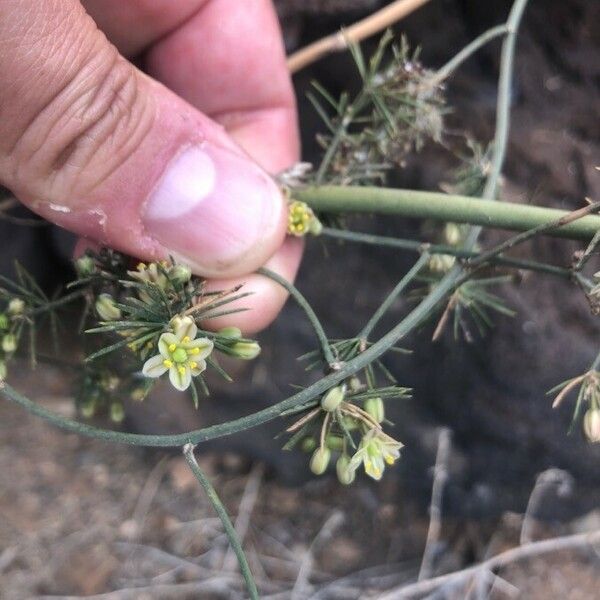
- 🌿 The Foliage: Unlike true leaves, it features "cladodes"—flattened green stems that look like fine needles. These grow in distinct, umbrella-like clusters (umbels) along the branches.
- 🎋 The Stems: The main stems are surprisingly stiff and woody, often developing a slight zig-zag pattern as they climb or spread.
- 🌼 Flowers & Berries: In late spring, it produces tiny, star-shaped white flowers that carry a subtle fragrance, followed by small, round berries that ripen from green to a dull orange or red.
🏡 In Your Garden
- 💧 Thirst for Humidity: Because of its island heritage, this plant craves moisture in the air more than soggy soil. If the "needles" start turning yellow and dropping, it’s usually a cry for more humidity rather than more water in the pot.
- ✂️ Taming the Tangle: It is a vigorous grower and can become "leggy" or tangled quite quickly. Don't be afraid to prune it back hard in early spring; this encourages the plant to push out much denser, fluffier growth from the base.
⚠️ Safety & Toxicity
- 🐾 Toxic to Pets: Like many ornamental asparagus species, the Asparagus umbellatus contains sapogenins. If cats or dogs brush against it frequently, it can cause skin irritation (allergic dermatitis).
- 🤢 Berry Warning: The colorful berries are highly toxic if ingested. They can cause severe gastrointestinal upset, including vomiting and abdominal pain, so keep this plant out of reach of curious toddlers and pets.
✨ Fun Fact
Despite its fern-like appearance, this plant is more closely related to garden-variety edible asparagus and even lilies than to any fern species. It evolved its needle-like stems to reduce water loss while still capturing enough sunlight on the misty, wind-swept cliffs of its native islands!

Detailed Care Instructions
To grow Asparagus umbellatus (also known as Ming Fern or Asparagus fern), you can follow these steps:
- Climate and soil requirements: Asparagus umbellatus thrives in warm, subtropical to tropical regions. It prefers well-draining soil with high organic matter content.
- Sunlight: This plant prefers partial shade or filtered sunlight. It can tolerate some direct sunlight, but excessive exposure may cause sunburn.
- Propagation: You can propagate Asparagus umbellatus through seeds, division, or by planting bulbs. Seeds can be sown in pots or directly in the ground in early spring. Bulbs can be planted at a depth of 1-3 inches in early spring.
- Planting: If you're starting from seeds, sow them in a container filled with well-draining soil. Keep the soil moist but not waterlogged. Transplant the seedlings to larger pots after they develop a few true leaves. For bulbs, dig a hole, place the bulb, and cover it with soil.
- Watering: Water the plant regularly to keep the soil evenly moist. Ensure that the soil doesn't become waterlogged, as this can lead to root rot.
- Fertilization: Asparagus umbellatus benefits from regular feeding. Use a balanced fertilizer, such as a 10-10-10 formula, once a month during the growing season.
- Pruning: Prune any dead or damaged fronds to maintain the plant's appearance and encourage healthy growth. You can also prune to control the size and shape of the plant.
- Mulching: Apply a layer of organic mulch, such as compost or shredded leaves, around the base of the plant. This helps retain moisture and suppresses weed growth.
- Pests and diseases: Asparagus umbellatus is generally resistant to pests and diseases. However, watch for common houseplant pests like spider mites or mealybugs. In case of infestation, treat with insecticidal soap or neem oil.
- Winter care: If you live in an area with freezing temperatures during winter, bring the plant indoors before cold weather. Place it in a spot with bright, indirect light and reduce watering during the dormant period.
Remember to research and follow any specific care instructions for your specific climate and growing conditions.
To properly water this plant, you should first check the soil moisture level by using your finger or a moisture meter. It is important to make sure that the soil is never too dry, but also not overly saturated. The amount and frequency of watering will depend on the specific conditions of your environment, such as the temperature and humidity. It is generally recommended to water deeply but less frequently, allowing the soil to dry out slightly before watering again. When watering, it is best to apply water directly to the soil and avoid getting the leaves wet, as this can lead to fungal diseases. Additionally, it is important to use good quality water, free from any harmful chemicals or excessive minerals.
Asparagus Umbellatus requires a well-draining soil with a pH between 6.5 and 7.5. The plant prefers full sun to partial shade and needs to be watered consistently. To fertilize, apply a balanced fertilizer (10-10-10 or 20-20-20) in the spring as new shoots begin to emerge. Apply the fertilizer at a rate of 1/2 pound per 10 square feet of area. Repeat the application after 6 weeks. Avoid over-fertilizing as this can lead to excessive foliage growth at the expense of root development.
The best soil to use with this particular plant is one that is loose, well-draining, and nutrient-rich. It should be slightly acidic with a pH of around 6.0-6.5. A mix of loam, sand, and compost in equal parts can provide an ideal growing medium. Additionally, the soil should be moist but not waterlogged, as excessive moisture can cause root rot. It is also recommended to add a slow-release fertilizer to the soil before planting to provide essential nutrients for the plant's growth and development. Overall, using high-quality soil is essential for the health and vitality of this plant.
To propagate this plant, you will need to collect its seeds and soak them in tepid water for a few hours. After soaking, sow the seeds in well-draining soil, cover them with a thin layer of soil, and water lightly. Keep the soil consistently moist and place the pot in a warm, well-lit area.
Once the seedlings have emerged, thin them out, leaving only the healthiest plants to grow. It is important to wait until the seedlings have grown large enough before transplanting them to their final location.
Another way to propagate this plant is through division. This process involves separating the plant into smaller sections and replanting them. To do this, gently dig up the plant and separate the roots into sections with a sharp knife. Each section should have at least one healthy stem and root system.
After dividing the plant, replant each section in well-draining soil and water it thoroughly. Keep the soil consistently moist and place the pot in a warm, well-lit area until the plant establishes roots and begins to grow.








