Plant Overview
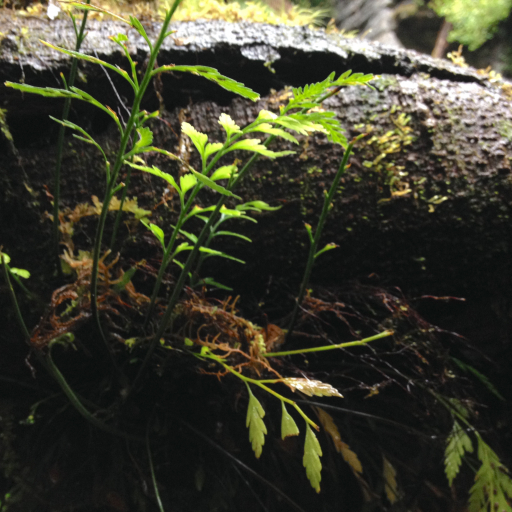
Often called the Weeping Spleenwort, this elegant fern is a master of the damp, shaded gullies of Australia and New Zealand. Its delicate, feathery fronds cascade downward like a green waterfall, making it a favorite for hanging baskets. In the wild, it is often found clinging to mossy rocks or the trunks of ancient trees, living a quiet, moisture-loving life in the forest understory.
🔍 How to Identify
- 🌿 The Fronds: Deep green and glossy, these fronds are "bipinnate," meaning they are intricately divided into small, pointed segments that give the plant a lace-like appearance.
- 💧 The Texture: Unlike many soft ferns, the foliage feels slightly leathery or "thick" to the touch, a clever adaptation that helps it retain moisture during dry spells.
- 🖋️ Spore Patterns: On the underside of mature leaves, you will find short, linear brown streaks (sori) arranged in a herringbone pattern, which is a classic signature of the Asplenium family.
🏡 In Your Garden
- ☁️ Humidity is Key: This fern thrives in "goldilocks" conditions—it hates being soggy but will shrivel in dry air. It excels in a bathroom with a window or near a pebble tray where the air stays consistently misty.
- 🪨 Not Your Average Soil: Because it often grows on rocks (lithophytic) or trees (epiphytic) in nature, it prefers a very airy, bark-heavy potting mix rather than dense, heavy garden soil. It needs its roots to "breathe."
⚠️ Safety & Toxicity
- ✅ Pet & Child Friendly: The Asplenium appendiculatum is generally considered non-toxic to cats, dogs, and humans. It is a safe choice for a "living room jungle."
- 🧤 Handle with Care: While not poisonous, the fronds can be sensitive to the oils on human skin. Avoid touching the new, curling "fiddleheads" too often, as this can cause the tips to turn brown.
✨ Fun Fact
The name "Spleenwort" dates back to ancient herbalism. Because the spore clusters on the back of the leaves were thought to resemble the human spleen, people believed the plant could cure various ailments of that organ—a theory known as the "Doctrine of Signatures."

Detailed Care Instructions

Place in a dark room with little light, like a dark bedroom or a spot far away from a window or directly in a north-facing window.

Asplenium Appendiculatum is a type of plant that belongs to the genus Asplenium. It requires a moderate amount of water to maintain its healthy growth and appearance.
When watering this plant, it is important to avoid overwatering as it can lead to root rot, which can be fatal for the plant. Therefore, it is recommended to water Asplenium Appendiculatum once a week or when the top inch of the soil feels dry to the touch.
The best method for watering this plant is to pour water evenly over the soil until it starts to drain out from the bottom of the pot. Make sure to empty the saucer under the pot to prevent the plant from sitting in standing water.
It is also essential to use room temperature water for watering Asplenium Appendiculatum, as cold water can shock its roots and harm the plant. Additionally, it is recommended to avoid getting water on the plant's fronds when watering, as this can cause the leaves to rot or develop fungal diseases.
In summary, water Asplenium Appendiculatum once a week or when the soil feels dry to the touch, use room temperature water, pour water evenly over the soil, and avoid getting water on the plant's fronds.
Asplenium Appendiculatum plant prefers a rich, slightly acidic, and well-draining soil. It requires soil that is high in organic matter, and has a pH range of 5.5-7.0. The soil should be able to retain moisture evenly without becoming waterlogged, as this can cause root rot. A soil mix consisting of peat moss, perlite, coco coir, and sand can be a good choice for this plant. Avoid using soil that is heavy and clayey in texture, as it can hinder the growth and development of Asplenium Appendiculatum. Additionally, fertilizers can be added during the growing season to improve the soil's nutrient content and promote plant growth.








