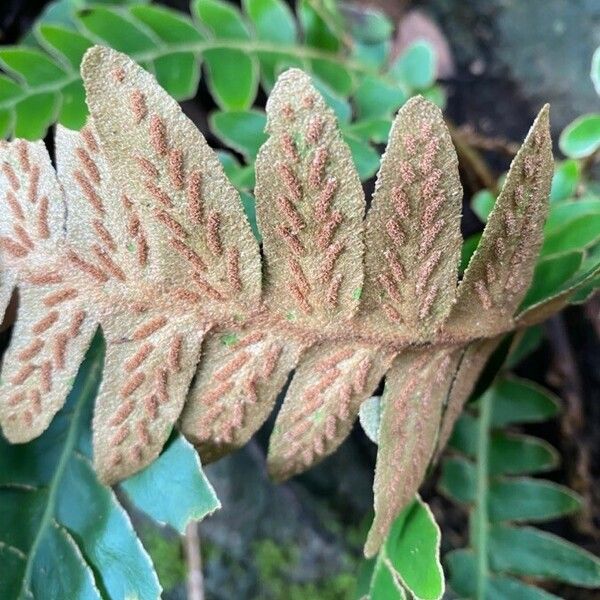
Plant Overview
Known as the "Golden Spleenwort" or "Canary Island Hart's Tongue," this resilient fern is a jewel of the Macaronesian islands. Unlike many of its moisture-loving cousins that hide in dark forests, Asplenium aureum is a master of the elements, often found clinging to sun-drenched volcanic cliffs. It is famously known as a "resurrection plant" for its dramatic ability to bounce back from total dehydration.
🔍 How to Identify
- 🌿 The Fronds: Deeply lobed, leathery leaves that look like thick, wavy green ribbons with rounded segments.
- ✨ The Underside: The "golden" in its name comes from the dense layer of shimmering, honey-colored scales that completely cover the back of the leaves.
- 🌀 The Thirst Response: During dry periods, the fronds curl tightly inward, hiding the green surface and exposing only the golden scales to reflect the sun.
🏡 In Your Garden
- 🧗 The Rock Dweller: This fern is epilithic, meaning it loves to grow in the cracks of stone walls or rocky outcrops. It requires exceptional drainage and hates "wet feet," so avoid heavy, water-retaining potting soils.
- 🌤️ Light & Air: While most ferns demand deep shade, Asplenium aureum enjoys bright, indirect light and can even handle some direct morning sun. It thrives on good air circulation, mimicking the breezy coastal cliffs of its home.
⚠️ Safety & Toxicity
- ✅ Status: Generally non-toxic and safe.
- 🐾 Details: Like most members of the Spleenwort family, this plant is considered safe for households with cats, dogs, and children. It does not produce irritating saps or toxic compounds.
✨ Fun Fact
The golden scales on the underside of the leaves aren't just for decoration; they act like a biological "space suit." They reflect harsh UV rays and trap a thin layer of humidity against the leaf, allowing the plant to survive for months without a single drop of rain.

Detailed Care Instructions








