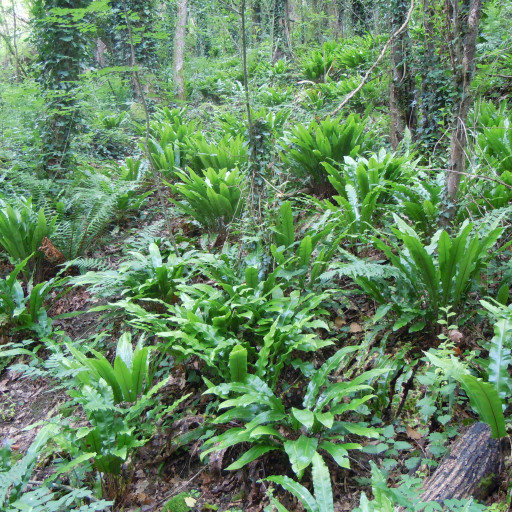
Plant Overview
Known as the "Hart’s Tongue Fern," this plant gets its nickname because its long, undivided fronds resemble the tongue of a male red deer (historically called a "hart"). Unlike the lacy, feathery foliage typical of most ferns, this ancient-looking species offers a bold, architectural structure. It is a favorite for Victorian-style "stumperies" and shaded rock gardens, bringing a touch of prehistoric mystery to the landscape.
🔍 How to Identify
- 🌿 The Fronds: The leaves are strap-shaped, leathery, and glossy. Unlike common ferns, they are entirely undivided with slightly wavy or "crinkled" margins.
- 📏 Growth Habit: It grows in a lush, fountain-like rosette, typically reaching 12 to 20 inches in height, creating a compact but striking silhouette.
- 🤎 Spore Patterns: On the underside of mature fronds, you will find long, paired brown stripes called sori. These diagonal lines look like centipede legs, which is why the species name is derived from the Greek word for centipede, scolopendra.
🏡 In Your Garden
- 🪨 The Lime Lover: While most ferns crave acidic soil, the Hart's Tongue is a "calcicole," meaning it thrives in alkaline or lime-rich environments. It is the perfect choice for planting near old concrete walls or limestone rockeries.
- ☁️ Shadow Dweller: This plant is a true shade specialist. It prefers deep or dappled shade and will quickly "sunburn" or turn yellow if exposed to direct afternoon rays.
- 💧 Moisture Balance: It loves high humidity and consistent moisture but requires excellent drainage. It often grows vertically out of rock crevices in the wild to ensure its roots never sit in stagnant water.
⚠️ Safety & Toxicity
- ✅ Safe for All: The Hart's Tongue Fern is considered non-toxic to cats, dogs, and horses. It is a very "family-friendly" plant for indoor or outdoor use.
- 🧤 Skin Sensitivity: While not poisonous, the spores on the underside of the leaves can occasionally cause very mild irritation to those with extremely sensitive skin if handled excessively.
✨ Fun Fact
During the Victorian era's "Pteridomania" (the great fern craze), plant hunters discovered hundreds of mutated varieties of this single species—some with fringed edges, some with forked tips, and others that looked like ruffled kale! Many of these rare Victorian cultivars are still grown by collectors today.

Detailed Care Instructions
| Color | Green Foliage |
| Soil Ph | Acid, Alkaline, Neutral |
| Lighting | Part Sun |
| Toxicity | Non-Toxic |
| Soil Type | Grows Best With Clay Or Sandy Soil That Includes Organic Content |
| Plant Type | Terrestrial, And Epiphyte |
| Mature Size | 12-18 In. Tall |
| Native Area | Australia And New Zealand |
| Sun Exposure | Partial Sunlight |
| Hardiness Zones | 5-9 |
To grow Asplenium Scolopendrium, also known as Hart's Tongue Fern, follow these steps:
- Choose the right location: Asplenium Scolopendrium prefers partial shade to full shade conditions. It thrives in moist, humus-rich soil that is well-draining. Select a suitable spot in your garden or prepare a container with the right soil conditions.
- Prepare the soil: The soil should be kept consistently moist but not waterlogged. If your soil does not retain moisture well, consider incorporating organic matter like compost or peat moss to improve water retention.
- Planting: If you are planting in the garden, dig a hole slightly larger than the root ball of the fern. Place the fern in the hole, ensuring the crown is level with the soil surface. Gently firm the soil around the plant's base.
- Watering: Asplenium Scolopendrium requires regular watering, especially during dry spells. Water the plant at the base, being careful not to wet the fronds excessively as this can lead to rot. Mulching around the base of the fern can help retain moisture in the soil.
- Fertilizing: Although not necessary, you can apply a balanced liquid fertilizer during the growing season to promote healthy growth. Follow the instructions on the fertilizer package for proper dosage.
- Pruning: Remove any dried or damaged fronds periodically to maintain the plant's appearance. Be cautious not to cut into the crown of the fern while pruning.
- Protection from extreme temperatures: Asplenium Scolopendrium is hardy in USDA zones 5-9. If you live in a colder zone, ensure the fern is protected during the winter months with mulch or by moving potted plants indoors.
- Propagation: Hart's Tongue Fern can be propagated through division. Lift the plant from the ground or gently remove it from its pot. Divide the clump into smaller sections, making sure each section has roots attached. Replant the divisions in suitable locations and provide proper care.
By following these steps, you can successfully grow and maintain an Asplenium Scolopendrium plant.

Place in a window with dappled sun or a spot in the middle of a room. Or directly in a window facing west or east.

Asplenium Scolopendrium is a fern plant that requires consistent and even moisture to thrive. The soil should be kept moist, but not waterlogged, and allowed to dry out slightly before the next watering. It is important to water the plant at its base, avoiding getting water on the leaves as this can lead to fungal growth or damage to the delicate fronds. Watering should be done once or twice a week, depending on the level of humidity and environmental conditions in the plant's growing location. It is important to ensure that the plant is not sitting in standing water, as this can lead to root rot. Adequate drainage should be provided to prevent water from collecting in the soil, and the plant may benefit from being placed on a bed of pebbles or gravel to improve drainage.
To fertilize this plant, use a balanced water-soluble fertilizer that is diluted to half-strength. Apply it to the soil every two to three weeks during the growing season, which is typically from spring through summer. Be careful not to over-fertilize, as this can cause damage to the plant's roots. Additionally, make sure to water the plant thoroughly after fertilizing to help prevent burning of the roots.
Asplenium Scolopendrium plant prefers a moist and well-draining soil that is rich in organic matter. The ideal soil texture for this plant is loamy, which is a medium-textured soil that provides a good balance between water-holding capacity and drainage. Clay soils are not ideal for this plant as they tend to retain too much water, leading to root rot and other problems.
It is important to ensure that the soil is slightly acidic to neutral, with a pH range of 6.0 to 7.0. This can be achieved by adding peat moss or compost to the soil mix.
When planting Asplenium Scolopendrium, it is recommended to use a high-quality potting soil mix that contains perlite or vermiculite for better drainage. Alternatively, a mix of equal parts peat moss, perlite, and vermiculite can be used.
It is also important to provide proper drainage for the plant to prevent standing water that can cause root rot. This can be achieved by placing a layer of rocks or pebbles at the bottom of the pot before adding the soil mix.
In summary, Asplenium Scolopendrium plant prefers a loamy, slightly acidic to neutral soil that is rich in organic matter and well-draining. When planting, use a high-quality potting soil mix that contains perlite or vermiculite, and ensure proper drainage to prevent standing water.
To propagate this plant, you will need to take a cutting from an existing healthy specimen. You should select a stem with several fronds attached and make a clean cut below the lowest set of leaves. You can then prepare the cutting by removing any lower fronds or dead material, leaving only the top portion of the stem with the healthy leaves intact.
Next, you should prepare a pot with well-draining soil and make a hole in the center. Place the cutting in the hole and lightly cover it with soil, making sure that the base of the stem is firmly in contact with the soil. Water the cutting thoroughly and place it in a bright, but shaded area.
It may take several weeks for the cutting to take root, during which time you should ensure that the soil remains moist but not waterlogged. You can check for signs of root growth by gently tugging on the cutting; if it resists, it has likely begun to grow roots.
Once the cutting has established a strong root system and new growth has appeared, you can transplant it to a larger container or into the ground outside. Water regularly and provide ample shade until the plant has acclimated to its new environment.
Common pests of the hart's-tongue fern include Scale insect, mealybugs, spider mites, aphids, thrips. Make a habit of checking your hart's-tongue fern frequently for pests so that any infestations can be caught and managed early.








