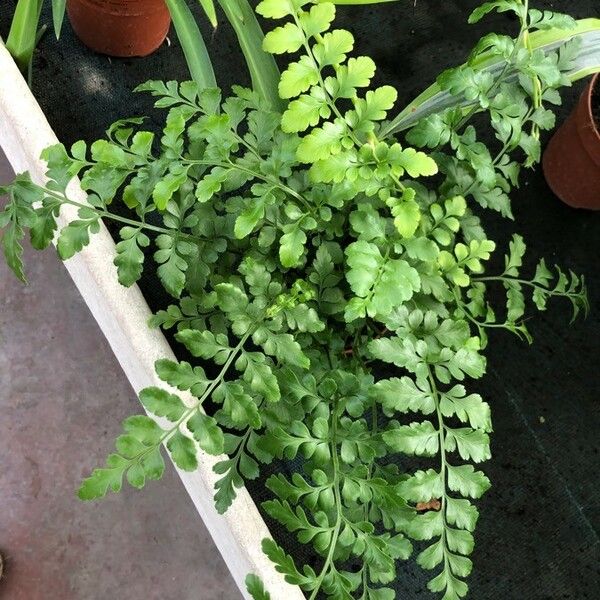
Plant Overview
Known as the Three-lobed Spleenwort, this charming miniature fern is a hidden gem from the temperate rainforests of southern Chile and Argentina. Unlike many of its sprawling relatives, this plant stays compact and creates a delicate, geometric pattern wherever it grows. It is a master of adaptation, often found clinging to mossy tree trunks or damp rock faces in the misty Valdivian forests.
🔍 How to Identify
- 🌿 The Frond Shape: The most striking feature is its "trilobed" leaf, which looks like a tiny green trident or a simplified arrowhead.
- 🟢 Texture & Color: The fronds are a deep, waxy green with a leathery texture that helps the plant retain moisture in humid environments.
- 🧬 Spore Arrangement: On the underside of mature leaves, you will find linear brown streaks called sori, which follow the veins of the leaf in a neat, organized pattern.
🏡 In Your Garden
- ☁️ Humidity is Key: Because this fern originates from rainforests, it thrives in high-humidity environments. It is a perfect candidate for a closed terrarium or a "living wall" where moisture is consistent.
- ⛰️ Epiphytic Roots: In the wild, it often grows on bark or rocks rather than deep soil. If potting it, use a very airy, well-draining mix like orchid bark or sphagnum moss to prevent the roots from suffocating.
⚠️ Safety & Toxicity
- ✅ Pet & Human Safe: Like most members of the Asplenium genus, the Three-lobed Spleenwort is generally considered non-toxic to cats, dogs, and humans.
- 🧤 Handle with Care: While not poisonous, the plant is physically delicate. Frequent touching can damage the waxy coating on the leaves, so it's best to enjoy its beauty from a distance.
✨ Fun Fact
The Asplenium trilobum is considered a "relic" species from the ancient Valdivian flora. It has survived for millions of years in specific microclimates, making it a living connection to the prehistoric forests of South America!

Detailed Care Instructions

Place in a dark room with little light, like a dark bedroom or a spot far away from a window or directly in a north-facing window.

Water-loving plants flourish in wet or sloppy soil and near ponds. The extensive root system enables these plants to absorb plenty of water. The surface of the soil should be kept moist at all times. Place your pot in a container filled with water to guarantee that plants get enough water. If the ground becomes dry, it is recommended that you water it well. Plants in smaller pots will need to be watered more frequently. Water the soil in which the plant is standing thoroughly using a watering can.








