Plant Overview
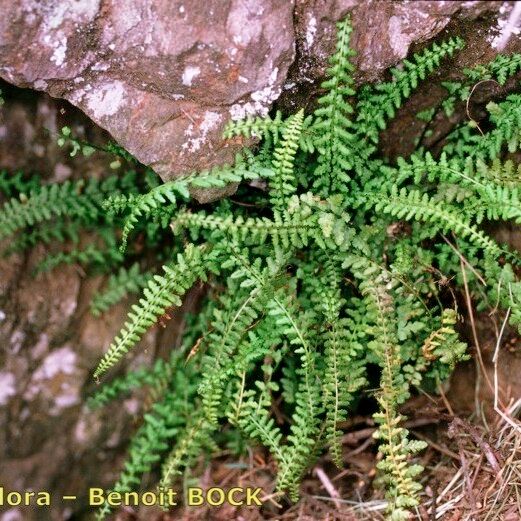
Known as a rare botanical "meeting of the minds," Asplenium x pagesii is a naturally occurring hybrid fern. It is the offspring of two distinct spleenworts (Asplenium trichomanes and Asplenium foresiense), often found clinging to rocky limestone crevices in Western Europe. Because it is a hybrid, it possesses a unique "middle-ground" beauty that fascinates fern enthusiasts and plant hunters.
🔍 How to Identify
- 🌿 The Fronds: It produces lance-shaped, semi-evergreen leaves that grow in a compact, fountain-like rosette.
- 🎨 Stipe Coloring: The central stalk (stipe) is typically a deep, dark brown or ebony at the base, gradually fading into a bright green as it reaches the leafy part of the plant.
- 🍃 Leaflet Texture: The individual leaflets (pinnae) are somewhat rectangular with slightly lobed or "toothed" edges, looking a bit more rugged and textured than the common Maidenhair Spleenwort.
🏡 In Your Garden
- 🧗 Vertical Ambition: This fern is a "lithophyte," meaning it loves to grow on stone. In a garden setting, it thrives when tucked into the cracks of a dry-stone wall or nestled between rocks in a shady alpine garden.
- 💧 Drainage is Non-Negotiable: Because its natural habitat is a cliffside, it cannot tolerate stagnant water around its crown. It prefers high humidity but requires "sharp" drainage—meaning water should run past its roots quickly.
- ⛰️ Mineral Preference: Unlike many ferns that crave acidic peat, this hybrid often shows a preference for alkaline environments, making it a perfect companion for limestone rocks.
⚠️ Safety & Toxicity
- 🐾 Safe for Pets: This fern is generally considered non-toxic to cats, dogs, and horses, making it a "worry-free" choice for low-level plantings.
- 🚫 Non-Edible: While it isn't poisonous, it is not a culinary herb. Ingesting the fronds may cause mild stomach upset for curious toddlers or pets, so it’s best enjoyed visually.
✨ Fun Fact
In the world of botany, this plant is considered a "sterile hybrid." Because its parents come from different evolutionary branches, Asplenium x pagesii usually cannot produce viable spores of its own. Every plant found in the wild is a unique, spontaneous "genetic handshake" that occurred when the two parent species happened to live in the exact same damp, rocky corner!

Detailed Care Instructions








