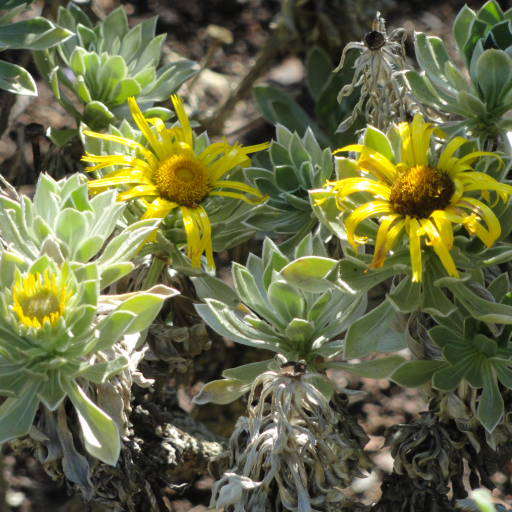
Plant Overview
Known as the Canary Island Daisy or the Silky Asteriscus, this sun-loving shrub hails from the rocky coastlines of the eastern Canary Islands. It is beloved by Mediterranean gardeners for its ability to look like a mound of molten silver topped with miniature golden suns. In the wild, it clings to volcanic cliffs, making it a rugged survivor that brings a touch of "island life" to any xeriscape or rock garden.
🔍 How to Identify
- 🌿 Silky Foliage: The leaves are spoon-shaped and covered in a dense layer of fine, silvery-white hairs, giving the plant a soft, velvety texture and a shimmering appearance.
- 🌼 Golden Disc Flowers: It produces large, daisy-like flowers with bright yellow centers and matching yellow "petals" (ray florets) that sit nestled tightly against the foliage.
- Compact Mounds:** The plant naturally grows in a low, dense, rounded cushion shape, rarely exceeding a foot in height, which helps it withstand heavy coastal winds.
🏡 In Your Garden
- ☀️ Sun Worshiper: Because it evolved on volcanic islands, this plant requires maximum sunlight. If placed in the shade, the "silky" silver hairs will thin out, and the plant may lose its compact, tidy shape.
- 🏜️ Drainage is Vital: This species is highly susceptible to root rot. It thrives in poor, sandy, or stony soil where water moves quickly; think of it as a "succulent-adjacent" plant that prefers a "soak and dry" approach.
- 🌊 Salt Tolerance: It is an excellent choice for seaside gardens. Unlike many decorative flowers, its thick, fuzzy leaves are specifically designed to repel salt spray and harsh, drying winds.
⚠️ Safety & Toxicity
- ✅ General Safety: Asteriscus sericeus is generally considered non-toxic to humans and common household pets like dogs and cats.
- 🧤 Skin Sensitivity: Like many members of the Asteraceae (Daisy) family, the sap or the fine hairs on the leaves can cause mild skin irritation or "contact dermatitis" in gardeners with sensitive skin. Wearing gloves during heavy pruning is recommended.
✨ Fun Fact
The Asteriscus genus is known for a fascinating "hygroscopic" trait: the dried flower heads act like natural weather vanes. They close up tight when the air is dry to protect the seeds and pop open when it rains or becomes humid to facilitate seed dispersal!

Detailed Care Instructions
To grow Asteriscus Sericeus, also known as silver crown, follow these steps:
- Choose the right location: Select a spot in your garden that receives full sun to partial shade. The plant can tolerate a range of soil conditions but prefers well-draining soil.
- Planting: Dig a hole slightly larger than the size of the root ball. Place the plant in the hole and backfill it with soil. Press gently around the base of the plant to secure it in place.
- Watering: Water the plant thoroughly after planting to settle the soil. Afterward, water regularly, especially during dry periods. However, avoid overwatering, as excessive moisture can cause root rot.
- Mulching: Apply a layer of organic mulch around the base of the plant. This helps retain moisture, suppress weed growth, and keeps the roots cool.
- Fertilizing: Use a slow-release, balanced fertilizer in the spring to provide essential nutrients for healthy growth. Follow the recommended dosage mentioned on the fertilizer packaging.
- Pruning: Trim back any dead or damaged growth to maintain a tidy appearance. Avoid severe pruning, as Asteriscus Sericeus usually has a compact and rounded shape.
- Pests and diseases: Asteriscus Sericeus is generally resistant to pests and diseases. However, practicing good garden hygiene and inspecting the plant regularly can help prevent and address any issues that may arise.
- Propagation: Asteriscus Sericeus can be propagated through seeds or by taking stem cuttings. Collect mature seeds in the fall and sow them in a well-prepared seedbed. Alternatively, take stem cuttings in early summer and root them in moist, well-draining soil.
- Winter protection: In colder climates, provide winter protection for Asteriscus Sericeus by mulching around the plant base and adding a layer of straw or leaves over the top.
By following these steps, you should be able to successfully grow Asteriscus Sericeus and enjoy its beautiful silver foliage and yellow daisy-like flowers.
Asteriscus Sericeus is a plant that requires regular watering to thrive. It is important to ensure that the plant's soil is moist but not waterlogged, as this can lead to root rot.
To water Asteriscus Sericeus, begin by checking the soil moisture level. This can be done by sticking your finger into the soil up to your second knuckle. If the soil feels dry, it is time to water.
Fill a watering can or hose attachment with room temperature water (avoid using cold water, as it can shock the plant). Slowly pour the water onto the soil around the base of the plant, allowing it to soak in. Be careful not to get water on the plant's leaves, as this can lead to fungal growth.
Continue watering until the soil is saturated, but be sure not to overwater. Wait until the soil dries out slightly before watering again, as this will allow the roots to absorb oxygen.
In addition to regular watering, it is important to ensure that Asteriscus Sericeus is planted in well-draining soil and receives adequate sunlight. This will help the plant to thrive and produce healthy blooms.
To fertilize this particular plant, you will want to use a balanced, water-soluble fertilizer that is high in nitrogen. This should be done every two weeks during the active growing season. Be sure to dilute the fertilizer according to the package instructions and avoid overfeeding, as this can lead to burning or other issues. Additionally, you may want to incorporate some organic matter or compost into the soil to add natural nutrients and improve soil quality. Finally, make sure to water the plant well before and after fertilizing to help prevent any potential damage from the fertilizer.
Asteriscus Sericeus plant prefers a well-drained soil that is rich in organic matter. It is best to use a soil mix that is designed for container gardening and has plenty of perlite, vermiculite, and/or coarse sand mixed in. The pH level of the soil should be between 6.0 and 7.0. It is important to avoid using heavy potting soils that can become compacted and waterlogged. A good soil mix for Asteriscus Sericeus plant will provide good drainage and aeration, while retaining enough moisture to keep the plant healthy. It is also important to provide adequate nutrients to the plant, either through regular applications of fertilizers or by using a high-quality soil mix that contains fertilizers already mixed in.
To propagate this plant, gather mature seeds after the growing season has ended. Sow the seeds in a pot filled with well-draining soil and keep the soil consistently moist. Place the pot in a location with bright, indirect sunlight and warm temperatures.
Alternatively, take stem cuttings from the plant in the spring or early summer. Cut a 4-6 inch length of stem just below a node and remove any leaves from the bottom half of the cutting. Dip the cut end in rooting hormone and plant it in a pot filled with moist potting soil. Cover the pot with a plastic bag to create a humid environment and place it in a location with bright, indirect sunlight.
Both methods may take several weeks to several months for the plant to establish itself and begin growing. Once the plant has rooted and grown larger, it can be transplanted into a larger pot or into the garden.








