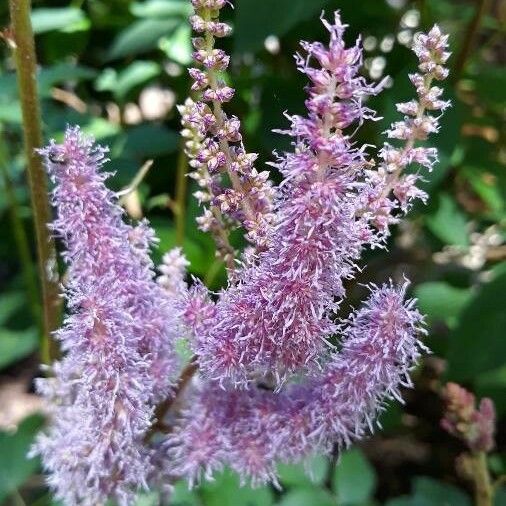
Plant Overview
Often called the "False Spirea" or "Meadowsweet," Astilbe rubra is the undisputed jewel of the shady garden. These resilient perennials are famous for their architectural plumes that look like soft, glowing towers of crimson lace rising above the ground. Originating from the damp woodlands of Asia, they bring a touch of misty mountain elegance to any backyard corner that feels a bit too dark for traditional flowers.
🔍 How to Identify
- 🌿 The Foliage: Deep green, glossy leaves with serrated edges that look remarkably like fern fronds, forming a dense, attractive mound even when the plant isn't in bloom.
- 🕯️ The Plumes: Thousands of tiny, star-shaped flowers clustered together in stiff, upright pyramidal spikes that can reach up to three feet in height.
- 🍂 Winter Interest: Even after the vibrant red or deep pink color fades in late summer, the flower heads dry into stiff, bronze-colored stalks that provide beautiful texture against winter frost.
🏡 In Your Garden
- 💧 Thirst for Moisture: Astilbe rubra is a dedicated "water-worshipper." Unlike many garden plants that can handle a bit of drought, this plant will turn crisp and brown almost overnight if the soil dries out. It is the perfect choice for those "problem" soggy spots near a pond or a leaky outdoor faucet.
- ☁️ The Shade Sweet-Spot: While they love the light, intense afternoon sun is their nemesis. They thrive best in "dappled light"—the soft, filtered glow found under a large canopy tree—which keeps their delicate blooms from scorching and preserves the intensity of their color.
⚠️ Safety & Toxicity
- ✅ Non-Toxic: Great news for families and pet owners! Astilbe rubra is widely considered non-toxic to dogs, cats, and humans.
- 🧤 Skin Sensitivity: While safe to touch, the coarse texture of the leaves and stems can occasionally cause mild mechanical irritation to those with very sensitive skin. Wearing gloves during pruning or division is a simple way to stay comfortable.
✨ Fun Fact
- 🦋 Pollinator High-Rises: While Astilbe flowers don't have a strong scent for humans, their fuzzy plumes are like high-rise apartments for nature's workers; you will often see several different species of butterflies and bees feeding on a single plume at the same time!

Detailed Care Instructions
| Humidity | Normal |
| Lighting | Part Sun |
| Difficulty | Easy |
| Temperature | 20°C - 30°C |
| Hardiness Zones | 3 - 8 |
To grow Astilbe Rubra plants, you can follow these steps:
- Location: Choose a location that receives partial shade to full shade. Astilbe Rubra prefers a cool and moist environment, protected from direct sunlight.
- Soil: Astilbe Rubra thrives in rich, well-draining soil with a slightly acidic pH (around 6.0 to 6.5). Amend the soil with organic matter, such as compost or peat moss, to improve its moisture retention and fertility.
- Planting: Dig a hole that is about twice the size of the plant's root ball. Place the plant in the hole, ensuring that the crown is level with or slightly above the soil surface. Backfill the hole with the amended soil and gently firm it around the plant. Space the plants about 1 to 2 feet apart to allow for proper air circulation.
- Watering: Keep the soil consistently moist but not waterlogged. Water deeply whenever the top inch of soil feels dry. A layer of mulch around the plants can help retain moisture and suppress weeds.
- Fertilizing: Before planting, incorporate a slow-release balanced fertilizer into the soil. Additionally, you can apply a water-soluble fertilizer every 4-6 weeks during the growing season to promote healthy growth and blooming.
- Maintenance: Regularly remove any weeds around the plants to prevent competition for nutrients. Astilbe Rubra doesn't require much pruning, but you can remove spent flowers and dead foliage to maintain a tidy appearance. In late fall or early spring, you can cut back the entire plant to the ground to encourage new growth.
- Dividing: Every 3-4 years, Astilbe Rubra plants should be divided to maintain their vigor. Lift the clumps in early spring or fall, carefully divide them into smaller sections, and replant them.
- Pests and diseases: Astilbe Rubra is generally resistant to pests and diseases. However, it can be prone to powdery mildew in humid conditions. To prevent this, provide proper air circulation, avoid overhead watering, and remove any infected foliage promptly.
By following these guidelines, you should be able to successfully grow Astilbe Rubra plants and enjoy their beautiful, feathery flower spikes.

Place in a window with dappled sun or a spot in the middle of a room. Or directly in a window facing west or east.

The Astilbe Rubra plant requires consistent moist soil. This can be achieved by regularly watering the soil around the plant to ensure it doesn't dry out completely. It's recommended to water the plant deeply, but not to the point of causing waterlogging in the soil. You can achieve this by watering around the base of the plant and allowing the water to soak deep into the soil. It's important to note that the Astilbe Rubra plant does not tolerate drought well, so it's important to maintain consistent moisture levels in the soil throughout the growing season. Additionally, it's recommended to mulch around the base of the plant to help retain moisture in the soil and prevent drying out.
For optimal growth, fertilize this perennial in the early spring with a slow-release, balanced fertilizer. Apply the fertilizer evenly around the plant, taking care not to sprinkle it directly on the leaves or stem. Water the plant immediately after fertilizing to help the nutrients penetrate the soil. Avoid over-fertilizing as this can lead to excessive foliage growth and fewer blooms.
Astilbe Rubra plant thrives in soil that is rich in organic matter, well-draining, and slightly acidic. A soil pH between 5.5 and 6.5 is ideal. The soil should also contain adequate amounts of nitrogen, phosphorus, and potassium. A peat-based potting mix or a loamy soil mixed with leaf mold can be used when planting Astilbe Rubra. The soil should be kept consistently moist, but not waterlogged, to prevent drying out and wilting of the plant. Adding mulch to the top layer of soil can help retain moisture and regulate soil temperature.
Astilbe Rubra is a perennial plant that belongs to the Saxifragaceae family. It is commonly propagated by division, which involves separating a portion of the plant from the main clump and planting it elsewhere. The following steps outline the process for propagating Astilbe Rubra:
- Identify a mature Astilbe Rubra plant that has been growing for at least two to three years. This will ensure that the plant has developed a healthy root system and enough foliage to support division.
- Choose a suitable time for division. The best time is during the early spring or fall when the plant is not actively growing and the roots are dormant.
- Carefully dig up the plant with a spade or garden fork, taking care not to damage the roots. Gently shake off any excess soil from the roots.
- Use a sharp, clean knife or garden shears to carefully separate a section of the plant from the main clump. Each section should have a good clump of roots and several healthy shoots or leaves.
- Plant the new sections in a prepared hole, keeping the crown of the plant at soil level. Water well and keep the soil moist until the plant becomes established.
- Provide the new plants with partial shade and regular watering until they become fully established, which may take several weeks to a few months depending on the conditions.
- Once the new plants have become established and are producing healthy growth, they can be transplanted to their final location in full sun or partial shade.
By following these simple steps, anyone can propagate their own Astilbe Rubra plants and enjoy the beauty of these stunning, low-maintenance perennials in their garden.








