Plant Overview
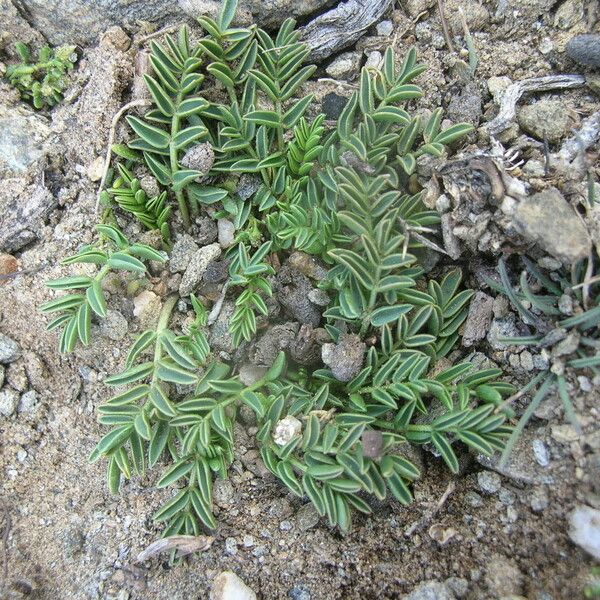
Known as the One-flowered Milkvetch, this resilient little legume is a high-altitude specialist. Found clinging to the windswept slopes of the Andes, it forms dense, silvery cushions that look like soft, shimmering stones from a distance. In the harsh alpine climate of South America, it has evolved to be a master of minimalism and survival.
🔍 How to Identify
- 🌿 Silvery Foliage: The leaves are small and covered in a dense layer of fine, silky hairs, giving the entire plant a distinct metallic or grayish-green sheen.
- 🌸 Solitary Blooms: Living up to its name (uniflorus), it typically produces single, pea-shaped flowers that peek out from the foliage rather than growing in long clusters like other milkvetches.
- ☁️ Cushion Habit: It grows very low to the ground in tight, rounded mounds. This "cushion" shape helps it trap heat and resist the buffeting winds of the high mountains.
🏡 In Your Garden
- 🏔️ Mountain Heritage: This plant is an alpine specialist, meaning it thrives in thin, rocky, and nutrient-poor soils. It is perfect for specialized rock gardens but will struggle in heavy, wet garden soil.
- 🧪 Nitrogen Fixer: Like most members of the pea family, it has a symbiotic relationship with soil bacteria. It "fixes" nitrogen from the air, actually improving the soil quality around its roots over time.
- ☀️ UV Protection: The silver hairs on its leaves act as a natural sunblock, reflecting intense high-altitude sunlight and preventing the plant from drying out.
⚠️ Safety & Toxicity
- 🐾 Livestock Warning: Many species in the Astragalus genus are known as "locoweeds." They can contain swainsonine, a toxin that causes neurological issues (often called "locoism") in cattle and horses.
- ⚠️ Selenium Accumulator: This plant can absorb and concentrate selenium from the soil. While rare in a garden setting, it is best to keep this plant away from curious pets and children to avoid accidental ingestion.
✨ Fun Fact
The "fuzz" on the leaves isn't just for sun protection—it acts like a botanical puffer jacket! The hairs trap a thin layer of still air against the leaf surface, creating a micro-climate that protects the plant from freezing Andean nights.

Detailed Care Instructions