Plant Overview
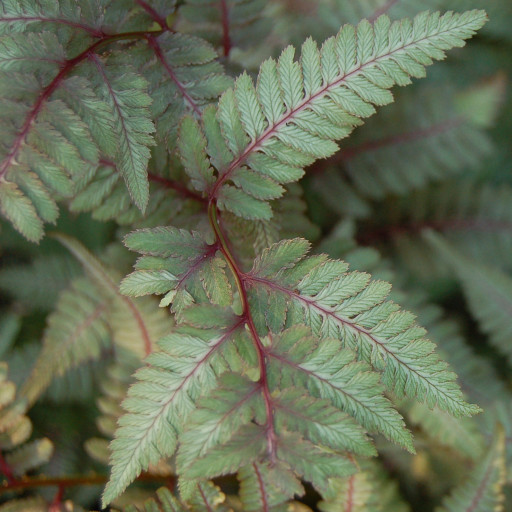
Often hailed as the "Gothic Princess" of the shade garden, the Japanese Painted Fern is widely considered one of the most beautiful ferns in cultivation. Unlike its plain green cousins, this East Asian native looks as though an artist meticulously brushed metallic silver and deep burgundy onto every frond. It is a slow-growing, deciduous treasure that brings an ethereal, shimmering light to the darkest corners of your landscape.
🔍 How to Identify
- 🎨 The "Painted" Frond: The most striking feature is the color—a delicate blend of silvery-grey, blue-green, and pewter that appears almost metallic.
- 🍷 Burgundy Veins: The central stems (rachis) are a deep, contrasting wine-red or burgundy, which bleeds out into the leaflets for a dramatic "watercolor" effect.
- 🌿 Growth Habit: It grows in low, arching clumps that typically reach about 12 to 18 inches in height, forming a soft, mounded shape.
🏡 In Your Garden
- 💧 Moisture is Key: While it loves shade, its "painted" colors actually pop more with a tiny bit of dappled morning sun. However, it is thirsty; it requires consistently moist, rich soil and will "melt" or go dormant if left to dry out during a heatwave.
- 🐌 Resilient Foliage: Unlike many delicate ferns, the Japanese Painted Fern is surprisingly resistant to browsing deer and rabbits, making it an excellent choice for woodland edges where wildlife often wanders.
- ❄️ Winter Nap: Don't panic in late autumn—this plant is deciduous. It will completely disappear into the ground during winter, only to emerge with fresh, tightly coiled "fiddleheads" once the spring soil warms up.
⚠️ Safety & Toxicity
- ✅ Pet Safe: Good news for pet owners! Athyrium niponicum is generally considered non-toxic to cats, dogs, and horses.
- 👶 Human Safety: It is safe to handle and grow around children. While not considered poisonous, it is an ornamental plant and should not be ingested, as some ferns can cause mild stomach upset if eaten in large quantities.
✨ Fun Fact
The Japanese Painted Fern was so revolutionary in the gardening world that it became the first fern to ever win the "Perennial Plant of the Year" award in 2004! Scientists have found that the cooler the climate, the more intense its signature silver and purple pigments become.

Detailed Care Instructions
| Color | Non-Flowering |
| Soil Ph | Neutral To Very Acidic Or Slightly Alkaline |
| Humidity | High |
| Lighting | Part Sun |
| Toxicity | Non-Toxic |
| Soil Type | Well-Drained, Humusy, And Kept Evenly Moist |
| Bloom Time | Non-Flowering; Ferns Are An Ancient Group Of Plants That Reproduce Via Spores |
| Difficulty | Hard |
| Plant Type | Deciduous Fern |
| Hibernation | Cold Period |
| Mature Size | About 18 Inches Tall And Wide |
| Native Area | Eastern Asia |
| Temperature | 18°C - 24°C |
| Sun Exposure | Partial Shade To Full Shade |
| Hardiness Zones | 3 To 8 |
To grow Athyrium Niponicum plants successfully, follow these steps:
- Choose a suitable location: Athyrium Niponicum prefers partial shade to full shade. Find a location in your garden that receives indirect sunlight or dappled shade throughout the day.
- Soil preparation: The plant requires well-draining soil that is rich in organic matter. Amend the soil with compost or well-decomposed manure to improve its fertility and drainage.
- Planting: Dig a hole slightly larger than the root ball of the Athyrium Niponicum plant. Gently place the plant in the hole and cover the roots with soil, making sure not to bury the crown (where the roots meet the foliage).
- Watering: Keep the soil evenly moist but not waterlogged. Water the plant deeply once a week, and more frequently during hot, dry weather. Avoid overwatering, as it can lead to root rot.
- Mulching: Apply a layer of organic mulch, such as shredded leaves or bark, around the plant. This helps conserve moisture, suppress weeds, and insulate the soil.
- Fertilization: Feed Athyrium Niponicum with a balanced fertilizer, such as a slow-release granular fertilizer or a liquid fertilizer diluted according to the package instructions. Apply the fertilizer in early spring and mid-summer to promote healthy growth.
- Pruning: In late winter or early spring, remove any dead or damaged fronds to maintain a tidy appearance. Avoid pruning healthy foliage during the growing season.
- Pests and diseases: Athyrium Niponicum is relatively resistant to pests and diseases. However, keep an eye out for snails, slugs, and fern scale. If necessary, treat infestations with organic pest control methods.
- Division: Over time, Athyrium Niponicum clumps can become overcrowded. Divide the plant every 3-4 years in early spring to rejuvenate and maintain its vigor. Gently lift the clump, separate it into smaller sections, and replant them in suitable locations.
By following these steps and providing the right growing conditions, you can successfully grow Athyrium Niponicum plants.

Place in a window with dappled sun or a spot in the middle of a room. Or directly in a window facing west or east.

To properly water this plant, you should first check the soil moisture level using your finger or a moisture meter. If the soil feels dry or slightly moist, it is time to water. Use room temperature water and pour it slowly around the base of the plant until you see water coming out of the drainage holes in the bottom of the pot.
Avoid getting water on the leaves of the plant, as this can cause leaf damage and increase the risk of disease. Watering frequency will depend on the environmental conditions and the size of the pot, so monitor the soil moisture level regularly to ensure the plant is getting the right amount of water.
It is also important to choose a well-draining pot and soil mixture, as this plant prefers good drainage and can suffer from root rot if overwatered. Adding a layer of mulch on top of the soil can help retain moisture and promote healthy growth.
To fertilize Athyrium Niponicum plant, follow these instructions:
- Choose a balanced, slow-release fertilizer specifically formulated for ferns or acid-loving plants.
- Prior to applying fertilizer, ensure that the soil is moist.
- Use a liquid or granular fertilizer and follow the product's instructions for the correct application rate.
- Apply the fertilizer evenly around the base of the plant, avoiding direct contact with the leaves. Take care not to over-fertilize, as this can lead to burning of the foliage.
- Gently work the fertilizer into the topsoil using a small garden fork or your fingers.
- Water the plant thoroughly after applying the fertilizer to help it absorb the nutrients.
- Repeat the fertilization process every 4-6 weeks during the growing season, typically from spring through summer.
- Monitor the plant's appearance and adjust the fertilizer application if needed. If the fronds show signs of yellowing or slow growth, you may need to increase the frequency or amount of fertilization.
- In the fall and winter months, reduce or stop fertilizing as the plant enters its dormant period.
Remember, it is always best to refer to the specific instructions provided on the selected fertilizer package, as they may vary slightly.
Athyrium Niponicum, commonly known as Japanese painted fern, is a delicate and vibrant perennial plant that requires specific soil conditions to thrive. The ideal soil for Athyrium Niponicum should have the following characteristics:
- Moisture Retention: This fern thrives in well-drained soil that retains moisture without becoming waterlogged. It prefers soil that is consistently moist, but not overly soggy.
- pH Level: The optimal pH range for Athyrium Niponicum is slightly acidic to neutral (pH 5.5-7.0). It is important to maintain the soil within this range as extreme acidity or alkalinity can negatively affect the plant's growth.
- Organic Matter: Adding organic matter to the soil, such as compost or well-rotted manure, improves its structure and nutrient content. Athyrium Niponicum benefits from soil rich in organic matter, as it provides essential nutrients and promotes healthy root development.
- Nutrient Content: The soil should be nutrient-rich to support the growth of Athyrium Niponicum. Incorporating a balanced, slow-release fertilizer into the soil before planting can provide the necessary nutrients throughout the plant's lifespan.
- Texture: Athyrium Niponicum prefers loamy soil, which is a combination of sand, silt, and clay. Loamy soil provides a good balance of drainage and moisture retention, allowing the roots to access water and nutrients while preventing waterlogged conditions.
- Mulching: Applying a layer of organic mulch around the base of the plant helps to conserve moisture, regulate soil temperature, and suppress weed growth. It also gradually decomposes, enriching the soil with organic matter over time.
By considering these soil requirements, you can create an optimal growing environment for Athyrium Niponicum, ensuring its health and vitality.
To propagate Athyrium Niponicum plants, follow these steps:
- Choose a healthy parent plant that you want to propagate. Look for a plant that has strong, vibrant fronds and no signs of disease or damage.
- Prepare a pot or container with well-draining soil mixture. You can use a combination of peat moss, compost, and perlite to create a fertile yet well-draining medium.
- Locate the runner or rhizome on the parent plant. This is the underground stem from which new plants will sprout. Gently dig around the runner to expose it without causing damage.
- Using a sharp, sterilized knife or garden shears, carefully cut the runner away from the parent plant. Make sure to include a portion of the rhizome at the base of the runner.
- Fill the prepared pot with the soil mixture and create a small hole in the center.
- Place the cut runner in the hole, ensuring that the rhizome is fully covered with soil while the fronds stay above the ground.
- Gently press the soil around the runner to secure it in place and promote good contact.
- Water the newly potted runner thoroughly to settle the soil and provide moisture to the plant.
- Place the pot in a warm, well-lit area that receives bright, indirect sunlight. Avoid placing it in direct sunlight as this can scorch the delicate fronds.
- Maintain consistent moisture levels, ensuring that the soil remains damp, but not waterlogged. Water whenever the top inch of soil feels dry to the touch.
- After a few weeks, the runner will start to develop roots and new fronds. At this point, you can reduce watering slightly to avoid over-saturation.
- Once the new plant has established a healthy root system and several strong fronds, you can consider transplanting it into a larger container or directly into the garden if desired.
Remember, propagating plants can take time and patience. It is essential to provide the necessary care and conditions during the propagation process to ensure successful growth.
Common pests of the japanese painted fern include Mealybugs, spider mites, aphids. Make a habit of checking your japanese painted fern frequently for pests so that any infestations can be caught and managed early.








