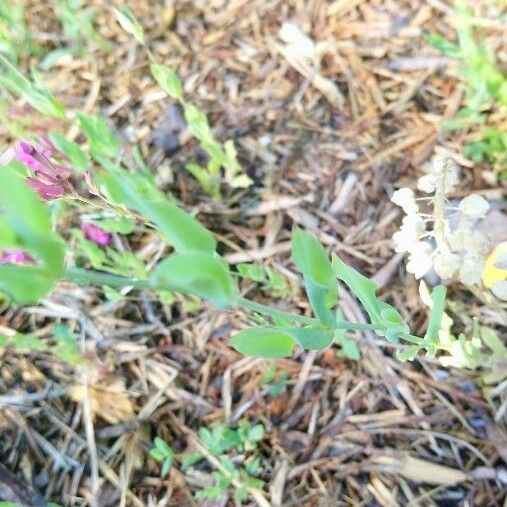
Plant Overview
Often called the Sweet William Catchfly or the whimsical "None-so-pretty," Atocion armeria is a nostalgic cottage garden favorite. Originally hailing from Europe, this plant is famous for its vibrant, hot-pink flower clusters that seem to glow against its cool, blue-green foliage. It has earned its "Catchfly" nickname due to a peculiar, sticky sap found on its stems that acts as a miniature booby trap for crawling insects.
🔍 How to Identify
- 🌸 Neon Blooms: Features dense, flat-topped clusters of small, five-petaled flowers in a shocking shade of magenta or deep pink.
- 🍃 Waxy Foliage: The leaves and stems have a distinct "glaucous" coating—a waxy, blue-grey film that makes the plant look almost frosted.
- 🕸️ Sticky Banding: If you touch the stem just below the leaf joints (nodes), you’ll feel a tacky, glue-like substance designed to deter "nectar thieves" like ants.
🏡 In Your Garden
- 🌱 The Great Wanderer: While it is technically an annual or short-lived perennial, it is a master of self-seeding. Once you plant it, expect it to pop up in different corners of your garden year after year, choosing its own favorite spots.
- ☀️ Drought Warrior: Because of its waxy leaves, which help retain moisture, this plant is incredibly resilient in dry, sunny spots. It thrives in well-draining soil and can even sprout from cracks in stone walls or gravel paths.
⚠️ Safety & Toxicity
- ✅ Low Risk: Atocion armeria is generally considered non-toxic to humans, cats, and dogs. It is a safe choice for family-friendly landscapes.
- 🧤 Skin Sensitivity: The sticky "catchfly" sap is not poisonous, but it can be a mild irritant to those with very sensitive skin or allergies to plant resins. Washing with soap and water easily removes the residue.
✨ Fun Fact
Despite the name "Catchfly," this plant is not carnivorous. It doesn't eat the insects it traps! Scientists believe the sticky stems are a defense mechanism to prevent non-pollinating insects, like ants, from climbing up to steal nectar without helping the plant reproduce.

Detailed Care Instructions
To grow Atocion Armeria plant, also known as Sea Pink, follow these steps:
- Choose a suitable location: Atocion Armeria prefers full sun and well-drained soil. Make sure the area receives at least six hours of sunlight per day.
- Prepare the soil: Ensure the soil is well-drained by adding organic matter such as compost. It should be loose, fertile, and slightly acidic.
- Planting: Dig a hole slightly larger than the plant's root ball. Place the plant in the hole and fill it with soil, ensuring the crown of the plant (where the stem meets the roots) is level with the ground.
- Watering: After planting, give the plant a thorough watering to establish its roots. In general, Atocion Armeria does not require excessive watering. Allow the soil to dry out between waterings.
- Mulching: Apply a layer of organic mulch around the plant to help retain moisture and suppress weed growth. This also helps maintain a cool root zone.
- Pruning: Prune Atocion Armeria plants after flowering to maintain their shape and encourage new growth. Cut back any dead or damaged stems and remove spent flower heads.
- Fertilizing: Atocion Armeria plants do not typically require regular fertilization. However, if the soil is poor, you can apply a balanced, slow-release fertilizer in early spring.
- Pests and diseases: Atocion Armeria is generally resistant to most pests and diseases. However, keep an eye out for common issues like aphids, slugs, or root rot. Address any problems promptly.
- Propagation: You can propagate Atocion Armeria by division or from seeds. Division is best done in spring, while seeds can be sown in early summer or early autumn.
- Winter care: Atocion Armeria is cold hardy but may benefit from a layer of mulch in colder regions to protect the roots from frost.
Remember to regularly monitor the plant's health, water it as needed, and remove any dead or damaged foliage to keep it thriving.

Place in a window with dappled sun or a spot in the middle of a room. Or directly in a window facing west or east.

The best way to water this plant is to thoroughly wet the soil until it is evenly moist, making sure not to over-water. A good technique is to water slowly and steadily, allowing the water to penetrate deeply into the soil. It is important to ensure that the soil is well-drained, as the plant is prone to root rot if the soil remains too wet for extended periods. It is also recommended to water only when the top inch of soil feels dry to the touch, as the plant prefers to be kept slightly on the dry side. When watering, avoid getting water on the foliage or flowers, as this can encourage disease.
To properly fertilize this plant, you should give it a balanced fertilizer in the spring and early summer. Apply the fertilizer once a month, following the package instructions for the amount to use. Avoid feeding in late summer and fall, as this can encourage the plant to produce new growth that may not have enough time to harden off before winter. Additionally, avoid using a high-nitrogen fertilizer, as it can cause excessive leafy growth without promoting flowering. Instead, opt for a fertilizer that contains phosphorus, which is important for flower development. Remember to water the plant thoroughly before and after fertilizing to prevent salt buildup in the soil.
The most suitable soil for Atocion Armeria plant is a well-draining soil mix that has good air permeability and water retention capacity. The soil should be slightly acidic and must contain a good amount of organic matter. A mix of peat moss, coarse sand, and perlite or vermiculite mixed in equal parts would be ideal. It is important to avoid heavy, clayey soils, as they do not provide good drainage and can cause root rot. The plant should be watered regularly, but the soil should not be allowed to become waterlogged. Fertilizing the plant with a balanced fertilizer every two weeks during the growing season will also help in producing healthy foliage and blooms.
To propagate this plant, you will need to collect stem cuttings from a mature and healthy specimen. It is best to take cuttings in the spring or summer when the plant is actively growing. Use clean and sharp garden scissors to take a cutting of about 4-6 inches in length.
Next, remove the leaves from the bottom third of the cutting, leaving only a few leaves at the top. Then, dip the cut end of the stem into a rooting hormone powder to encourage root growth.
Plant the cutting in a well-draining potting mix, ensuring that the soil is moist but not waterlogged. Keep the pot in a warm and bright location but out of direct sunlight. Mist the cutting regularly to maintain humidity levels around it.
After a few weeks, check for root growth by gently tugging on the plant. If there is resistance, it means roots have formed, and you can gradually reduce watering frequency.
Once the plant has established roots, you can transplant it into a larger pot or to your desired location in the garden. Keep the soil moist but not waterlogged, and monitor the plant for any signs of stress or disease.








