Plant Overview
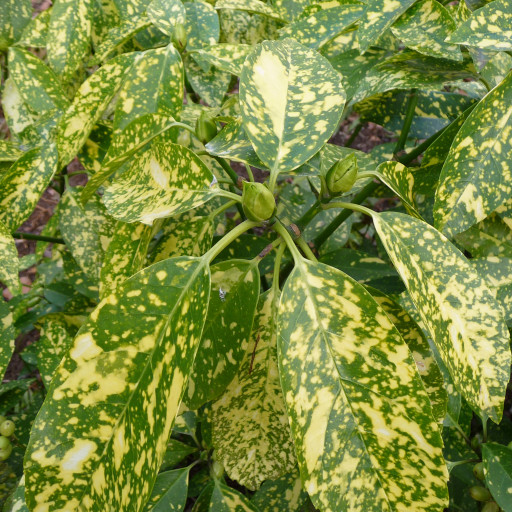
Often called the "Gold Dust Plant" because its leaves look like they’ve been splattered with droplets of yellow paint, Aucuba japonica is the ultimate problem-solver for those dark, shady corners of the garden. Native to the mountain forests of Japan and China, this tough-as-nails evergreen has been a favorite since the Victorian era for its ability to thrive where other plants fail. It brings a permanent tropical glow to the garden, even in the middle of a gloomy winter.
🔍 How to Identify
- 🍃 Leathery Foliage: Large, glossy, lance-shaped leaves that feel thick and waxy to the touch, often with coarsely toothed edges near the tips.
- ✨ Spotted Patterns: While the wild species is solid green, most garden varieties feature striking yellow "dusting" or large central splotches.
- 🔴 Winter Berries: On female plants, you’ll find clusters of bright, olive-shaped red berries that persist throughout the winter, providing a pop of color against the dark leaves.
🏡 In Your Garden
- 🌑 Shade Specialist: This plant is a true "shade lover." In fact, too much direct sunlight will actually scorch the leaves, turning the beautiful yellow spots into unsightly black burn marks.
- 🐢 Patient Growth: It is a slow-growing shrub that values stability. Because it develops a deep root system, it hates being transplanted; choose its "forever home" carefully to avoid stressing the plant later.
- 🌬️ Pollination Duo: Aucuba is dioecious, meaning there are separate male and female plants. If you want those iconic red berries, you’ll need to plant at least one male nearby to act as a pollinator for the females.
⚠️ Safety & Toxicity
- 🚫 Mildly Toxic: The leaves and berries contain aucubin (a glycoside), which can cause digestive distress if consumed.
- 🐾 Pets & Kids: It is considered toxic to dogs, cats, and horses. Ingestion usually leads to vomiting, diarrhea, or mild lethargy, so it’s best kept away from curious nibblers.
✨ Fun Fact
The Aucuba japonica was so prized in 18th-century England that the first specimens sent from Japan were guarded like crown jewels. However, because only female plants were initially imported, it took another 80 years for a male plant to arrive so that gardeners could finally see the plant's famous red berries!

Detailed Care Instructions
| Color | Purple-Maroon, White |
| Soil Ph | 4.5-8 |
| Humidity | Normal |
| Lighting | Part Sun |
| Toxicity | Poisonous |
| Soil Type | Rich, Well-Drained |
| Bloom Time | March-April |
| Difficulty | Medium |
| Plant Type | Evergreen Shrub |
| Mature Size | Up To 10 Feet Tall |
| Native Area | Japan |
| Temperature | 5°C - 24°C |
| Sun Exposure | Partial Shade; Indirect Sunlight |
| Hardiness Zones | 7-9 |
Here are some tips to help you grow Aucuba Japonica:
- Planting: Choose a suitable location with well-draining soil and partial to full shade. Aucuba Japonica can tolerate a range of soil types, but it prefers slightly acidic soil. Dig a hole that is slightly larger than the root ball of the plant and place it in the hole ensuring that the top of the root ball is level with or slightly above the soil surface.
- Watering: Provide regular watering, especially during dry periods. However, be careful not to overwater as Aucuba Japonica can develop root rot in excessively wet soil. It is best to keep the soil slightly moist, but not waterlogged.
- Mulching and Fertilizing: Apply a layer of organic mulch around the base of the plant to retain moisture and suppress weed growth. In spring, apply a slow-release fertilizer specifically formulated for shrubs and follow the instructions on the packaging.
- Pruning: Aucuba Japonica can be pruned to maintain its desired shape and size. Prune back any dead, damaged, or crossing branches. Late winter to early spring is the best time for pruning.
- Pests and Diseases: Aucuba Japonica is generally considered to be a relatively pest and disease-resistant plant. However, it can sometimes be susceptible to scale insects and leaf spot diseases. Inspect the plant regularly for any signs of pests or diseases and take appropriate measures to control them if necessary.
- Cold Protection: In colder regions, where temperatures drop below freezing, provide some winter protection for the plant. Apply a layer of mulch around the base and consider using burlap or a frost blanket to cover the plant during extreme cold snaps.
By following these tips, you should be able to successfully grow and care for Aucuba Japonica.

Place in a window with dappled sun or a spot in the middle of a room. Or directly in a window facing west or east.

To properly water this particular plant, it is recommended to check the soil moisture regularly. Inserting your finger about an inch deep into the soil is a good practice. If the soil feels dry, it is time to water it.
When watering, it is important to avoid getting water on the leaves and stems of the plant, as it can lead to fungal diseases. The best method is to water at the base of the plant and allow the soil to absorb the water.
Overwatering should also be avoided, as it can lead to root rot. Make sure to allow the soil to dry out slightly between watering sessions.
Lastly, choosing the proper pot or container for this plant is important. Look for a container with drainage holes to ensure excess water can escape and not sit in the bottom of the pot, causing issues for the plant.
To fertilize this plant, use a slow-release, balanced fertilizer in the early spring. Apply the fertilizer around the plant's drip line, and then water thoroughly. Repeat this fertilizing process every six to eight weeks during the growing season. Avoid over-fertilizing, as this can burn the plant's roots and cause damage.
The ideal soil for Aucuba Japonica plant should be well-draining and slightly acidic in nature. It should be rich in nutrients and organic matter to support healthy growth. Aucuba Japonica plant prefers a soil with a pH range between 5.0 and 6.5. It can also grow in sandy or clay soils as long as the soil is not compacted. Soil moisture is also an important factor to consider, as Aucuba Japonica plant requires consistently moist soil to thrive, but not waterlogged soil. Adding compost or other organic matter to the soil can improve its nutrient content and water-holding capacity.
Propagation of this plant can be done through stem cuttings and division of the root ball. For stem cuttings, select a healthy stem with several leaves and make a clean cut just below a node. Remove the lower leaves and dip the cut end in rooting hormone. Place the cutting in a pot filled with moist potting soil and keep it in a warm, humid location out of direct sunlight. Keep the soil moist and wait for new growth to appear before transplanting.
For division of the root ball, gently remove the plant from its pot or the ground and use a clean, sharp knife to divide the root ball into several sections. Each section should have a healthy stem and a good amount of roots attached. Replant the sections in individual pots or in various locations in the ground and water thoroughly.
Both methods can be successful in propagating this plant, but be patient as it may take several weeks or even months for the new plants to establish and show growth.
Common pests of the japanese laurel include Scale insect, spider mites, aphids. Make a habit of checking your japanese laurel frequently for pests so that any infestations can be caught and managed early.








