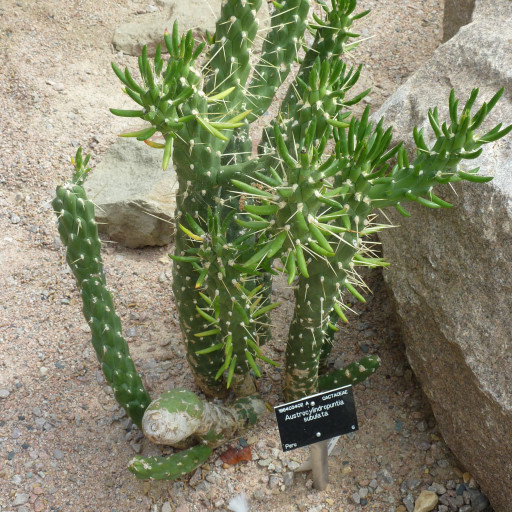
Plant Overview
Often called "Eve's Needle" or "Eve's Pin," this architectural cactus hails from the high altitudes of the Peruvian Andes. Unlike many of its prickly cousins that look like flat paddles, this plant grows tall, cylindrical stems that resemble emerald candles reaching for the sky. It is a favorite for those seeking a prehistoric, "desert-luxe" aesthetic in their homes or rock gardens.
🔍 How to Identify
- 🌵 Stems: Long, cylindrical, and bright green. They grow upright and can branch out significantly, eventually taking on a shrubby or even tree-like appearance.
- 🍃 Persistent Leaves: A unique feature among cacti; it keeps its fleshy, awl-shaped green leaves on new growth for a long time before they eventually drop.
- ⚔️ Spines: Tucked among the leaves are formidable, pale-yellow spines that can grow up to 3 inches long. They are straight, stiff, and very sharp.
🏡 In Your Garden
- ☀️ Sun Seeker: This plant craves intense, direct sunlight. If kept in the shade, the stems will become "etiolated"—meaning they grow thin, weak, and pale as they stretch desperately toward the light.
- ⛰️ Drainage is Key: Reflecting its mountain origin, it hates "wet feet." Use a gritty cactus mix and terracotta pots to ensure the roots stay dry between drinks, as it is highly susceptible to root rot in heavy soil.
⚠️ Safety & Toxicity
- 🌵 Physical Hazard: While not chemically toxic to humans or pets, it is physically dangerous. The long spines cause immediate puncture wounds, and the base of the spines may contain tiny, irritating barbs.
- 🐾 Pet Warning: Keep this plant on high shelves or in corners away from "zoomie" paths. A curious cat or a wagging dog tail can easily be impaled by the needle-like spines.
✨ Fun Fact
The name subulata comes from the Latin word subula, which means "awl"—a sharp, pointed tool used by shoemakers to poke holes in leather. This perfectly describes the shape of the plant’s unique, pointy green leaves!

Detailed Care Instructions
| Humidity | Dry |
| Lighting | Full Sun |
| Difficulty | Easy |
| Temperature | 15°C - 30°C |
| Hardiness Zones | 9A - 11B |
To grow an Austrocylindropuntia subulata plant, also known as Eve's Needle or Eve's Needle cactus, follow these steps:
- Plant Selection: Purchase a healthy Austrocylindropuntia subulata plant from a reputable nursery or find a healthy cutting from an established plant.
- Potting: Choose a pot with drainage holes that is slightly larger than the root ball of the plant. Fill the pot with a well-draining cactus or succulent potting mix.
- Planting: Gently remove the plant from its nursery container or insert the cutting into the potting mix. Ensure the plant is upright and centered in the pot. Pat down the soil gently to secure the plant in place.
- Light: Austrocylindropuntia subulata prefers bright, indirect sunlight. Place the plant near a window with filtered light, or provide artificial grow lights if natural light is limited. Avoid placing it in direct sunlight, as it can scorch the plant.
- Temperature and Humidity: This cactus thrives in average to warm temperatures, preferably ranging from 70-85°F (21-29°C). It can tolerate lower temperatures down to 50°F (10°C). Maintain moderate humidity levels, but avoid excessive moisture.
- Watering: Allow the cactus to completely dry out between waterings. Overwatering is one of the most common causes of damage to succulents. Stick your finger or a moisture meter into the soil; if it's dry at least an inch deep, it's time to water. Water thoroughly until water drains out of the bottom of the pot, but do not let the plant sit in standing water.
- Fertilizing: During the growing season (spring and summer), fertilize about once every month with a diluted cactus or succulent fertilizer. Follow the instructions on the fertilizer package for application rates.
- Maintenance: Prune the cactus sparingly, if necessary, to remove any dead or damaged parts. Handle it carefully using gloves or newspaper to protect yourself from the plant's spines.
- Propagation: If you wish to propagate Austrocylindropuntia subulata, you can take stem cuttings in the spring or summer. Allow the cuttings to callus for a few days, then plant them in the potting mix, ensuring they are kept slightly moist until roots develop.
Remember to research and understand any potential pests or diseases that could affect your plant and take appropriate preventive measures. With proper care, patience, and suitable growing conditions, Austrocylindropuntia subulata can grow into a beautiful and unique addition to your plant collection.

Place in a bright room that is sun drenched almost all day. Or directly in a south-facing window.

To properly water this plant, it is important to take into consideration its specific needs and environment. First, ensure that the soil is well-draining and not waterlogged, as this can lead to root rot. Then, water the plant deeply and thoroughly, allowing the water to soak into the soil and reach the roots. Avoid getting water on the leaves or stem, as this can lead to fungal growth. The frequency of watering will depend on various factors, such as the climate, humidity, and amount of sunlight the plant receives. In general, it is better to underwater than overwater this plant, as it is adapted to survive in arid environments. Monitoring the soil moisture level and adjusting the frequency of watering accordingly is key to keeping this plant healthy.
To fertilize this plant, mix a balanced fertilizer with equal amounts of nitrogen, phosphorus, and potassium. Apply the fertilizer to the soil around the roots, taking care not to get it on the plant's stems and leaves. Water the plant regularly to help the fertilizer soak into the soil and nourish the roots. Use a diluted fertilizer solution every two weeks during the growing season, reducing frequency during cooler seasons. Avoid fertilizing this plant during its dormant period when it doesn't need as much feeding.
The ideal soil for Austrocylindropuntia Subulata plant is one that is well-draining and sandy. The soil should be slightly acidic with a pH of 6.0 to 7.0. It should also have a good amount of organic matter mixed in to improve the soil structure and fertility. Avoid soils that are too rich in nutrients or heavy clay soils which retain water, as that can lead to root rot. Adding coarse sand, perlite or volcanic rock to the soil mix can improve drainage. Additionally, the plant prefers dry soils, so it is important not to overwater it.
To propagate this plant, select a healthy and mature stem from the parent plant. Use a sterilized sharp blade to cut off a section of the stem that is at least 4 inches long. Make a clean cut just below a node, which is where the leaves or spines grow from.
Leave the cutting to dry for a few days until the wound has calloused over. This is important to prevent the cutting from rotting when planted.
Prepare a well-draining potting mix by mixing coarse sand, perlite, and peat moss. Wet the mix lightly without making it soggy.
Make a hole in the soil and insert the cutting about an inch deep into the mix. Ensure that the soil covers the cut end completely.
Keep the pot in a warm and bright spot with indirect sunlight. Water the cutting lightly, only enough to keep the soil slightly moist. Do not overwater as it can lead to rotting.
Check the cutting after a few weeks to see if it has taken root. Gently pull on the stem, and if you feel resistance, it means that roots have formed.
Once the cutting has rooted, gradually increase the amount of sunlight it receives until it can handle full sun. You may then transplant it into a bigger container or to the garden.
Common pests of the eve's pin include Scale insect, mealybugs, spider mites. Make a habit of checking your eve's pin frequently for pests so that any infestations can be caught and managed early.








