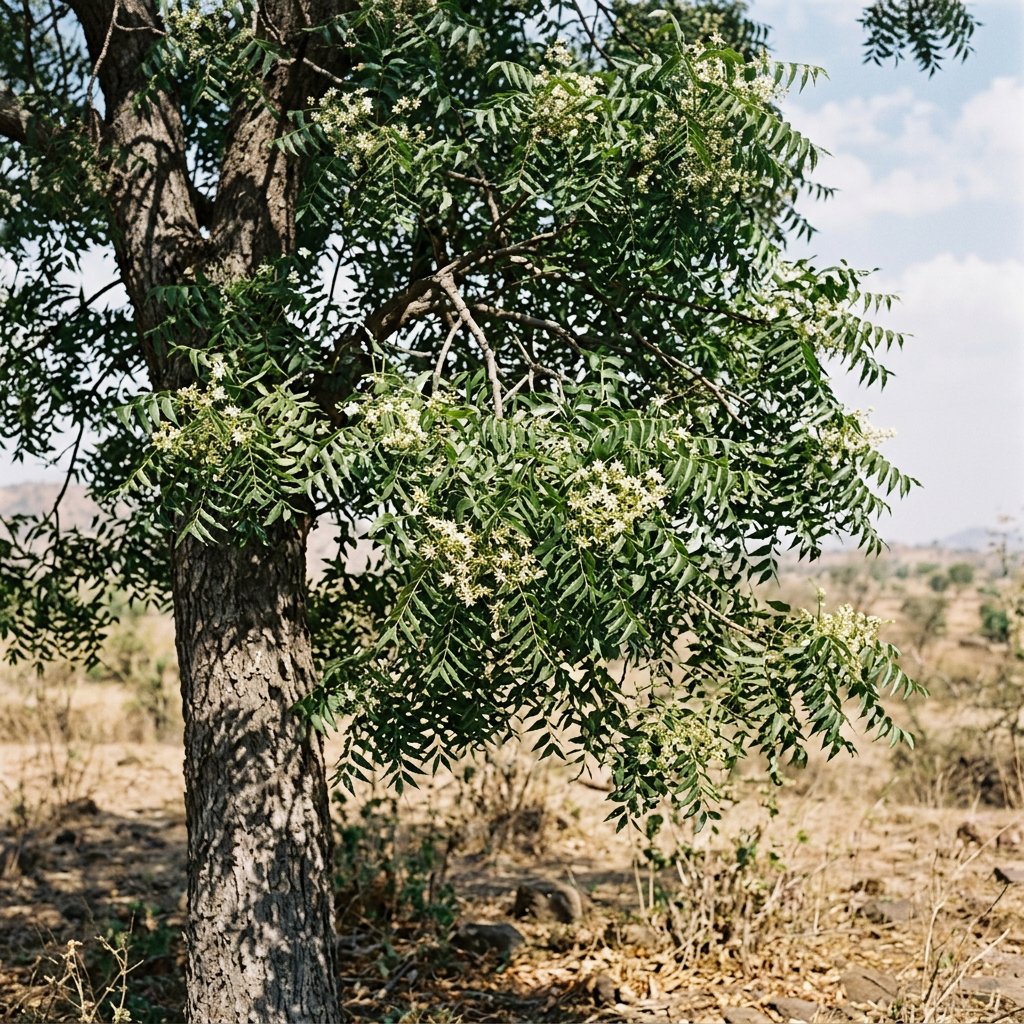
Plant Overview
Commonly known as the "Village Pharmacy" in India, the Neem tree is a legendary evergreen that has been revered for thousands of years for its healing properties. It is a hardy survivor, capable of thriving in poor soils and extreme heat while providing a cooling, wide canopy of shade. Whether it is being used in ancient Ayurvedic medicine or as a modern natural pest repellent, this tree is a true powerhouse of the natural world.
🔍 How to Identify
- 🍃 Serrated Foliage: The leaves are "pinnate" (feather-like), featuring leaflets that are distinctively curved with a sharp, saw-tooth edge and a pointed tip.
- 🌸 Fragrant Blooms: It produces drooping clusters of tiny, white, star-shaped flowers that emit a sweet, honey-like scent, particularly noticeable in the evening.
- 🌳 Rugged Bark: The trunk is usually short and straight with a thick, furrowed bark that transitions from greyish-brown to a darker, more cracked texture as the tree matures.
🏡 In Your Garden
- 🏜️ Drought Champion: Neem is incredibly resilient to dry spells. It possesses a deep taproot that searches for moisture far underground, which means it hates being transplanted once established—choose its "forever home" in your garden wisely.
- 🦟 Living Pesticide: Having a Neem tree is like having a built-in pest control system. The tree naturally produces azadirachtin, a compound that disrupts the life cycles of harmful insects while remaining relatively safe for beneficial pollinators like bees and butterflies.
⚠️ Safety & Toxicity
- 🐾 Pet Warning: While Neem oil is a common ingredient in pet shampoos, the raw leaves, bark, and seeds should not be ingested by dogs or cats. Ingestion can lead to vomiting or, in rare cases, more severe neurological symptoms.
- 👶 Child Safety: Pure Neem oil and raw extracts are highly concentrated and can be toxic if swallowed by children. Always store concentrated garden products out of reach and stick to refined, store-bought products for topical health uses.
✨ Fun Fact
🌿 In many Indian cultures, the Neem tree is believed to be a manifestation of the Goddess Durga. It is so highly valued that "Neem honey" is a prized delicacy, known for its dark, rich color and slightly bitter, medicinal aftertaste.

Detailed Care Instructions
| Color | White Blossoms |
| Soil Ph | 6.2-7.0 |
| Lighting | Full Sun |
| Toxicity | Toxic |
| Soil Type | Sandy, Well-Draining Soil |
| Bloom Time | Mid Spring |
| Plant Type | Broadleaf Evergreen Perennial |
| Mature Size | 15-30 Meters Tall And 15-20 Meters Wide |
| Native Area | Sri Lanka, Bangladesh, Pakistan, India, And Nepal |
| Sun Exposure | Full Sun To Partial Shade |
| Hardiness Zones | 10-12 |
To grow an Azadirachta Indica plant, commonly known as a neem tree, you can follow these steps:
- Climate and soil: Neem trees thrive in tropical and subtropical regions. They prefer well-draining soil with a pH level between 6.0 and 7.0. If the soil is too acidic, you can add lime to increase the pH level.
- Seed selection: Obtain neem tree seeds from a reputable source. Fresh seeds have higher germination rates, so try to get them as soon as possible. If you can't find seeds, you might be able to find young neem tree saplings to transplant.
- Germination: Soak the seeds in warm water for 24 hours to help soften the tough outer shell. After soaking, plant them in pots filled with a mixture of potting soil and compost. Place the pots in a warm, well-lit area but away from direct sunlight. Keep the soil moist but not waterlogged.
- Transplanting: Once the seedlings have grown to a height of around 6-8 inches (15-20 cm) and have developed several leaves, they can be transplanted into larger pots or directly into the ground. If you choose to plant them outdoors, ensure the frost period is over.
- Watering: Neem trees are drought-tolerant but require regular watering during their initial growth period. Water the plant deeply but allow the soil to dry out between waterings to avoid waterlogging and root rot.
- Sunlight: Neem trees prefer full sun, so ensure they receive at least 6-8 hours of direct sunlight each day. If growing indoors, place the potted plant near a south-facing window or use artificial grow lights.
- Pruning: Occasionally prune the neem tree to shape it or remove damaged or dead branches. Pruning also helps to improve air circulation and light penetration.
- Fertilization: Neem trees generally do not require regular fertilization. However, you can apply an organic, slow-release fertilizer once or twice a year to enhance growth and overall health.
- Pest control: Neem trees are known for their natural insecticidal properties. They can help repel various insect pests. However, if you encounter a severe infestation, you can use neem oil or other organic pest control methods.
- Patience: Neem trees are slow-growing and can take several years to reach maturity. Be patient and provide consistent care to ensure their healthy growth.
Remember to check the specific growing requirements for your region and adjust accordingly.

Place in a bright room that is sun drenched almost all day. Or directly in a south-facing window.

To water this plant, you should regularly check the moisture level of the soil by using a moisture meter or sticking your finger about two inches into the soil. If the soil feels dry, it is time to water the plant. When watering, make sure to water deeply enough so that the water reaches the roots. However, be careful not to overwater the plant as this can lead to root rot. It is recommended to water this plant once a week and adjust the frequency based on the plant's needs and environmental conditions. Additionally, avoid getting water on the leaves as this can lead to fungal diseases.
To fertilize this plant, use a balanced fertilizer with equal ratios of nitrogen, phosphorus, and potassium. Apply the fertilizer once a month during the growing season, which typically falls between spring and summer. Avoid over-fertilization, as this can lead to excessive foliage growth and reduced flowering. When fertilizing, apply around the base of the plant and water well after application. It is also recommended to avoid fertilizing during the dormant season, which typically falls between fall and winter.
The Azadirachta Indica plant prefers well-draining soil with a neutral to slightly acidic pH level. It is important to use soil that is rich in organic matter, such as compost or peat moss, and has a good balance of nutrients. Avoid using soil that is too heavy or clay-like, as this can lead to poor drainage and root rot. It is also important to ensure that the soil is moist but not waterlogged, as this can cause the plant to wilt or develop fungal diseases. Additionally, adding perlite or sand to the soil can help improve drainage and prevent waterlogging.
Propagation of this plant can be done by taking cuttings from mature branches or by sowing seeds. If taking cuttings, choose a healthy, mature branch and cut a section approximately six inches long. Remove any leaves from the bottom two-thirds of the cutting and dip the end in rooting hormone before planting it in a pot with well-draining soil. Water the cutting regularly and provide it with bright, indirect light.
If propagating from seed, harvest the seeds from mature fruits and soak them in water for 24 hours. Plant the seeds in a pot with well-draining soil and keep them moist until they germinate. Provide the seedlings with bright, indirect light and water them regularly.
Both methods of propagation can take several weeks to months before a new plant is established. However, with proper care and attention, the Azadirachta Indica plant can thrive and become a beautiful addition to any garden.
Common pests of the neem include Scale insect, mealybugs, spider mites. Make a habit of checking your neem frequently for pests so that any infestations can be caught and managed early.








