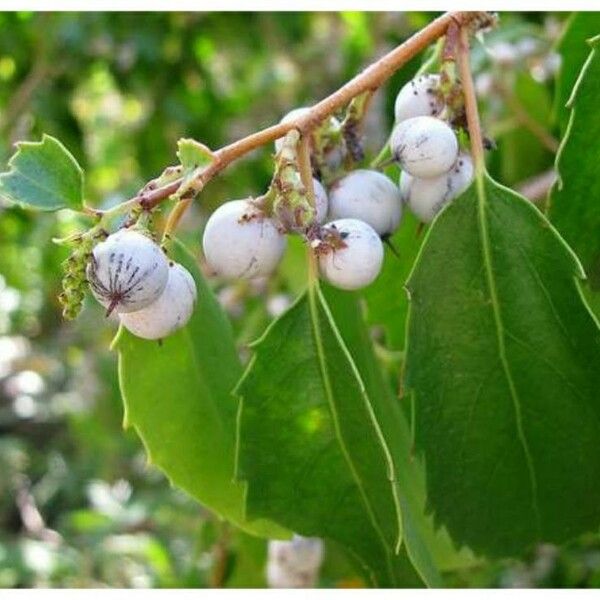
Plant Overview
Often called the Holly Azara, this elegant evergreen is a hidden gem from the temperate forests of Chile. While it shares the glossy, jagged foliage of a traditional holly, it surprises gardeners in late winter with a sudden burst of golden, vanilla-scented blossoms. It is a sophisticated choice for those looking to add vertical structure and intoxicating fragrance to a cool-season landscape.
🔍 How to Identify
- 🍃 Serrated Foliage: The leaves are dark green, leathery, and glossy, with distinct "teeth" along the edges that mimic the look of holly.
- 🌼 Mimosa-like Flowers: In late winter or early spring, it produces clusters of bright yellow, petal-less flowers that look like tiny, fluffy pom-poms.
- 🌿 Twin Leaves: Look closely at the base of the leaf stems (petioles); you will see small, leaf-like structures called stipules that make it look as if a smaller leaf is growing right behind the main one.
🏡 In Your Garden
- 🌬️ Wind Protection: While hardy, this plant thrives best when tucked against a south-facing wall or in a corner sheltered from harsh, drying winter winds.
- 👃 Sensory Placement: Because the scent is often compared to white chocolate or vanilla, plant it near a doorway or a frequently used path to catch the fragrance on the breeze.
- 🌱 Soil & Drainage: It prefers rich, acidic to neutral soil and hates "wet feet." Ensure your garden spot drains well to keep the roots happy.
⚠️ Safety & Toxicity
- ✅ Generally Safe: Azara petiolaris is not known to be toxic to humans, cats, or dogs.
- 👐 Mild Irritation: As with any ornamental shrub, sensitive individuals might experience mild skin irritation if handling the sap directly, but it is considered a very safe addition to family gardens.
✨ Fun Fact
Despite its mimosa-like yellow tufts and holly-like leaves, the Azara is actually a member of the Salicaceae family, making it a distant relative of the Willow tree!

Detailed Care Instructions








