Plant Overview
Often called Carqueja or the Jaguar’s Broom, Baccharis articulata is a resilient South American shrub that seems to defy the laws of plant anatomy. Instead of traditional lush leaves, it sports unique, "winged" stems that serve as its primary photosynthetic engines. Deeply rooted in Gaucho folklore, it is celebrated both as a hardy landscape survivor and a staple in traditional herbal medicine.
🔍 How to Identify
- 🌿 Winged Stems: The most striking feature is the green, flattened "wings" or flanges that run along the stems, giving the plant a segmented, geometric appearance rather than a rounded branch.
- 🍃 Inconspicuous Leaves: To conserve water, this plant has evolved to have almost no true leaves; they are reduced to tiny, brownish scales that are often invisible to the naked eye.
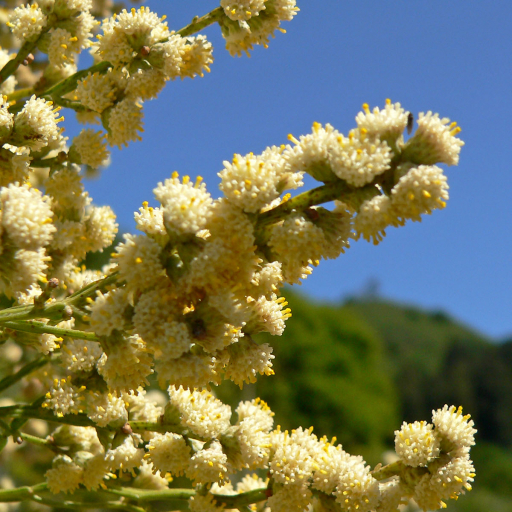
- 🌼 Fuzzy Flower Heads: During the blooming season, the tips of the winged stems produce small, yellowish-white tufted flowers that look like miniature, fuzzy tassels.
🏡 In Your Garden
- ☀️ Sun Worshiper: Carqueja thrives in full, uncompromising sunlight. It is exceptionally drought-tolerant once established, making it a perfect candidate for "rock gardens" or areas where the soil is too poor for more delicate species.
- 🪴 The Drainage Rule: While it is a tough survivor, it cannot tolerate "wet feet." It requires sandy or very well-draining soil; if the roots sit in stagnant water, the plant will quickly decline. It is best left to grow naturally without heavy pruning or excessive fertilization.
⚠️ Safety & Toxicity
- 🍵 Medicinal Status: In South American culture, it is widely used as a medicinal tea for digestion. However, it should be used with caution as it is incredibly potent.
- 🐾 Pet & Child Safety: While not considered "deadly," the plant contains high concentrations of bitter resins and essential oils. If ingested by curious pets or children, it can cause significant gastrointestinal upset or nausea due to its intense bitterness.
✨ Fun Fact
In Argentina and Uruguay, Carqueja is a key botanical used in the production of traditional "Amargo" beverages. It is so famously bitter that there is a local saying: "Bitter as Carqueja," used to describe someone with a particularly sour personality!

Detailed Care Instructions
To grow Baccharis Articulata, also known as the saltbush or jojoba plant, follow these steps:
- Choose the right location: Baccharis Articulata thrives in sunny areas with well-drained soil. Make sure the location receives full sun for at least six hours a day.
- Prepare the soil: If the soil is heavy or clay-like, add some organic matter such as compost or well-rotted manure to improve drainage and fertility.
- Plant the seeds: Baccharis Articulata can be grown from seeds. Sow the seeds directly into the prepared soil, spacing them about 12 inches apart.
- Water regularly: Keep the soil consistently moist but not waterlogged. Provide enough water to keep the soil evenly moist until the plants are established. After that, they are relatively drought-tolerant and should only require occasional watering.
- Mulch: Apply a layer of organic mulch, such as wood chips or straw, around the base of the plant. This will help conserve moisture, suppress weed growth, and insulate the roots.
- Prune if necessary: Baccharis Articulata typically doesn't require pruning, but if the plant becomes overgrown or straggly, you can trim it back in spring to maintain a compact shape.
- Fertilize sparingly: Baccharis Articulata is adapted to low-nutrient soils and typically does not require regular fertilization. However, if the plants seem weak or pale, you can apply a slow-release, balanced fertilizer according to the manufacturer's instructions.
- Monitor for pests and diseases: Baccharis Articulata is generally resistant to pests and diseases. However, keep an eye out for common garden pests, such as aphids or spider mites, and treat them with an organic insecticide if necessary.
By following these steps, you should be able to successfully grow Baccharis Articulata. Enjoy the beauty of this unique plant!
To water this plant, first, check the soil moisture by inserting a finger into the soil. If the top inch of soil feels dry, it is time to water. Use a watering can or hose with a gentle spray nozzle to moisten the soil around the base of the plant. Make sure to avoid getting water on the leaves, as this can promote disease. Water thoroughly until the soil is evenly moist but not oversaturated. Allow the soil to drain before placing the plant back in its location. Monitor the moisture level regularly and adjust your watering schedule accordingly to prevent over or under watering.
To fertilize this plant, you should apply a slow-release fertilizer in the spring, ensuring that it is evenly distributed around the root zone. Do not over-fertilize as this may lead to excess growth and reduced plant health. Additionally, organic fertilizers such as compost or manure can be applied annually to improve soil fertility and provide nutrients. Always make sure to water the plant before and after fertilization to avoid root burning.
Baccharis articulata is a type of plant that grows well in soil that is well-draining and has good fertility. It is recommended to use a soil mix that is made up of 50% organic matter, such as compost or peat moss, and 50% inorganic matter, such as sand or perlite. This type of soil mix will help to provide the necessary nutrients and drainage for the Baccharis articulata plant to grow well. It is also important to make sure that the soil is not too acidic, as this can inhibit plant growth. A pH level between 6 and 7 is ideal for this type of plant. In addition, adding a layer of mulch to the soil can help to retain moisture and regulate temperature, which can be beneficial for the growth of the Baccharis articulata plant.
To propagate this plant, take softwood cuttings from the stem. It is best to do this in the spring or summer when the plant is actively growing. Cut a 6-inch section of the stem, making sure it has at least 2-3 nodes. Remove any leaves from the bottom half of the stem. Dip the cut end in rooting hormone powder and tap off the excess. Plant the stem in moist, well-draining soil, and keep it in a warm, bright area with indirect sunlight. Water the cutting regularly, making sure the soil stays moist but not waterlogged. Roots should begin to form in 2-3 weeks. Once the cutting has developed a strong root system, it can be transplanted into a larger pot or into the ground.








