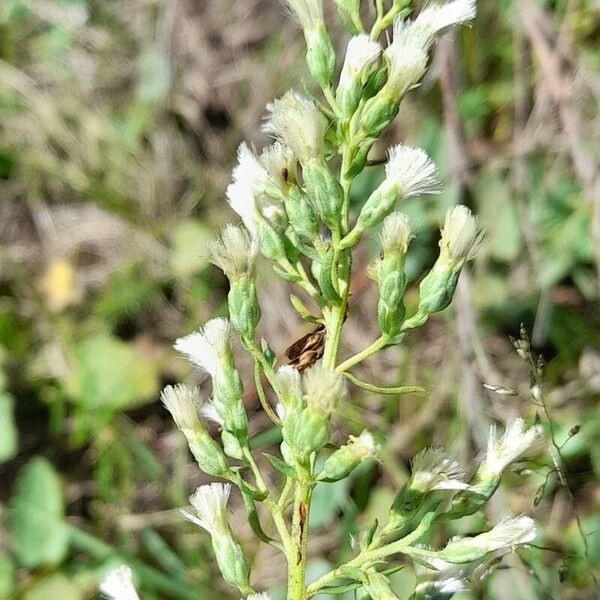
Plant Overview
Often called "Mio-Mio" or "Romerillo" in its native South American range, this shrub looks deceptively like a delicate, oversized sprig of rosemary. While it may appear soft and airy swaying in the winds of the pampas, it is one of the most respected and feared plants among ranchers. It is a hardy survivor, built to thrive in harsh, open grasslands where other plants might wither.
🔍 How to Identify
- 🍃 Needle-like Leaves: The foliage is composed of very narrow, linear leaves that are densely packed along the stems. They are bright green and lack the strong aromatic scent of true rosemary.
- 🌼 Clustered Blooms: It produces small, inconspicuous yellowish-white flowers at the tips of its branches. Since the plant is dioecious, you will notice that some individuals bear "male" flowers while others bear "female" ones.
- 🌾 Shrubby Habit: It typically grows into a multi-stemmed, woody shrub about 1 to 3 feet tall, often appearing bushy and somewhat messy as it ages.
🏡 In Your Garden
- ☀️ Drought Specialist: This plant is an expert at living in poor, rocky, or sandy soils. It requires very little water once established and can handle intense, direct sunlight without scorching.
- 🦋 Pollinator Support: While it isn't a traditional "ornamental" for most home gardens, it serves a vital role in its native ecology by providing nectar for various butterflies and specialized bees.
- 🌱 Wild Character: If grown in a native or meadow-style garden, it adds a fine-textured, silvery-green backdrop that moves beautifully in the wind.
⚠️ Safety & Toxicity
- 🚫 Status: Extremely Toxic. Baccharis coridifolia is notorious for being lethal to livestock, particularly cattle, sheep, and horses.
- 🐾 Details: The plant contains macrocyclic trichothecenes (potent mycotoxins). Even a small amount of ingested foliage can cause severe gastrointestinal inflammation and heart failure in animals. It is not recommended for residential gardens with pets or young children, and gardeners should wear gloves when pruning to avoid skin irritation.
✨ Fun Fact
The toxicity of the Mio-Mio is actually a "biological partnership." The plant doesn't produce the deadly toxins entirely on its own; it has a symbiotic relationship with a soil fungus (Stachybotrys) that produces the chemicals, which the plant then absorbs and stores in its leaves to protect itself from being eaten!

Detailed Care Instructions







