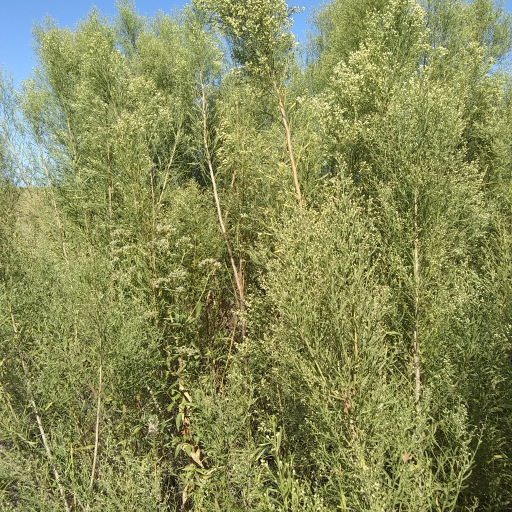
Plant Overview
Known as the Roosevelt Weed, Baccharis neglecta earned its iconic nickname by being one of the few plants hardy enough to flourish in the scarred landscapes of the 1930s Dust Bowl. Often mistaken for a willow due to its slender leaves, this resilient evergreen shrub is a master of survival in the American Southwest and Northern Mexico. It is a champion of ecological restoration, quickly claiming neglected soils and transforming them into bustling pit-stops for migrating butterflies.
🔍 How to Identify
- 🌿 Slender Foliage: The leaves are narrow, linear, and dark green, resembling rosemary or willow leaves, but with a slightly resinous or "sticky" feel when touched.
- ☁️ Autumn Plumes: In late fall, female plants produce spectacular, feathery white seed heads that look like a dusting of snow or clouds caught in the branches.
- 🎋 Broom-like Form: It typically grows as a multi-stemmed shrub with an upright, fountain-like shape, often reaching heights of 3 to 10 feet.
🏡 In Your Garden
- 🦋 Pollinator Magnet: This plant is a vital nectar source for Monarch butterflies during their fall migration. If you want a garden vibrating with wings in October, this is the shrub to plant.
- 🏜️ The Ultimate Survivor: It thrives in "impossible" spots—alkaline soil, salty coastal air, or compacted clay where other plants fail. Because it has a deep taproot, it is exceptionally drought-tolerant once established.
- ✂️ Maintenance Tip: It can become "leggy" or thin at the bottom over time. To keep it dense and lush, gardeners often prune it back significantly in early spring to encourage fresh, bushy growth.
⚠️ Safety & Toxicity
- 🤧 Allergy Alert: While not poisonous to the touch, the male plants release significant amounts of pollen in the fall, which can trigger hay fever for sensitive individuals.
- 🐾 Pet & Livestock Note: While generally ignored by cats and dogs, it contains resins that can be toxic to livestock (especially cattle and sheep) if consumed in large quantities. It is best kept away from grazing pastures.
✨ Fun Fact
The name "Roosevelt Weed" was coined because the plant spread rapidly across abandoned Texas farmlands during the Great Depression. It became a symbol of the New Deal era's focus on soil conservation and land healing.

Detailed Care Instructions
To grow Baccharis Neglecta (Roosevelt Weed), you can follow the steps below:
- Choose a suitable location: Baccharis Neglecta prefers full sun exposure, so select a location in your garden or yard that receives at least 6 hours of direct sunlight per day.
- Prepare the soil: This plant prefers well-draining soil, so amend the soil with organic matter, such as compost, to improve drainage. Baccharis Neglecta can tolerate a wide range of soil types, including sandy or clay soils.
- Sow the seeds: You can sow the seeds directly into the prepared soil in early spring, after the last frost. Scatter the seeds on the soil surface and cover them lightly with a thin layer of soil. Water gently to moisten the soil.
- Watering: Baccharis Neglecta is a drought-tolerant plant once established, so avoid overwatering. Water the seedlings regularly until they establish roots. After that, water deeply when the soil becomes dry, but allow the top layer of soil to dry out between waterings.
- Mulching: Apply a layer of organic mulch, such as straw or wood chips, around the base of the plants to help conserve moisture and suppress weed growth.
- Pruning: Baccharis Neglecta benefits from occasional pruning to maintain its shape and stimulate new growth. Prune the plant in late winter or early spring before new growth begins.
- Pests and diseases: Baccharis Neglecta is generally resistant to pests and diseases but keep an eye out for any signs of insect infestation or disease. Treat these issues with the appropriate organic insecticides or fungicides if necessary.
- Fertilization: Baccharis Neglecta typically does not require much fertilizer. However, if your soil lacks nutrients, you can apply a balanced, slow-release fertilizer in early spring.
- Propagation: Apart from seeds, Baccharis Neglecta can also be propagated through cuttings. Take semi-hardwood cuttings in late spring or early summer, dip them in rooting hormone, and place them in moist soil or a container with a well-draining potting mix until they develop roots.
Remember, Baccharis Neglecta is a native plant and provides important habitat for birds and butterflies. By growing it, you can contribute to local ecosystem health and biodiversity.

Place in a window with dappled sun or a spot in the middle of a room. Or directly in a window facing west or east.

Baccharis Neglecta is a type of plant that requires watering on a regular basis to ensure its survival and growth. When watering the plant, it is important to avoid overwatering, as this can lead to root rot and other issues that can harm the plant.
To water Baccharis Neglecta, it is recommended to wait until the soil is dry to the touch before watering. This can be determined by sticking a finger into the soil and feeling for moisture. If the soil feels dry, it is time to water the plant.
When watering, it is important to use a watering can or hose with a gentle spray nozzle to avoid disturbing the soil and roots. Slowly pour water onto the soil around the base of the plant, taking care not to get any water on the leaves or stems.
It is also important to ensure that the plant has proper drainage, as this will help prevent overwatering. If the pot or container has no drainage holes, consider using a drill to create some or transferring the plant to a new pot with proper drainage.
Overall, watering Baccharis Neglecta requires patience, attention, and care to ensure the plant remains healthy and happy.
To properly fertilize this plant, use a balanced 10-10-10 fertilizer and apply it to the soil surrounding the plant during the early spring growing season. Be sure to water the plant before and after applying the fertilizer to prevent root burn. Repeat fertilization every four to six weeks throughout the growing season to encourage healthy growth and abundant blooms. Avoid over-fertilizing, as this can lead to excessive vegetative growth and reduced flower production.
Baccharis neglecta is a plant that prefers well-draining soil that is moderately fertile. It can tolerate a range of pH levels and soil types, but it is best grown in sandy loam or loamy soils. The soil should be moist but not waterlogged, and it should be able to retain water for long enough to keep the roots hydrated between waterings. The plant prefers soil that is slightly acidic to neutral and should not be grown in highly alkaline soil. The soil should be enriched with organic matter, such as compost, to provide the plant with nutrients and to help retain moisture. Overall, the soil should be well-aerated, allowing for good drainage, and should not contain excess amounts of clay.
Propagation of this plant can be done through either stem cuttings or seeds. To propagate via stem cuttings, select a healthy stem and cut it just below a node. Remove any leaves from the lower section of the stem and dip the cut end into rooting hormone. Plant the cutting in well-draining soil and water thoroughly. Keep the cutting in a warm and humid location, and mist it regularly until roots develop.
To propagate via seeds, collect the seeds from the plant and allow them to dry out completely. Plant the seeds in well-draining soil and cover with a thin layer of soil. Water the seeds regularly and keep them in a warm and well-lit location until they germinate.
It is important to note that this plant should not be propagated in areas where it is considered invasive or where it can potentially harm native plant populations.








