Plant Overview
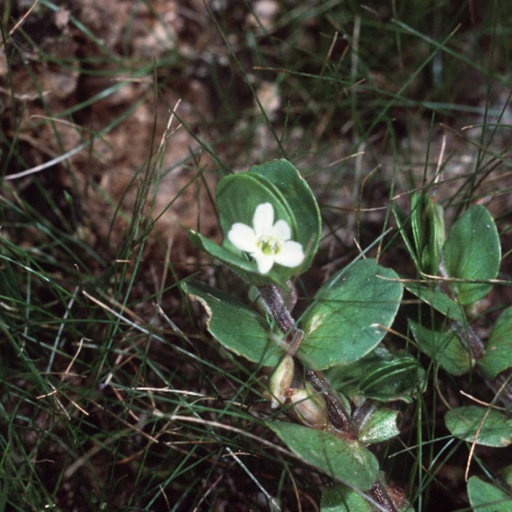
Often called the "Roundleaf Water Hyssop," this charming North American native is a master of the shoreline. Whether it is floating lazily on a pond surface or carpeting a muddy bank, its succulent-like leaves create a lush, bright green mat. It is a favorite for water gardeners and aquarium hobbyists because it is nearly indestructible as long as it stays wet.
🔍 How to Identify
- 🍃 Round Foliage: The leaves are perfectly circular or disc-shaped, growing in opposite pairs along the stem. They have a slightly fleshy, succulent texture.
- 🌸 Dainty Blooms: Small, funnel-shaped white flowers with five petals and a subtle yellow or green throat appear tucked between the leaves during the summer.
- 🌱 Creeping Stems: The stems are soft and often slightly fuzzy (pubescent). They are designed to root at every "node" that touches mud, allowing the plant to spread rapidly.
🏡 In Your Garden
- 💧 The "Wet Feet" Rule: This is an obligate wetland plant. It doesn't just like water; it requires it. It is best used in "bog gardens," at the edge of ponds, or even completely submerged in aquariums where it provides excellent cover for small fish.
- ☀️ Light & Legginess: While it can survive in partial shade, it needs bright light to maintain its dense, "carpet-like" look. In low-light conditions, the stems will stretch out (become leggy), and the plant will lose its compact charm.
- ✂️ Easy Propagation: If the plant wanders too far, simply pinch off a stem and stick it in wet soil. It will grow a new root system almost immediately without the need for special rooting hormones.
⚠️ Safety & Toxicity
- 🐾 Non-Toxic: Bacopa rotundifolia is generally considered safe and non-toxic for dogs, cats, and horses.
- 🦠 Environmental Safety: While the plant itself is safe, because it grows in stagnant or slow-moving water, it can harbor aquatic parasites or bacteria if the water quality is poor. Always wash your hands after maintenance in a pond environment.
✨ Fun Fact
While it looks very different, this plant belongs to the Plantaginaceae family—the same family as the tall, regal Snapdragon! It is also a close cousin to Bacopa monnieri, a famous herb used in traditional medicine, though rotundifolia is primarily grown for its ornamental beauty.

Detailed Care Instructions
To grow Bacopa Rotundifolia plant, follow these steps:
- Choose a suitable location: Bacopa Rotundifolia thrives in moderate to bright indirect sunlight. Select a spot with good lighting conditions but avoid direct sunlight as it may burn the leaves.
- Prepare the aquarium: Bacopa Rotundifolia is an aquatic plant, so you need an aquarium or a aquatic plant pot to grow it. Ensure the aquarium has a substrate made of nutrient-rich soil or a dedicated aquatic plant substrate.
- Planting: Gently separate the Bacopa Rotundifolia stems and plant them about 1 inch into the substrate, leaving some space between each stem. Push the substrate gently around the base of the stems to secure them.
- Water conditions: Bacopa Rotundifolia prefers slightly acidic to neutral water conditions with a pH ranging between 6.5 to 7.5. Maintain a consistently high temperature in the aquarium, ideally around 72-82°F (22-28°C). Maintain good water circulation and add a suitable aquatic plant fertilizer according to the manufacturer's instructions.
- Lighting: Provide moderate to bright indirect lighting for Bacopa Rotundifolia. Using a suitable aquarium light fixture with a color temperature around 6500K will help the plant grow well.
- CO2 supplementation: Bacopa Rotundifolia can benefit from carbon dioxide (CO2) supplementation. You can consider using a CO2 system or liquid carbon supplements to enhance its growth. However, it can still grow well without CO2 supplementation.
- Pruning: Regularly trim the Bacopa Rotundifolia plant to maintain its shape and promote bushier growth. Use clean scissors or aquatic plant trimming tools to prune excessive growth.
- Maintenance: Regularly monitor and maintain good water quality parameters such as ammonia, nitrate, and phosphate levels. Perform water changes as needed to keep the environment healthy for the plant.
By following these steps and providing optimal conditions, you should be able to grow Bacopa Rotundifolia successfully in your aquarium.

Place in a bright room that is sun drenched almost all day. Or directly in a south-facing window.

To water this plant, ensure that the soil is not completely dry before watering. Use water at room temperature and water the soil directly, rather than the leaves. Allow the water to drain out of the bottom of the pot and do not allow the plant to sit in standing water. Watering frequency may vary depending on the temperature and humidity of the plant's environment.
To fertilize the plant, use a balanced liquid plant fertilizer and dilute it to half strength. Apply the fertilizer once every two weeks during the growing season. Potted plants may need more frequent fertilization than those planted in the ground. It is important not to over-fertilize, as this can lead to burning and damage to the plant's roots. Ensure that the soil is moist before applying the fertilizer.
Bacopa Rotundifolia plant grows best in well-draining soil that is rich in nutrients. The soil should be slightly acidic with a pH of around 6.0 to 6.5. It's important to avoid soil that is too heavy or clay-like as it can retain too much water, which can lead to root rot. A mixture of peat moss, sand, and perlite can create a good substrate for the plant as it will provide good drainage and aeration. Additionally, adding fertilizer to the soil can aid in the plant's growth and development.
Bacopa Rotundifolia is a green stem plant that is frequently used in aquariums and planted tanks. It is a species of aquatic flowering plant that belongs to the family of Scrophulariaceae. The plant is typically propagated by stem cuttings.
To propagate Bacopa Rotundifolia plant, the first thing you need to do is to identify healthy and mature stems, which are typically green in color, and cut them from the parent plant using a pair of sharp and sterilized scissors.
After collecting the stems, you can proceed to remove the lower leaves, as they can rot and become a breeding ground for bacteria that can harm the new plant. At least 2-3 leaves must be left on the stem to facilitate photosynthesis.
Next, you can insert the cut stems into substrate with adequate light and nutrients, such as aquarium soil, sand, or gravel. The substrate should be moist but not waterlogged. You can use small weights or clips to hold the stems in place while new roots develop.
The best conditions for Bacopa Rotundifolia stems to root include adequate lighting, which should be around 2 watts per gallon or more, depending on the intensity of the light source. You can also use a CO2 injection system to provide extra carbon dioxide to the new plants.
Once the newly propagated plants have developed strong roots, you can remove the weights or clips to allow the stems and roots to grow freely. You can also transplant them into a larger tank or aquarium if needed or trim the stems and place them back in the same tank.
By following these steps, you can successfully propagate Bacopa Rotundifolia and enjoy a thriving aquatic garden in your aquarium or planted tank.








