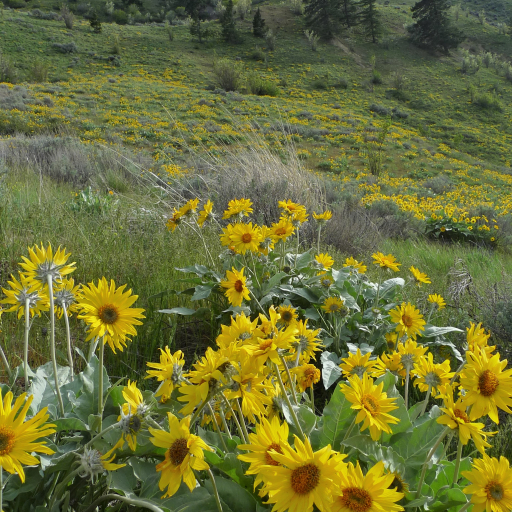
Plant Overview
Often called the "Sunflower of the Hills" or "Oregon Sunflower," the Arrowleaf Balsamroot is the golden crown of Western North America’s wild meadows. These resilient perennials are famous for painting entire mountainsides bright yellow during the spring, acting as a herald for the end of winter. Deeply rooted in both the soil and indigenous history, they are as tough as they are beautiful.
🔍 How to Identify
- 🏹 Arrow-Shaped Leaves: The most defining feature is the large, triangular leaves that look exactly like broad arrowheads, growing primarily from the base of the plant.
- 🌻 Sun-Like Blooms: Each plant sends up multiple leafless stalks topped with a single, vibrant yellow flower head that closely resembles a wild sunflower.
- Silvery Fuzz:** The leaves and stems are covered in fine, white hairs, giving the plant a soft, silvery-green or "velvet" appearance that helps it conserve moisture.
🏡 In Your Garden
- 🌱 The Mighty Taproot: This plant develops a massive, woody taproot that can reach over four feet deep into the earth. Because of this, it is nearly impossible to transplant; if you want it in your garden, you must start it from seed in its "forever home."
- ☀️ Drought Warrior: Once established, it is incredibly self-sufficient. It thrives in full sun and well-draining, rocky soil, requiring almost no supplemental water once the spring rains fade.
- 🦋 Pollinator Magnet: It serves as a vital early-season food source for native bees, butterflies, and even big game like elk and deer who graze on the protein-rich flowers.
⚠️ Safety & Toxicity
- ✅ Status: Generally non-toxic and historically significant as a food source.
- 🐾 Details: There are no known toxic effects for dogs, cats, or horses. While many parts of the plant were traditionally eaten by humans (after specific preparation), it is best enjoyed visually today to protect wild populations and avoid any potential stomach upset from raw consumption.
✨ Fun Fact
The Arrowleaf Balsamroot was a "survival supermarket" for Indigenous peoples and early explorers like Lewis and Clark. The roots can be roasted or steamed to create a sweet, molasses-like flavor, and the seeds can be ground into a nutritious flour or "pinole."

Detailed Care Instructions
To grow Balsamorhiza sagittata, also known as arrowleaf balsamroot, you can follow these steps:
- Climate and Location: Ensure you have the right climate for the plant. Arrowleaf balsamroot is native to North America and thrives in dry, sunny areas. It prefers well-draining soil and is commonly found in grasslands, foothills, or meadows. Select a suitable location that receives full sun for a minimum of six to eight hours a day.
- Soil Preparation: Prepare the soil by removing any weeds or debris in the selected area. If the soil is heavy or compacted, consider amending it with organic matter like compost to improve drainage and fertility. Balsamorhiza sagittata prefers slightly alkaline soil with a pH range of 6.5 to 7.5.
- Planting: Balsamorhiza sagittata can be propagated from either seeds or root cuttings. If using seeds, sow them directly in the garden in late fall or early spring. The seeds require a period of cold stratification to germinate, so they need exposure to colder temperatures for several weeks before planting. Lightly press the seeds into the soil, ensuring they are not covered too deeply. If using root cuttings, ensure they are taken from healthy plants and plant them in the desired location at the same depth the roots were originally growing.
- Watering: Keep the soil evenly moist during the germination process until the plants are established. Once established, arrowleaf balsamroot is drought-tolerant and requires infrequent watering. However, during prolonged dry periods, supplemental irrigation may be necessary.
- Maintenance: After establishment, arrowleaf balsamroot does not require much care. Remove any weeds that may compete for resources, but avoid disturbing the plant's roots. Fertilizer is generally not needed, as excessive nutrients can cause the plant to produce more foliage at the expense of flowers.
- Pruning: In late fall or early spring, you can trim back the spent flower stalks to tidy up the plant. However, leaving them intact can provide food and shelter for wildlife during the winter months.
- Propagation: Balsamorhiza sagittata can self-seed and spread naturally. If you wish to propagate more plants, you can collect the seeds once they have matured and plant them in new areas or share them with other gardeners.
By following these steps, you can successfully grow Balsamorhiza sagittata in your garden and enjoy its beautiful yellow flowers.

Place in a bright room that is sun drenched almost all day. Or directly in a south-facing window.

To properly hydrate this particular plant, ensure that the soil has been completely drained before watering it. You may want to wait until the soil has dried out a bit before giving it a good soak. As you water, be sure to avoid standing water around the roots of the plant by being careful not to overwater it. If possible, try to water the plant at its base rather than over its leaves. Finally, avoid watering the plant during times of extreme heat or cold to prevent moisture-stress on the plant.
To successfully fertilize this plant, start by selecting a balanced fertilizer that contains equal amounts of nitrogen, phosphorus, and potassium. Dilute the fertilizer according to the instructions on the packaging, and apply it to the soil around the base of the plant using a watering can or garden sprayer. Avoid getting fertilizer on the leaves or flowers of the plant, as this can cause damage. Apply the fertilizer once every two weeks during the growing season, from spring through early autumn. Water the plant thoroughly after fertilizing to ensure that the nutrients are absorbed into the soil.
To cultivate the Balsamorhiza Sagittata plant, it is recommended to use a well-draining soil that is low in nutrients. The soil should be mix of sandy or rocky soil with organic compost. The plant also prefers soil that is slightly alkaline, with a pH between 6.5 and 7.5. It is important to avoid using overly moist soil, as this can lead to root rot. The soil should be kept moist, but not waterlogged. Additionally, the plant is very drought-tolerant and can survive in dry soil conditions.
Balsamorhiza Sagittata is a perennial plant that can be propagated through seed or vegetative methods. To propagate through seed, collect the mature seed pods in late summer or early fall and allow them to dry for several days. Once dry, separate the seeds from the pods and store them in a cool, dry place until ready to plant.
To propagate through vegetative methods, take stem cuttings in early spring or fall. Choose healthy stems with at least two nodes, and remove the lower leaves. Dip the cut end in rooting hormone and plant in well-draining soil. Keep the soil moist and in a warm, sunny location until new growth appears.
Another method of vegetative propagation is through root cuttings. Dig up the plant in fall or early spring, and cut off sections of the root that are at least one inch long. Plant the cuttings in pots filled with well-draining soil, and keep them in a warm, sunny location until new growth appears.
Regardless of the method chosen, ensure that the soil is well-draining and that the plant receives adequate water and sunlight to encourage healthy growth.








