Plant Overview
Often called the Swamp Banksia or Broad-leaved Banksia, this Australian native looks like a prehistoric relic that wandered out of a coastal bog and into the modern garden. Thriving in the damp, sandy heaths of Eastern Australia, it is beloved for its massive, leathery foliage and dramatic flower spikes that transition through a kaleidoscope of earthy colors.
🔍 How to Identify
- 🍃 The Foliage: Features some of the largest leaves in the Banksia family—stiff, paddle-shaped, and reaching up to 12 inches long with bold, saw-toothed edges.
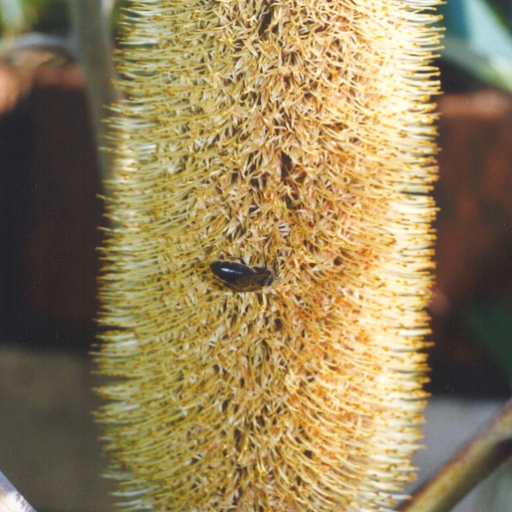
- 🕯️ The "Lanterns": Produces massive cylindrical flower spikes that start as a stunning metallic green, turn a creamy yellow as they open, and eventually age into deep, velvet-brown cones.
- 🍂 Rusty Fuzz: Look closely at the new growth; young stems and emerging leaves are often covered in a soft, decorative "rusty" down that feels like felt.
🏡 In Your Garden
- 💧 The "Wet Feet" Wonder: Unlike many of its cousins that demand perfect drainage, Banksia robur loves moisture. It is the ideal plant for those "problem spots" in your yard where the soil stays damp or heavy.
- 🔥 Resilient Heart: This plant is a survivor. It grows from a "lignotuber"—a woody swelling at the base—which allows it to sprout back with vigor even if it’s cut to the ground or damaged by fire.
⚠️ Safety & Toxicity
- ✅ Safe for All: This plant is non-toxic to humans, dogs, and cats. It is a popular choice for wildlife-friendly sensory gardens.
- 🧤 Scratchy Surface: While not poisonous, the leaves are incredibly stiff and the serrated teeth can be quite sharp. It’s best to wear gloves when pruning to avoid "foliage rash" or minor scratches.
✨ Fun Fact
The Banksia robur is a literal bird-buffet! It produces so much nectar that it’s known to attract "drunk" honeyeaters and lorikeets, who can become quite bold and noisy while feasting on the sweet syrup hidden in the flower spikes.

Detailed Care Instructions
To grow a Banksia Robur plant, you can follow these steps:
- Obtain seeds or young plants: You can purchase Banksia Robur seeds or young plants from a nursery or online store. Alternatively, you can collect seeds from mature plants if they are available in your area.
- Choose a suitable location: Banksia Robur prefers a sunny position with well-drained soil. Ensure that the area is protected from strong winds.
- Prepare the soil: Banksia Robur prefers sandy or loamy soils that are slightly acidic. If your soil is heavy or clayey, you can improve drainage by adding sand and organic matter, such as compost or well-rotted manure.
- Sow the seeds or plant the seedlings: If you have seeds, soak them in water for 24 hours before planting. Then, sow the seeds or plant the seedlings in the prepared soil, ensuring they are spaced apart to allow for growth.
- Water regularly: Banksia Robur plants require regular watering, especially during dry spells. Water deeply and allow the soil to dry slightly between waterings. However, avoid overwatering as they are sensitive to waterlogging.
- Mulch: Apply a layer of organic mulch, such as straw or bark chips, around the base of the plant. This will help retain moisture, moderate soil temperature, and suppress weed growth.
- Pruning: Banksia Robur may require pruning to maintain shape and promote bushier growth. Prune lightly after flowering to encourage fresh growth and remove any dead or diseased branches.
- Fertilize: Apply a slow-release native plant fertilizer in spring to provide necessary nutrients to the plant. Follow the instructions on the packaging for the appropriate dosage.
- Protect from frost: In areas with frost, consider protecting the plant during winter by covering it with a frost cloth or moving it to a sheltered spot.
- Monitor pests and diseases: Banksia Robur is generally resilient to pests and diseases. However, keep an eye out for any signs of infestation or disease, such as aphids or root rot. Treat any issues promptly.
By following these steps, you can successfully grow a Banksia Robur plant and enjoy its unique and beautiful flowers.

Place in a bright room that is sun drenched almost all day. Or directly in a south-facing window.

There are certain considerations that need to be taken into account when watering the Banksia Robur plant. Firstly, the soil should be allowed to dry out slightly before watering. This is because overwatering can lead to root rot and damage the plant's health.
When it is time to water, the soil should be saturated but not waterlogged. If the plant is in a pot, the best method is to water it from the bottom by placing the pot in a tray of water and allowing it to soak up the moisture. This ensures that the water reaches the roots without causing any damage to the stem or leaves.
If the plant is in the ground, it is best to water it deeply but infrequently. This encourages the roots to grow deeper into the soil and helps the plant to become more drought-tolerant.
In general, it is important to monitor the soil moisture level regularly and adjust the watering frequency accordingly. This will ensure that the Banksia Robur plant remains healthy and vibrant.
To properly fertilize the Banksia Robur plant, it is important to use a balanced fertilizer and to do so during the plant's growing season. Begin by mixing the fertilizer with water in accordance with the manufacturer's instructions. Then, gradually pour the solution onto the soil surface, avoiding wetting the foliage. Be careful not to over-fertilize, as this can damage the plant. It is also recommended to fertilize once every 2-3 months.
For optimal growth, it is recommended to use a well-draining soil that is slightly acidic to neutral with a pH range of 5.5 to 7.0. The soil should also be enriched with organic matter such as compost or leaf litter to enhance soil fertility and improve moisture retention. It is important to avoid using heavy, clay soils or soils that do not drain well as this can lead to root rot and other plant issues. Additionally, it is recommended to avoid using soil that has been heavily fertilized or treated with pesticides as this can also be harmful to the plant.
To propagate this plant, you will need to collect healthy plant material such as stem cuttings or seeds. For stem cuttings, you should select a young and healthy stem with no diseases or pests. You can then sterilize a sharp knife or shear and cut the stem about 6 inches long.
Remove leaves from the bottom half of the stem and dip the cut end in rooting hormone powder. Plant the cutting in well-draining soil or a mixture of sand and peat moss. Water the cutting thoroughly and place it in a warm and bright spot.
Alternatively, you can collect mature seeds and sow them directly in well-draining soil. You should scarify or nick the seeds with a knife before sowing them to increase the chances of germination.
Water the seeds regularly and keep the soil moist until you see signs of growth. The exact propagation method may vary depending on the species, so it's important to research the specific requirements for Banksia Robur plant.








