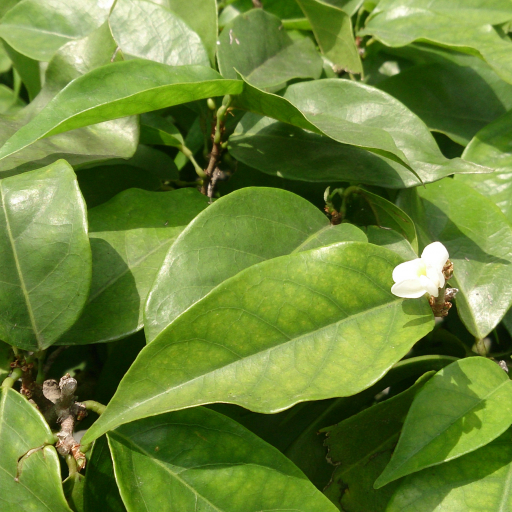
Plant Overview
Often called "African Sandalwood" or "Camwood," this versatile shrub is a cornerstone of West African tradition. For centuries, it has been cherished not just for its fragrant, pea-like flowers, but for the brilliant red dye hidden within its heartwood. Whether used as a natural cosmetic or a durable timber, it is a plant deeply woven into the cultural fabric of the rainforest.
🔍 How to Identify
- 🌿 The Foliage: Look for shiny, dark green leaves that are typically ovate or elliptic. They have a leather-like texture that helps the plant retain moisture in humid environments.
- 🌼 The Blooms: It produces small, delicate white flowers that often feature a distinct yellow "eye" or spot at the center. These blossoms release a sweet, heavy fragrance that attracts various pollinators.
- 🪵 The Inner Secret: If the bark is nicked or the wood is cut, the inner timber reveals a rich, reddish-brown hue that deepens upon exposure to air, which is the source of the famous "Camwood" dye.
🏡 In Your Garden
- 🌱 Root Development: Baphia nitida is known for its sturdy root system. It is often used in its native regions as a "living fence" or boundary marker because it is resilient and can be pruned into a dense, hedge-like shape.
- ☀️ Light and Space: While it thrives in the dappled light of a tropical canopy, it is surprisingly adaptable. In a home landscape, it prefers a spot where it can soak up morning sun but stay protected from the harshest afternoon heat to prevent leaf scorch.
- 💧 Soil Preference: It prefers slightly acidic, well-draining soil rich in organic matter. It doesn't like "wet feet," so ensuring your soil isn't compacted is key to a healthy plant.
⚠️ Safety & Toxicity
- ✅ Status: Generally considered safe and non-toxic for casual handling.
- 🧴 Details: The wood and bark are frequently processed into powders for skincare and traditional medicine to treat inflammation. However, while it is used topically, it is not meant for consumption. Always keep concentrated botanical powders out of reach of curious pets or toddlers to avoid respiratory irritation.
✨ Fun Fact
In many West African cultures, the red powder from the Baphia nitida tree, known as Osun, is a staple in bridal beauty rituals. It is mixed with water or oils to create a paste that is believed to give the skin a radiant, "ageless" glow before the wedding ceremony.

Detailed Care Instructions
To grow Baphia Nitida, also known as African Sandalwood, you can follow these steps:
- Climate and soil: Baphia Nitida requires a warm climate with minimum temperatures above 15°C (59°F). It can tolerate some shade but prefers full sun. The soil should be well-draining, fertile, and slightly acidic to neutral.
- Seeds or cuttings: Baphia Nitida can be grown from either seeds or cuttings. Seeds are readily available from online nurseries or botanical gardens, while cuttings can be taken from mature plants. If using cuttings, ensure they have at least two nodes or leaf pairs.
- Seed preparation: Soak the seeds in water for 24 hours to soften the hard coat. This will aid in germination.
- Germination: If using seeds, sow them in a seed tray or pot filled with a well-draining potting mix. Cover the seeds lightly with soil and keep them in a warm, humid environment. Germination can take several weeks, so be patient. Keep the soil slightly moist during this period.
- Transplanting: Once the seedlings are around 4-6 inches tall, or if you are using cuttings, they can be transplanted into individual pots or directly into the ground. At this stage, ensure the plants receive adequate sunlight and water them regularly.
- Care and maintenance: Baphia Nitida requires regular watering, especially during dry periods. However, be careful not to overwater as it can lead to root rot. Apply a balanced fertilizer during the growing season to promote healthy growth.
- Pruning: Regularly prune Baphia Nitida to maintain its shape and promote bushier growth. Pruning can be done during the dormant season or after flowering.
- Pest and disease control: Monitor the plant for common pests such as aphids, mealybugs, or spider mites. Treat infestations promptly using appropriate natural or chemical methods. Additionally, ensure good air circulation around the plant to prevent fungal diseases.
- Propagation: Baphia Nitida can be propagated through seed or cuttings as mentioned earlier. This allows you to expand your plant collection or share with other gardening enthusiasts.
- Patience: Growing Baphia Nitida may take time and patience as it can be slow-growing, especially in its early years. However, with the right care and conditions, you can enjoy the beauty of this plant in your garden or indoor space.

Place in a bright room that is sun drenched almost all day. Or directly in a south-facing window.

Watering Baphia Nitida will require a careful approach to avoid overwatering or underwatering the plant. Before watering the plant, check the moisture level of the soil by touching it. If the topsoil is dry, it is time to water the plant.
Fill a watering can with room temperature water and pour it slowly on the soil around the plant until it starts to drain from the bottom of the pot. Avoid pouring water directly on the leaves or stem of the plant.
If the soil is soaking wet or if there is standing water in the plant saucer, the plant has been overwatered. In such cases, allow the soil to dry out before watering again to prevent root rot.
During the winter months or when the plant goes into a dormant period, reduce the amount of water given to the plant and allow the soil to dry out completely before watering again.
It is also important to ensure that the pot has drainage holes to allow excess water to drain out. This will prevent water from getting trapped in the pot and causing damage to the plant.
To properly fertilize the Baphia Nitida plant, you should choose a balanced fertilizer that provides equal amounts of nitrogen, phosphorus, and potassium. Apply the fertilizer to the soil around the plant's roots in the early spring, and then follow up with another application in late summer. Avoid over-fertilizing, as this can lead to excessive growth and poor root development. Additionally, make sure to water the plant thoroughly after each application to help distribute the nutrients throughout the soil.
For optimum growth and health of this plant, it is recommended to use well-draining soil that is rich in nutrients. A mix of loam, sand, and peat moss is ideal for this plant as it will provide the necessary nutrients while ensuring good drainage. It is also important to maintain a slightly acidic pH level of around 6.0 to 6.5 in the soil for this plant. Additionally, adding organic matter such as compost or well-rotted manure can greatly improve the quality of the soil and help the plant thrive.
To propagate this plant, you will need to collect seeds from mature plants or take cuttings from young stems. If collecting seeds, wait until the pods have dried and split open, then remove the seeds and soak them in water for 24 hours. If taking cuttings, select a healthy young stem with several nodes and remove a 3-4 inch section.
Dip the bottom of the cutting in rooting hormone powder and plant it in a well-draining potting mix. Water the cutting thoroughly and keep it in a shaded area with high humidity. Mist the cutting regularly to keep it moist.
If propagating from seeds, plant them in a potting mix and keep the soil moist. Germination should occur within a few weeks.
Once the cutting or seedling has established roots, it can be transplanted into a larger container or planted in the ground. Ensure the plant receives adequate sunlight and water it regularly until it has fully matured.








