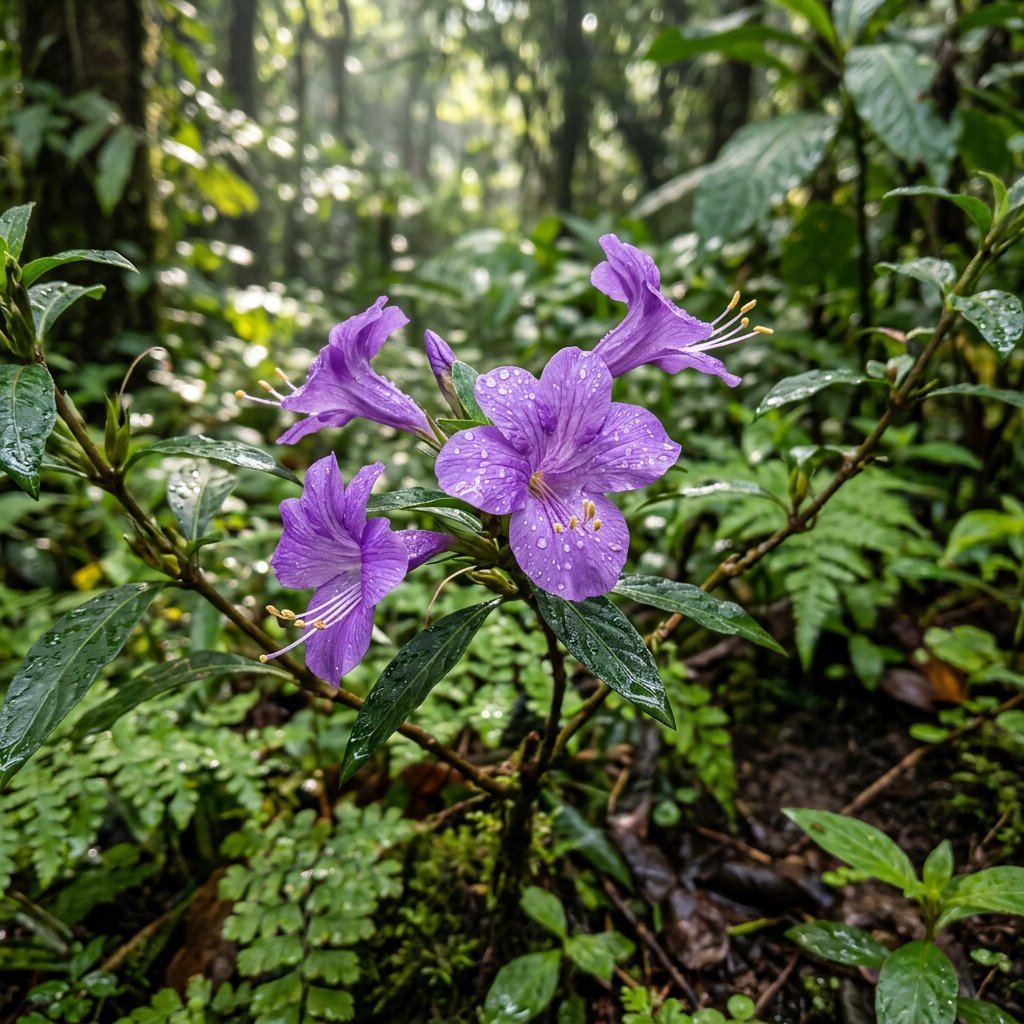
Plant Overview
Often called the Philippine Violet, this resilient shrub is a hidden gem for gardeners seeking a late-season "wow" factor. Despite its common name, it is actually native to India and Southeast Asia, where it is prized for its ability to burst into bloom just as other plants are fading for the winter. Its dense, bushy habit and crown of funnel-shaped flowers make it a favorite for those looking to add structure and reliable color to their landscapes.
🔍 How to Identify
- 🌸 The Blooms: Funnel-shaped flowers that appear in clusters at the ends of branches. While royal purple is the most common color, you may also find "Alba" (white) or "Striped" varieties that look like peppermint candy.
- 🍃 The Foliage: Dark green, elliptical leaves that grow in opposite pairs. They have a slightly rough texture and prominent veins that give the plant a lush, "full" appearance even when not in bloom.
- 📏 Growth Habit: An upright, multi-stemmed shrub that typically reaches 3 to 5 feet in height. If left unpruned, it takes on a soft, mounded shape that works perfectly as an informal hedge.
🏡 In Your Garden
- ☀️ The Light Sweet Spot: While it loves the sun, this plant is a "short-day" bloomer, meaning it relies on the longer nights of autumn to trigger its flower production. In very hot climates, providing some afternoon shade will keep the foliage from looking scorched.
- ✂️ Manage the Spread: It is a vigorous grower and can occasionally "leap" across the garden via self-seeding. To keep it tidy and promote a thicker carpet of flowers for the next year, give it a hard prune right after the final winter blooms have faded.
⚠️ Safety & Toxicity
- ✅ Generally Safe: The Philippine Violet is not known to be toxic to humans, dogs, or cats, making it a safe choice for family-friendly backyards.
- 🌵 Mechanical Defense: Be careful when pruning or weeding! While not "thorny" in the traditional sense, the base of the leaves can sometimes have small, stiff bracts that might prick sensitive skin.
✨ Fun Fact
🌸 Even though it is called a "Violet," it isn't related to the common garden violet at all! It actually belongs to the Acanthaceae family, making it a cousin to other famous garden beauties like the Mexican Petunia and the Shrimp Plant.

Detailed Care Instructions
To grow a Barleria Cristata plant, also known as the Philippine violet or firecracker flower, follow these steps:
- Climate: Ensure you are in a suitable climate for growing Barleria Cristata. It thrives in tropical and subtropical regions, typically USDA hardiness zones 9-11.
- Location: Choose a planting location that provides full sun to partial shade. Barleria Cristata prefers bright, indirect sunlight but can tolerate some shade.
- Soil: The plant prefers well-draining soil with a slightly acidic to neutral pH (around 6-7). Make sure the soil is rich in organic matter.
- Planting: Dig a hole that is slightly larger than the plant's root ball. Place the plant in the hole, ensuring that the top of the root ball is level with the surrounding soil. Backfill the hole and gently press the soil around the plant to secure it.
- Watering: Water the plant deeply immediately after planting to help it establish its roots. Afterward, water regularly to keep the soil evenly moist, but avoid overwatering, as excessive moisture can cause root rot.
- Fertilization: Apply a balanced fertilizer during the growing season (spring and summer) to encourage healthy growth and blooming. Follow the instructions on the fertilizer packaging for application rates and frequency.
- Pruning: Prune your Barleria Cristata plant to maintain its shape and encourage bushiness. Remove dead or damaged branches and trim back the tips of the plant if it grows too leggy.
- Mulching: Apply a layer of organic mulch around the base of the plant to help retain moisture, suppress weeds, and regulate soil temperature. Avoid piling the mulch against the plant's stem.
- Pests and Diseases: Monitor your plant regularly for any signs of pests or diseases. Common pests that can affect Barleria Cristata include aphids and mealybugs. Treat any infestations promptly with appropriate insecticides or natural remedies.
- Propagation: Barleria Cristata can be propagated through seeds or stem cuttings. Collect seeds from mature fruits and sow them in a well-draining potting mix. Keep the soil moist until the seeds germinate. Alternatively, take stem cuttings from healthy plants, dip them in rooting hormone, and plant them in a potting mix. Place the pot in a warm, humid location until the cuttings root.
Remember to research and determine the specific care requirements for Barleria Cristata in your particular climate and growing conditions to ensure the best possible growth and blooming.

Place in a bright room that is sun drenched almost all day. Or directly in a south-facing window.

Barleria Cristata plant requires regular watering to keep the soil moist, but not waterlogged. It is important to let the soil dry out slightly between waterings to prevent root rot. When watering, water the soil directly at the base of the plant and avoid getting water on the leaves. This plant prefers well-draining soil, so make sure the pot has drainage holes to prevent standing water. The frequency of watering will depend on the climate and location of the plant, but generally, it will need to be watered several times a week during the growing season and less often in the winter when it is dormant.
To fertilize Barleria Cristata, follow these instructions:
- Choose a balanced water-soluble fertilizer specifically formulated for flowering plants.
- Dilute the fertilizer as per the manufacturer's instructions. Generally, a ratio of 1 tablespoon of fertilizer in 1 gallon of water is recommended.
- Apply the fertilizer during the plant's active growing season, which is typically in spring and summer.
- Ensure the soil is moist before applying the fertilizer. Water the plant thoroughly a day or two before fertilizing.
- Pour the diluted fertilizer solution around the base of the Barleria Cristata, avoiding contact with the foliage.
- Use caution not to over-fertilize, as it can lead to nutrient burn or damage to the plant. Follow the recommended dosage and frequency provided on the fertilizer package.
- After applying the fertilizer, water the plant again to help the nutrients seep into the soil.
- Monitor the plant for any signs of stress or nutrient deficiencies. Adjust the fertilizing schedule or dosage if necessary.
- It is advisable to avoid fertilizing during the plant's dormant period, typically in fall and winter.
Remember to always read and follow the instructions on the fertilizer packaging for the best results, as different brands may have slight variations in their application guidelines.
To plant Barleria Cristata, it is recommended to use well-draining soil that is rich in nutrients. The soil should have a pH level of 6.0 to 7.5 and be able to retain moisture without becoming waterlogged. A mixture of compost and sandy loam soil is ideal for this plant. Ensure that the soil is aerated and free from weeds and debris. Adding organic matter such as peat moss or garden compost can also improve soil quality and promote healthy growth.
- Select a healthy and mature Barleria Cristata plant for propagation. Look for a plant with strong stems and vibrant foliage.
- Prepare a suitable propagation medium. A well-draining soil mix or a combination of perlite and peat moss would work well. Ensure the medium is moist but not waterlogged.
- Take stem cuttings from the selected plant. Use a sharp, sterile knife or scissors to make clean cuts. Choose 4 to 6-inch long stem cuttings, preferably from the tip of the plant.
- Remove any leaves from the lower half of the stem, leaving only a few leaves at the top intact. This reduces excess transpiration and allows the plant to divert energy towards root development.
- Optional: Dip the cut ends of the stem into a rooting hormone powder or gel. This can enhance the chances of successful rooting, but it isn't necessary for Barleria Cristata.
- Create a planting hole in the propagation medium using a pencil or your finger. Gently insert the cut end of the stem into the hole, ensuring that at least half of the stem is buried.
- Firmly press the soil around the stem to provide stability and ensure good soil-to-stem contact.
- Place the potted stem cuttings in a warm location with indirect light. Avoid direct sunlight as it can scorch the delicate cutting.
- Mist the cuttings regularly to maintain humidity levels around the plant. This can be done using a spray bottle with clean water.
- Avoid overwatering as it can lead to rotting. Instead, monitor the moisture levels of the soil and water lightly when the top inch feels dry.
- Within a few weeks, roots should start to develop. You can check for root growth by gently tugging on the stem. If there is resistance, it indicates the presence of roots.
- Once a healthy root system has developed, usually after 4-6 weeks, carefully transplant the rooted cuttings into individual pots or the desired garden location. Ensure the soil in the new pot or planting site is well-draining and water appropriately.
- Continue to provide the propagated Barleria Cristata plant with adequate light, water, and nutrients to support its growth and establishment.
By following these steps, you should be able to successfully propagate Barleria Cristata and expand your collection of these beautiful plants.
Common pests of the philippine-violet include Larvae. Make a habit of checking your philippine-violet frequently for pests so that any infestations can be caught and managed early.








