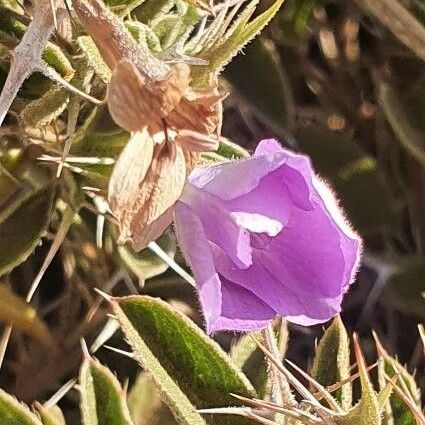
Plant Overview
Often found in the sun-drenched landscapes of East Africa, Barleria delamerei is a hardy survivor with a delicate secret. Known for its elegant, pale flowers and formidable thorns, it is a plant that perfectly balances beauty with a "stay back" attitude. Whether used as a natural security fence or a drought-resistant ornamental, it brings a touch of the rugged Savannah to any landscape.
🔍 How to Identify
- 🌸 The Bloom: Look for funnel-shaped, trumpet-like flowers that are typically creamy white or very pale mauve, often appearing nestled among the leaves.
- 🗡️ The Spines: This plant is well-armed; it features sharp, yellowish axillary spines (thorns) that emerge from the leaf bases to deter hungry herbivores.
- 🍃 The Foliage: It sports small, elliptical to oval-shaped leaves that are a soft grayish-green, often feeling slightly leathery or "fuzzy" to help retain moisture.
🏡 In Your Garden
- 🏜️ Tough as Nails: This species is a champion of xeriscaping. It thrives in poor, rocky soil and high heat, making it an excellent choice for areas of the garden where other plants might wither from thirst.
- 🦋 Pollinator Sanctuary: Despite its prickly exterior, its nectar-rich flowers are a magnet for bees and butterflies. It acts as a "fortress" for wildlife, providing food while protecting small birds from predators within its thorny branches.
- 🚧 Natural Security: Because of its dense growth habit and sharp thorns, it is traditionally used as a "living fence." In its native range, it is often planted to create a secure perimeter that is nearly impossible for larger animals to push through.
⚠️ Safety & Toxicity
- 🩹 Physical Hazard: While Barleria delamerei is not known to be chemically toxic if ingested, the spines are incredibly sharp and can cause deep, painful punctures.
- 🐾 Pets & Kids: This plant should be kept away from play areas or narrow walkways. Its thorns can easily snag a curious paw or a running child, leading to skin irritation or injury.
✨ Fun Fact
- 🎩 Noble Roots: The species name delamerei honors the 3rd Baron Delamere, a famous and colorful pioneer of agriculture in Kenya who was instrumental in the early 20th-century development of East African farming.

Detailed Care Instructions

Place in a bright room that is sun drenched almost all day. Or directly in a south-facing window.

To properly water this plant, you should first assess the soil moisture level by sticking your finger about an inch into the soil. If the soil feels dry to the touch, it's time to water. Use a watering can with a narrow spout to carefully water the plant at the base of the stems, avoiding getting water on the leaves or flowers. Water until you see water coming out of the drainage holes at the bottom of the pot. Once the water has fully drained, empty any excess water from the saucer beneath the pot to prevent the roots from sitting in standing water. Wait until the soil dries out again before watering to avoid overwatering.
Barleria Delamerei plant prefers well-draining soil that is rich in organic matter and has a slightly acidic pH level. It thrives in sandy loam or loamy soil with good drainage. The soil should be moist but not waterlogged, and regular watering is necessary to keep the soil consistently moist. Fertilizing with a balanced fertilizer every 4-6 weeks during the growing season can help promote healthy growth. Soil should be kept free of weeds and debris, as this can cause stress to the plant. Proper soil preparation is key to the plant's overall health and well-being.








