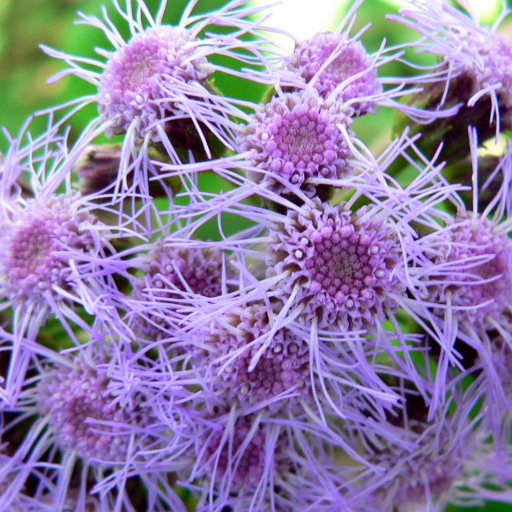
Plant Overview
Often called the "Purple Torch" or the "Blue Mist Flower," Bartlettina sordida is a show-stopping evergreen shrub that looks like it stepped straight out of a prehistoric cloud forest. Native to the lush highlands of Mexico, it is prized by enthusiasts for its oversized, velvety foliage and massive clusters of lilac-colored flowers that look like soft, fuzzy pom-poms.
🔍 How to Identify
- 💜 The Flowers: Large, rounded clusters (up to 10 inches across) of tiny, thread-like blooms in shades of lavender, violet, or soft blue. They appear in late winter and spring.
- 🍃 The Foliage: Massive, heart-shaped leaves with a "quilted" or deeply veined texture. They are dark green on top and have a soft, velvety feel.
- 🍷 The Stems: Young stems and leaf stalks are often covered in a dense coating of reddish-purple hairs, giving the plant a rich, "fuzzy" appearance even when not in bloom.
🏡 In Your Garden
- ☁️ Cloud Forest Vibes: Because it originates from high-altitude forests, this plant craves high humidity and dappled shade. It hates the harsh, drying heat of direct afternoon sun, which will cause its giant leaves to wilt dramatically.
- 💧 Thirsty Giant: Those large leaves act like solar panels but also lose water quickly. It requires rich, organic soil that stays consistently moist. If you forget to water it, the plant will "faint," but it usually bounces back quickly once given a drink.
- ✂️ Pruning Needs: It is a fast grower and can become "leggy" or sparse over time. Pruning it back hard after the flowering season encourages a bushier, more compact shape and better leaf production.
⚠️ Safety & Toxicity
- 🐾 Pet Safety: While not famously deadly, it belongs to a family (Asteraceae) where many members contain compounds that can cause stomach upset if ingested. It is best to keep it out of reach of curious cats and dogs.
- 👶 Human Caution: The fine hairs on the stems and leaves can occasionally cause mild skin irritation or "itchiness" for people with sensitive skin during pruning.
- 🍽️ Non-Edible: This is strictly an ornamental plant; no part of the plant should be consumed.
✨ Fun Fact
The flowers of the Bartlettina sordida aren't just beautiful to look at—they are incredibly fragrant! Many gardeners describe the scent as a nostalgic blend of lilac, honey, and warm vanilla, making it a popular choice for sensory gardens.

Detailed Care Instructions
To grow Bartlettina sordida (previously known as Aster sordidus), follow these steps:
- Climate: This plant thrives in regions with cool summers and mild winters. It is native to Mexico and Central America and does well in USDA hardiness zones 8 to 10.
- Sunlight: Bartlettina sordida prefers full sun to partial shade. Choose a location that receives at least 6 hours of direct sunlight per day. If you live in a hot climate, provide afternoon shade to protect it from intense heat.
- Soil: The plant prefers moist, well-draining soil that is rich in organic matter. It can tolerate a wide range of soil types, including sandy or clay soil, as long as it drains well.
- Watering: Keep the soil consistently moist but not waterlogged. Water deeply once a week, or more frequently during hot and dry periods. Avoid overhead watering as it can promote diseases. Mulching around the base of the plant helps retain moisture and suppress weeds.
- Fertilization: Apply a balanced, slow-release fertilizer in early spring to promote healthy growth. Follow the package instructions for the recommended dosage and frequency. If the plant appears healthy, additional fertilization may not be necessary.
- Pruning: Trim back the spent flowers and any dead or damaged foliage to improve the plant's appearance and encourage new growth. You can also cut back the entire plant in early spring to promote bushier growth.
- Propagation: Bartlettina sordida can be propagated through division or stem cuttings. Divide mature plants in early spring or fall, making sure each division has roots attached. Stem cuttings can be taken in spring or early summer and rooted in a moist rooting medium.
- Pest and disease control: This plant is relatively pest-free but can occasionally be affected by aphids or slugs. Use organic insecticides or handpick pests when necessary. Proper spacing and good air circulation can help prevent diseases such as leaf spot.
Remember to check if the specific care requirements of your Bartlettina sordida variety differ slightly from the general guidelines mentioned above.

Place in a window with dappled sun or a spot in the middle of a room. Or directly in a window facing west or east.

The watering requirements of this plant consist of providing moderate to regular watering during the growing season, ensuring the soil remains consistently moist but not waterlogged. It can be beneficial to allow the topsoil to dry out slightly in between waterings, but the plant should not be allowed to wilt.
During the winter months, the plant can tolerate some drying out of the soil between waterings, and it is important to reduce watering frequency to prevent root rot. Overwatering can lead to disease, so it is important to monitor the soil moisture level and adjust watering accordingly.
When watering, it is recommended to water at the base of the plant rather than from above to prevent any fungal issues. Additionally, it is important to use lukewarm or room temperature water to avoid shocking the plant.
In summary, moderate to regular watering is required for this plant, ensuring the soil remains consistently moist but not waterlogged. During the winter months, reduce watering frequency and monitor soil moisture levels to prevent root rot. Water at the base of the plant and use lukewarm or room temperature water.
- Use a balanced fertilizer with equal parts nitrogen, phosphorus, and potassium.
- Apply the fertilizer in the early spring before new growth emerges.
- Follow the package instructions for the amount of fertilizer to use and how to apply it.
- Water the plant thoroughly after fertilizing.
- Repeat fertilization every 4-6 weeks during the growing season but reduce the amount by half each time.
- Avoid over-fertilizing as it can cause leaf burn or other damage to the plant.
The best type of soil to use for this particular plant should be one that is well-draining, fertile, and rich in nutrients. A recommended combination is a mix of peat moss, perlite, and sand to create a loose, porous mix. This type of soil will allow for proper water drainage and air circulation, which is essential for the plant's root system to thrive. Additionally, it's important to avoid using heavy, clay soils that may hold too much water and cause root rot. The ideal pH range for the soil should be slightly acidic to neutral, around 6.0-6.5.
To propagate this plant, take stem cuttings from a mature plant. Choose healthy stems that have several nodes (the points where leaves grow from the stem). Cut the stems at a 45-degree angle using a sharp, clean pair of pruning shears. Remove any leaves from the bottom third of the stem, leaving only a few leaves at the top.
Dip the cut end of the stem into rooting hormone powder to encourage root growth. Plant the stem into a well-draining potting mix, making sure the bottom nodes are buried in the soil. Water the cutting thoroughly and place it in a warm, brightly lit area where it will receive indirect sunlight.
Keep the soil moist but not waterlogged. You can cover the cutting with a plastic bag or clear plastic container to create a humid environment and encourage rooting. After a few weeks, check for root growth by gently tugging on the stem. If it resists, roots have formed and the cutting has taken root. You can then remove the plastic covering and continue to care for the plant as it grows.








