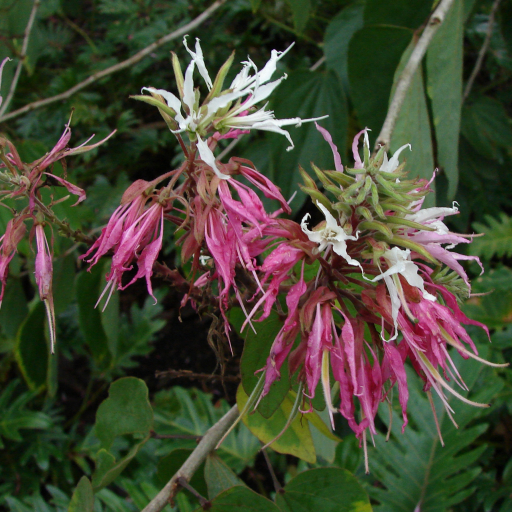
Plant Overview
Often called the "Pata de Vaca" or "Fan-leaf Orchid Tree," Bauhinia divaricata is a tropical treasure known for its whimsical, butterfly-shaped leaves and elegant blossoms. Native to the sun-drenched regions of Mexico and the Caribbean, this small tree or shrub brings a sense of airy lightness to any landscape. Its common name, "Cow’s Foot," comes from the distinct leaf shape that looks remarkably like the footprint of a cloven-hoofed animal.
🔍 How to Identify
- 🍃 Bilobed Leaves: The foliage is the most striking feature; each leaf is deeply cleft in the middle, creating two rounded lobes that look exactly like a butterfly's wings or a cow's hoof.
- 🌸 Orchid-like Blooms: It produces delicate clusters of white flowers that often fade to a soft pink. These flowers feature exceptionally long, wispy stamens that reach out like elegant eyelashes.
- 🌳 Spreading Habit: True to its name (divaricata means "spreading"), the branches grow in a wide, zig-zagging fashion, creating a graceful and open canopy.
🏡 In Your Garden
- 🦋 Pollinator Magnet: This plant is a powerhouse for local biodiversity. Its nectar-rich flowers are irresistible to hummingbirds and butterflies, turning your garden into a fluttering sanctuary.
- ☀️ Sun and Space: While it is relatively drought-tolerant once established, it prefers well-drained soil and plenty of sunlight. It hates "wet feet," so ensure your garden spot doesn't collect standing water, which can lead to root rot.
- ✂️ Pruning Nuance: Because it has a naturally leggy and spreading growth habit, it benefit from light "tipping" or pruning. This encourages a bushier shape rather than a single, sparse trunk.
⚠️ Safety & Toxicity
- 🟢 General Safety: Bauhinia divaricata is generally considered non-toxic to humans and common household pets.
- 🐾 Pet Context: While not poisonous, the leaves and seed pods are high in fiber and tannins; if a curious dog or cat ingests a large amount, they may experience mild digestive upset.
- 🧤 Garden Care: Always wear gloves when pruning, as the sap of many tropical trees can occasionally cause mild skin irritation for those with sensitive skin.
✨ Fun Fact
The genus Bauhinia was named after the 16th-century Swiss botanists, the Bauhin brothers. The famous two-lobed leaf was chosen specifically to represent the two inseparable brothers working together in the field of botany!

Detailed Care Instructions
Here are some steps to help you grow Bauhinia Divaricata plant:
- Choose the right location: Bauhinia Divaricata prefers full sunlight, so choose a location in your garden where it can receive at least 6-8 hours of direct sunlight each day. Make sure the soil is well-draining.
- Prepare the soil: The plant prefers slightly acidic to neutral soil with a pH range of 6.0-7.5. Additionally, the soil should be enriched with organic matter and have good water-holding capacity. Add compost or organic matter to improve the soil quality.
- Planting: Dig a hole that is slightly larger than the root ball of the plant. Place the plant in the hole and backfill it with soil, gently firming the soil around the roots. Make sure not to bury the root collar. Water the plant thoroughly after planting.
- Watering: Keep the soil consistently moist, especially during the first year of growth. However, avoid overwatering as it can lead to root rot. Water deeply and less frequently rather than shallow and frequent watering.
- Mulching: Apply a layer of organic mulch around the base of the plant, leaving a gap around the stem to prevent moisture buildup and stem rot. Mulching helps in retaining soil moisture and suppressing weed growth.
- Fertilization: Feed the plant with a balanced, slow-release fertilizer in early spring and late summer. Follow the instructions on the fertilizer package for application rates.
- Pruning: Bauhinia Divaricata can benefit from occasional pruning to maintain shape and remove any dead or diseased branches. Pruning can be done after flowering in late winter or early spring.
- Pest and disease control: Monitor the plant regularly for any signs of pests or diseases. Common pests that might affect this plant include aphids, spider mites, and mealybugs. Treat them with appropriate insecticides or organic pest control methods.
- Winter care: Bauhinia Divaricata is generally hardy in USDA zones 8-11. If you live in a colder climate, protect the plant during winter by covering it with a frost blanket or moving it indoors if possible.
By following these steps, you can successfully grow Bauhinia Divaricata plant and enjoy its beautiful flowers.

Place in a bright room that is sun drenched almost all day. Or directly in a south-facing window.

Bauhinia Divaricata is a tropical plant that requires regular watering in order to grow and thrive. When watering this plant, you should aim to keep the soil consistently moist but not waterlogged. This can be achieved by watering the plant deeply once or twice a week, depending on the climate and humidity levels in your area.
To water Bauhinia Divaricata, begin by checking the soil around the plant to see if it is dry to the touch. If so, it is time to water. You can do this using a watering can, hose, or drip irrigation system. Slowly pour water at the base of the plant, being careful not to splash water onto the leaves. Watering in the morning or evening when temperatures are cooler can help prevent moisture loss through evaporation and reduce the risk of leaf scorch.
It is important not to overwater Bauhinia Divaricata, as this can lead to root rot and other issues. To avoid this, make sure the soil has adequate drainage and avoid letting the plant sit in standing water. You can also monitor soil moisture levels by sticking your finger into the soil. If it feels damp, hold off on watering until the soil has had a chance to dry out a bit.
Overall, watering Bauhinia Divaricata is relatively simple, but it is important to be mindful of the plant's watering needs and avoid both under- and over-watering. With proper care, this beautiful tropical plant can thrive and add beauty to any garden or landscape.
- Choose a balanced fertilizer with a ratio of 10-10-10 or similar.
- Apply the fertilizer during the growing season, which is typically from spring to fall.
- Dilute the fertilizer according to the manufacturer's instructions.
- Apply the diluted fertilizer around the base of the plant, but avoid touching the stem or leaves.
- Water the plant thoroughly after applying fertilizer to help it absorb the nutrients.
- Repeat the fertilization process every four to six weeks throughout the growing season.
- Stop fertilizing in the winter when the plant goes dormant.
For Bauhinia Divaricata plants, it is recommended to use a well-draining soil that is rich in organic matter. It should have a pH level between 6.0 and 7.5. The soil should also be moist but not too wet, as the plant prefers to be grown in moderately dry conditions. Adding sand or perlite to improve drainage can also be beneficial. The plant should be grown in an area with full to partial sunlight.
To propagate this plant, you need to take stem cuttings from a healthy and mature plant. The cuttings should be about 6-8 inches long and should have at least 2-3 nodes on them.
Remove the leaves from the bottom of the cutting and dip the cut end in rooting hormone powder. Plant the cutting in a pot filled with a well-draining soil mix and water it thoroughly.
Keep the pot in a warm and bright spot but not in direct sunlight. Water regularly to keep the soil moist but not waterlogged. Within a few weeks, new roots should start to form and the cutting should start to grow.
Once the plant has established roots and is growing well, it can be transplanted into a larger pot or into the garden. Keep it watered and fertilized regularly to encourage healthy growth.








