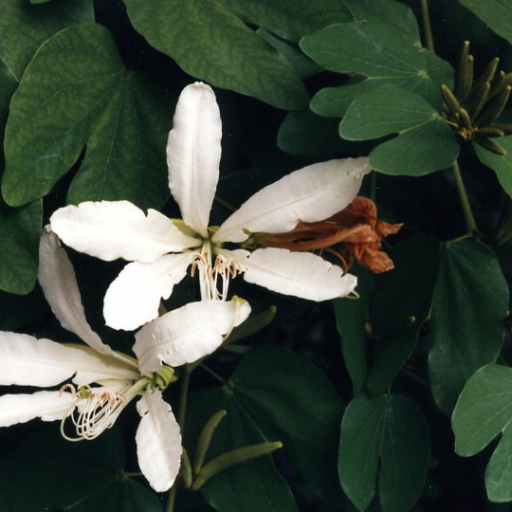
Plant Overview
Often called the Brazilian Orchid Tree or the Pata-de-vaca (Cow's Foot), this striking South American native is a masterpiece of geometry and elegance. Its name comes from its unique, twin-lobed leaves that perfectly mimic the shape of a cloven hoof. While it looks delicate with its snowy, orchid-like blooms, it is a hardy survivor that has transitioned from the wild forests of Brazil to urban gardens worldwide.
🔍 How to Identify
- 🍃 The "Hoof" Leaves: The most distinct feature is the light green leaf, which is deeply divided into two rounded lobes, looking exactly like a cow’s footprint.
- 🌸 Orchid-like Blooms: It produces large, five-petaled white flowers with long, elegant stamens that emerge at night and persist into the morning.
- ⚔️ Hidden Thorns: The species name forficata refers to the small, paired thorns found at the base of the leaves, resembling a small pair of scissors or pincers.
🏡 In Your Garden
- 🌳 Fast-Growing Shade: This tree is a sprinter in the garden world, quickly reaching heights of 15–30 feet. It’s perfect for those who want a privacy screen or a focal point without waiting decades.
- ☀️ Sun Seeker: While it can tolerate partial shade, it produces the most dramatic floral display when basked in full sunlight. It is remarkably drought-tolerant once its root system is established, making it a "set-and-forget" favorite for warmer climates.
- ✂️ Pruning Needs: Because it can become somewhat "leggy" or sprawling, it benefits from structural pruning in its youth to encourage a strong, upright canopy.
⚠️ Safety & Toxicity
- 🟢 General Safety: Bauhinia forficata is generally considered non-toxic to humans and pets, making it a safe choice for family backyards.
- 🌵 Physical Hazard: The primary safety concern is the small, sharp thorns located along the branches. Wear gloves when pruning to avoid painful scratches.
- 💊 Medicinal Note: In South America, it is known as "Vegetable Insulin" due to its use in traditional medicine to lower blood sugar. However, you should never ingest parts of the plant for medicinal purposes without professional medical guidance, as it can interfere with diabetes medications.
✨ Fun Fact
In Brazil, this tree is a staple in "Urban Reforestation" projects because its roots are non-invasive, meaning it can grow near sidewalks and pipes without causing the structural damage that other large trees might!

Detailed Care Instructions
To grow Bauhinia Forficata (also known as Brazilian orchid tree), follow these steps:
- Climate and soil requirements: Bauhinia Forficata grows well in tropical and subtropical regions. It prefers full sun and well-drained, slightly acidic soil.
- Propagation: You can propagate the plant through seeds or cuttings. Seeds can be collected from mature pods and sown in a seed tray filled with a mix of perlite and peat moss. Keep the tray in a warm and humid location. Cuttings can be taken from young, healthy shoots and rooted in a mixture of perlite and peat moss.
- Germination: If starting from seeds, soak them in warm water overnight before planting. Sow the seeds in the prepared seed tray, covering them with a thin layer of soil. Keep the tray consistently moist and warm (between 75-85°F or 24-29°C). Germination typically occurs within 2-4 weeks.
- Transplanting: Once the seedlings or rooted cuttings have grown a few inches tall and developed a good root system, transplant them into individual pots or directly into the ground. Ensure the soil is rich in organic matter and well-drained. Space the plants about 6-8 feet apart, as they can grow into large trees.
- Watering and fertilizing: Regular watering is necessary during the initial growth stage, keeping the soil consistently moist but not waterlogged. Once the plant is established, it becomes more drought-tolerant. Fertilize every few months with a balanced, slow-release fertilizer to promote healthy growth.
- Pruning: Prune the tree in early spring to maintain shape and remove any dead or damaged branches. Bauhinia Forficata can be trained to grow as a small tree or a shrub, depending on your preference.
- Pest and disease control: The tree is generally not prone to severe pest or disease problems. However, keep an eye out for mealybugs, scale insects, or fungal issues. If necessary, use organic or chemical sprays to control the problem.
- Winter care: In colder regions, Bauhinia Forficata may not tolerate freezing temperatures. If grown in pots, bring them indoors during winter or provide adequate protection. In the ground, protect the plant with frost cloth or mulch.
With proper care, Bauhinia Forficata can grow into a stunning and resilient plant with beautiful orchid-like flowers.

Place in a bright room that is sun drenched almost all day. Or directly in a south-facing window.

Bauhinia Forficata is a species of flowering plant that requires regular watering to thrive. To adequately water this plant, start by assessing the soil moisture. Insert your finger into the topsoil to a depth of 1-2 inches to check the moisture level. If the soil feels dry to the touch, it's time to water the plant.
When watering, apply water at the plant's base, ensuring that it soaks into the soil and reaches the root ball. Avoid watering the foliage as this can promote fungal growth or cause scorching in direct sunlight. It's best to water the plant in the morning or evening when temperatures are cooler.
The amount of water required will depend on the plant's age, size, and environment. As such, it's essential to monitor the soil moisture regularly. If the plant is in a pot, ensure that excess water drains out through the drainage holes to prevent waterlogging, which can cause root rot.
During the growing season, Bauhinia Forficata may require more frequent watering, especially during hot and dry periods. To conserve water and promote healthy growth, consider mulching around the plant's base with organic matter. This will help retain moisture, regulate soil temperature, and suppress weed growth.
In summary, watering Bauhinia Forficata requires monitoring soil moisture, watering at the base, avoiding foliage, watering at the right time of the day, adjusting water amounts based on growth and environment and regularly mulching.
To fertilize this plant, apply a slow-release fertilizer with a balanced NPK ratio (such as 10-10-10) during the growing season. Do not over-fertilize, as it can damage the roots. Water the plant lightly after fertilizing to ensure the nutrients are absorbed into the soil.
The best type of soil to use for the plant in question is a loamy soil with a pH ranging from neutral to slightly acidic. The soil should be well-draining, yet retain moisture. It should also be rich in organic matter, such as compost or well-rotted manure. The plant prefers a soil that is not too heavy or too sandy. A good way to test the soil is by squeezing a handful of it. If it stays in a clump, it is too heavy, but if it immediately falls apart, it is too sandy. The ideal texture is crumbly and loose. The plant requires good soil to thrive, as it obtains its nutrients and water from the soil. A soil that is too poor may result in a weak and stunted plant.
To propagate this plant, you will need to take stem cuttings. Choose a healthy stem that has at least 2-3 leaf nodes and is about 4-6 inches long. Cut the stem just below one of the nodes using clean, sharp scissors or pruners. Strip off the lower leaves to expose the growth node.
Next, prepare a container with well-draining soil that is moist but not waterlogged. Dip the end of your cutting into rooting hormone powder (optional) and place it into the soil, making sure the node is covered.
Cover the pot with a clear plastic bag to create a mini greenhouse. This will help keep the humidity high around your new plant and encourage root growth. Place the pot in bright, indirect light and keep the soil moist but not overly wet.
Within a few weeks, you should start to see new growth appearing on your cutting. Once the plant has developed a few leaves and seems to be growing well, you can remove the plastic bag and gradually introduce it to more sunlight.








